To the Editor:
Re “Students Are Getting a Reader’s Digest of Books” (front page, Dec. 15):
Kudos for calling attention to a troubling trend. Acknowledging the problem is the first step toward addressing it.
The article highlights a widespread assumption that teenagers are no longer capable of sustained reading. In fact, as one teacher noted, when expectations are high and adults believe in students’ abilities, young people rise to the challenge and relish doing so.
We also need clarity about the goals of English instruction. Guided analysis of short texts is a powerful method for helping students study language closely and access the critical ideas. But this must be in addition to, not instead of, reading complete works of literature. Only through sustained reading do students gain insight into the human condition and learn to participate thoughtfully in a democratic society.
This work must begin in kindergarten if we want students to develop stamina and a genuine reading identity by high school. Children need to read voluminously in and out of school and experience a strong reading culture led by adults who model joyful reading.
The challenge is not our young people; it is us. We must invest in our own reading lives and offer children the whole-book experiences that nurture reading stamina, passion and love.
Eva Moskowitz New York The writer is the founder and chief executive of Success Academy Charter Schools.
To the Editor:
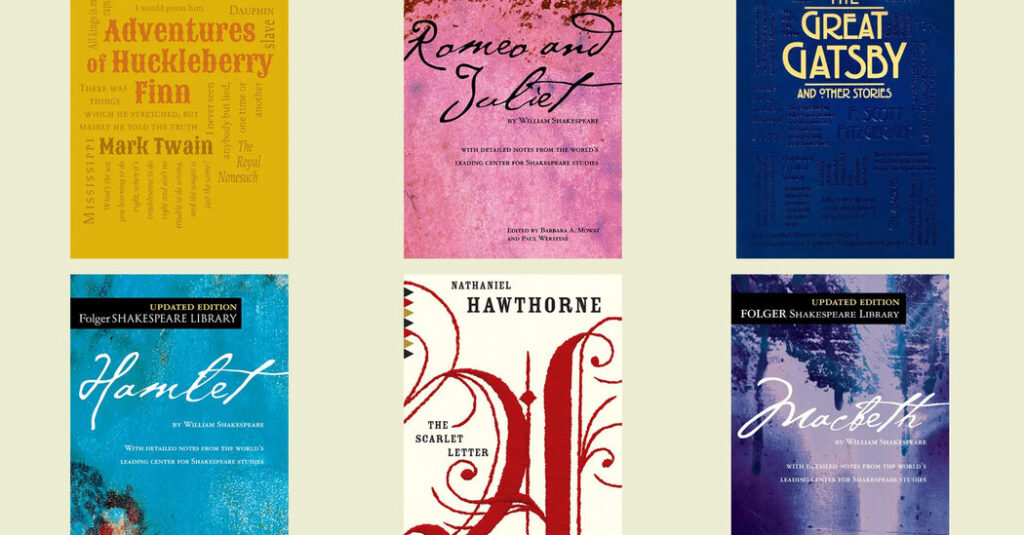
I was surprised to see the titles of the books being assigned to young (potential) readers in schools these days, especially because three of Shakespeare’s plays were among the top 10. As a theater professional myself, I find reading Shakespeare can be a heavy lift for modern readers. How much better to see a play, as it was meant to be consumed. Taking the class to see a live production, or a screening of a great film version, will certainly provide just as much conversation and be more memorable for the young people.
I think educators need to get out of a rut and offer timely, fascinating options to these young minds. I would put J.R.R. Tolkien on the list, to be read aloud in class. And bring back “Moby Dick”! Let’s give students what people have always craved in books — a passage to unknown worlds.
Christel Stevens University Park, Md.
To the Editor:
Your article on reading reflects my own children’s experience at a small-city public high school, but misses part of the bigger picture — namely, middle school.
After a book-rich K-5 education, my daughter was inhaling books with the intensity and craving of an addict, so as she entered sixth grade in 2015 I was excited for her to discover that her “hobby” was also a cornerstone of academic inquiry. But in three years of middle school she was assigned no entire books to read.
Fast forward to ninth-grade English: Students chose two books from a list of options — the favorite being “Alice in Wonderland” — and the teacher sent heartfelt emails home asking for family support in the very challenging task of reading the book. The challenges are real and multifaceted, but surely exacerbated by the fact that these students were coming out of a three-year book desert.
What the article does capture is the role of individual educators. For my daughter, school librarians and a beloved English teacher recognized and fed her passion; not all children are so lucky.
Young children love books — starting with picture books and simple stories. Why not build incrementally and systematically from there?
Rachel Hastings Olympia, Wash.
Friction Over Greenland
To the Editor:
Re “Angering Denmark, Trump Names Governor a Special Envoy to Greenland” (news article, Dec. 23):
The friction between Denmark and the United States over the appointment of Jeff Landry to be a special American envoy to Greenland is only one aspect of the larger question of which countries will dominate and manage the Arctic region in future years.
The United States now vies with Canada, Europe, Russia and, increasingly, China over control of the Arctic’s shipping lanes for commerce and military use. Governmental and private interests aim to exploit Arctic lands and the ocean for resource extraction. Cooperation is fragile when it exists at all.
And what about the people whose lives and livelihood are based in the region?
We should not mistake the president’s wish to take over Greenland as a joking matter. U.S. policy in the region puts us on a collision course with our traditional allies, and this is not in our national interest.
Anne Wheelock Jamaica Plain, Mass.
The post Encouraging Kids to Read Whole Books appeared first on New York Times.