Keith Humphreys is a professor of psychiatry at Stanford University. Beau Kilmer is co-director of the Rand Drug Policy Research Center.
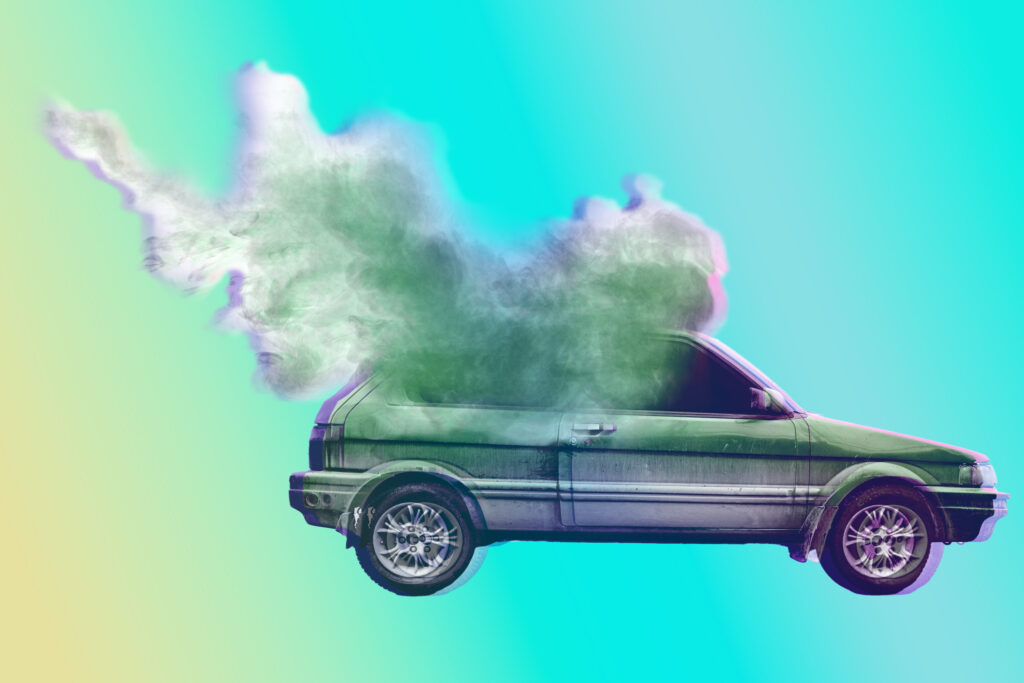
This holiday season, police departments across the country will repeat their laudable annual efforts to deter drunken driving. Yet more than a decade after states began legalizing recreational marijuana, or cannabis, effective policies to counter driving while high on it don’t exist. There are several reasons why the danger from cannabis-impaired drivers has so far gone largely unaddressed, and why the threat is increasing.
The first challenge is that when police stop a driver suspected of driving under the influence, they have no equivalent of a roadside breathalyzer test for detecting cannabis intoxication. There is no widely agreed upon, valid standard for rapidly and accurately measuring the amount of THC — cannabis’s psychoactive agent — in a person’s body. Even taking a suspected THC-intoxicated driver to the police station for a blood or urine test would be pointless: THC is lipophilic, meaning it hangs around in fat cells long after it has been consumed. That can skew testing, producing a positive result in a blood or urine test even though the person who consumed the cannabis is no longer high.
The second challenge: Getting high has become incredibly cheap in some states. For example, the median retail price for a gram of cannabis flower in Oregon is now $3.33 — about a 70 percent drop since 2016. It used to be the case that a gram would make about three joints, but these days it’s common to see one-gram pre-rolled joints in dispensaries. Some stores in Michigan have advertised ounces for $25, which, including taxes, works out to about $1 per gram.
Third, policymakers and advocates in many states did not follow up marijuana legalization with adequate regulations for the industry they created, the higher potency products it produced or the aggressiveness or accuracy with which those products were marketed. How states would detect and deter cannabis-impaired driving is one of many policy problems that did not receive sufficient thought.
The consequences are easy to see. A 2024 survey indicated that at least 11.7 million people in the United States had driven under the influence of cannabis in the prior year. That’s not far below the 14.2 million estimated to have driven under the influence of alcohol. Another national study found that in the month before being surveyed, 13 percent of high-school student drivers had driven when they had been using cannabis.
The lore persists in some circles that cannabis makes people safer drivers because they drive slower. Whether this was true in the era of weak weed that averaged 5 percent THC, it is clearly not true today, when the average flower sold in legal markets is closer to 20 percent THC, and concentrated products typically range between 60 and 90 percent THC. The resulting driving impairment is generally not as bad as that of alcohol, but still raises the risk of traffic crashes. And when someone drives both drunk and stoned, it can amplify the risk even further.
What could be done?
Multiple measurement technologies including oral swabs, urine screens and behavioral tests are being developed to better measure cannabis impairment, but none is yet as valid and simple to use as an alcohol breathalyzer. This would be an excellent target for an incentivizing a “breakthrough prize” from the government. A public-private partnership might help arrive at an answer more urgently. Cities might also experiment with increasing the availability of driverless-car technology to reduce impaired driving of all sorts.
But possible solutions extend beyond technological fixes.
Mass media campaigns to discourage people from driving after consuming cannabis — or riding in vehicles with these drivers — seem appropriate, especially since an expert panel concluded that “well-funded media campaigns are an important component of alcohol-impaired driving enforcement policy interventions.” Indeed, a recent National Academies report on cannabis policy and public health called on the Centers for Disease Control and Prevention to help develop and evaluate education campaigns.
Alcohol offers other lessons. For example, in the 24/7 Sobriety program used in several states, [[right?]] an individual with multiple impaired driving arrests has their right to use alcohol at any time suspended. The penalty is enforced with frequent testing and immediate sanctions after a positive test. Jurisdictions could pilot and evaluate 24/7 Sobriety programs focused on cannabis, and possibly augment them to incorporate positive incentives for compliance.
Also, mandating a floor price for alcohol has been shown to reduce alcohol use by heavy drinkers while little affecting moderate drinkers. Because cannabis sellers profit by encouraging and maintaining heavy use, imposing adequate regulation and counteracting large price decreases (for instance, with minimum unit pricing) could have the side effect of making the roads safer.
A key challenge will be to generate political interest in the hard work of writing and enforcing the regulations needed to make our roads and highways safer. Congress recently took the step of closing the “intoxicating hemp loophole,” which had created a large THC industry particularly in states without legal cannabis. Perhaps this is a harbinger, and more policymakers will begin taking cannabis regulation seriously. The benefits of doing so would be significant for road safety as well as for public health more generally.
The post States made marijuana use legal. Now they should get it off the road. appeared first on Washington Post.