On a warm Saturday afternoon in November, 17-year-old Tristan Johnson grabbed his black puffer jacket and headed out to rent a scooter.
He was walking a few blocks from the D.C. Armory, the staging area for hundreds of National Guard troops who had been patrolling Washington as part of President Trump’s crackdown on crime in the nation’s capital.
But not long after Tristan walked out of his grandmother’s front door, he was shot dead in the street. The police told Tristan’s mother that the suspects might have been trying to steal his jacket, which was one of his favorites.
In the days that followed, Tristan’s family found some solace in honoring his memory: his love of football and TikTok, his dreams of starting a truck driving business. But then, a little more than two weeks later, they watched as Mr. Trump seemed to erase his story altogether.
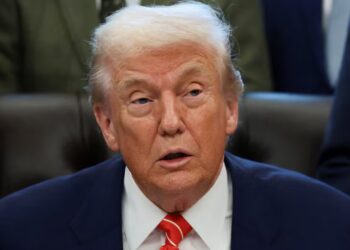
“We haven’t had a murder in six months,” Mr. Trump said of Washington.
It was the kind of glaringly false claim about crime in the capital that Mr. Trump has made repeatedly since August, when he deployed the National Guard and took federal control of the police force. While crime is dropping in Washington — homicides are down by 31 percent compared to the same time last year — the D.C. police have recorded 127 murders through Dec. 26, , including 28 since Mr. Trump announced his federal takeover.
The rate of homicides has dropped from an average of more than 12 a month since the National Guard was deployed, but still stood at seven per month over the closing four months of the year.
While Mr. Trump’s claim was easy to disprove, it was something else as well: evidence that Mr. Trump sees the violence on Washington’s streets as an unwelcome intrusion into what he wants to cast as a crime-fighting success story, one centered on his own power and strength in a city that he promised to bring to heel.
And the people whose deaths get downplayed or wiped away in his telling are typically people of color, including a 36-year-old mother who groomed pets during the day and drove an Amazon truck at night; a man who emigrated from Ethiopia as a child and was killed four days before his 31st birthday; and at least one other teenager, the same age as Tristan.
Historically, most murder victims in Washington have been Black.
Their absence from Mr. Trump’s account of progress stands in sharp contrast to his handling of the most high-profile killing in Washington this year, the case of Specialist Sarah Beckstrom, a white, 20-year-old West Virginia Army National Guard member, who was shot the day before Thanksgiving and died of her injuries. Mr. Trump reacted with ferocity to that attack and surged even more military forces to the city.
But Tristan Johnson’s life and death demonstrates how the reality of life in Washington is defying the simple narrative the president is trying to impose as he tries to expand his federal crackdown to other American cities.
When Mr. Trump deployed the National Guard in Washington in August, Tristan’s mother, Juanita Sampler, had her doubts that he was concerned about crime in her neighborhood, a largely Black community miles from the White House, the national monuments and the more gentrified areas of the city.
But Tristan was hopeful about Mr. Trump’s plan, she said. The two of them had been watching the news together when the president announced he was sending in the Guard.
“It’s going to be safe out here, Mom,” she recalled her son saying.
‘We Are a Safe City’
Abigail Jackson, a White House spokeswoman, said that Mr. Trump had prioritized the safety of Washington residents who had long been neglected by their local representatives.
“Despite unrelenting opposition and criticism from local and national Democrats, President Trump’s efforts have objectively made D.C. safer for residents and visitors,” Ms. Jackson said. “President Trump has done more than any elected official in recent history to address violent crime in cities around the country, including D.C., and he’s just getting started.”
Ms. Jackson did not respond to questions about why Mr. Trump had made the false claim that there had been no murders, or about concerns expressed by murder victims’ families that his statements ignored their lived experience.
Since the earliest days of his federal takeover, Mr. Trump has tried to disregard facts that would complicate his narrative on crime, including the fact that violent crime had been dropping in recent years even before the federal deployment. At one point he argued that domestic violence cases should not even count as crimes.
“They said, ‘Crime’s down 87 percent.’ I said, no, no, no — it’s more than 87 percent, virtually nothing,” Mr. Trump said in September. “And much lesser things, things that take place in the home they call crime. You know, they’ll do anything they can to find something. If a man has a little fight with the wife, they say this was a crime. See? So now I can’t claim 100 percent but we are. We are a safe city.”
Sherena Singletary, whose cousin, Maurisha Singletary, was killed in a domestic dispute, was aghast at Mr. Trump’s remark.
“What I would say is ‘a little fight with the wife’ is an argument that led to him physically taking a gun and shooting her in the head — twice,” she said
Ms. Singletary recalled how her cousin was a “bright light,” and how they were raised like sisters by their grandmother. Maurisha Singletary left behind two young daughters, Melody and Rhythm, and a brother with disabilities that she had cared for.
“A homicide is a homicide,” Ms. Singletary said. “She doesn’t deserve to be forgotten. And there were many that came after her.”
On the day that Maurisha Singletary was found dead, Mr. Trump told reporters at the White House that his deployment was so successful he was looking to send troops to other cities, like Chicago and Portland, Ore. “We’ve got no crime,” Trump said, even though that weekend there had been three murders in three days.
Carlena Durbin’s son, Jermaine, was one of them.
Ms. Durbin knew something was wrong when he took too long to come home for dinner. She had made ribs and banana pudding for him; she knew he would want to be home for that. But he was shot on Rhode Island Avenue and died where he fell.
The next time Ms. Durbin saw her son, it was a picture of him in the morgue.
At first she refused to believe that it was his 6-foot frame lying on the slab, until she saw an unmistakable identifier: the tattoo of her name on his neck. “Even looking in the casket, I didn’t believe it was my son,” she said as she sat in his room on a recent day. “But I know it’s my son because he hasn’t come home.”
In recent interviews, Ms. Durbin spoke about her only child in the present tense — when in his room, surrounded by his shoes, she sometimes talked to him — and recounted the goofy boy who loved to harass her with jokes and pranks, called her by her middle name, and wanted a career in cybersecurity.
She hasn’t ventured out much since his death. The sight of green electric bicycles that Jermaine used to ride like “a madman” makes her heart race, and she sees visions of him when she goes outside.
Ms. Durbin always thought Mr. Trump’s deployment was more about clearing homeless people from the streets than stopping children like hers from dying. “My son is gone,” she said. “So they’re here for who? For what?”
She hopes his face and name will help the president rethink his words and actions.
“I want the world to know about my son,” she said. “He had a family. He was loved. I want his story out so at least Trump can see that too.”
A Selective View of Victimhood
Mr. Trump’s reaction to the shooting of two National Guard members last month was swift and furious. Specialist Beckstrom died on Thanksgiving and the second victim of the attack, Staff Sgt. Andrew Wolfe, suffered a critical head wound but survived.
Mr. Trump delivered a prime-time address to the nation on the night of the shooting, in which he promised a maximalist version of his crackdown on crime. But he also cast the shootings as outliers in “the most successful public safety and national security mission in the history of our nation’s capital.”
While they empathized with the Guard, many Washington families said Mr. Trump’s speech affirmed their belief that Mr. Trump has a selective view of victimhood.
Many residents have been appealing for years for help with crime in the district, but the National Guard has largely been seen patrolling areas — and in some cases picking up trash — around national landmarks, tourist areas and metro stations.
“Let’s not mistake it, right, because there are plenty of D.C. residents who feel that we need the National Guard to address our crime, right?” said Robbie Woodland, a local Advisory Neighborhood Commission official who makes it a point to visit homicide scenes in her community. But Ms. Woodland said “it’s very clear his intentions are not good.”
“He definitely don’t value Black people,” she said.
Mr. Trump’s aides disputed the idea that Mr. Trump’s federalization was an attempt to clean up the whiter, more upscale parts of Washington, the parts that tourists would see. They have argued the president was moved to act after Jeanine Pirro, the U.S. attorney in Washington, showed him images of young Black victims who had been killed in the city.
But he has shown little regard for them since.
Javonte Vaden, whose 22-year-old sister Jayla was fatally shot last month, never saw the deployment as an act to protect communities of color, but rather to patrol and control them under the guise of safety.
“I was just down southwest I see the National Guard everywhere, or I’m down Navy Yard I see the National Guard,” she said in a recent interview. “They need to be across the bridge in the actual, real southeast — Ward 7, Ward 8 — where these things are happening every hour, every day.”
She said she believed the death of the Ms. Beckstrom and that of her sister should have taught Mr. Trump a painful lesson: Violence can strike anyone, at any time.
“That should show him that the National Guard cannot protect us,” she said. “That should show him that something needs to change on a deeper level. That should show him how sick the city is and how it needs more healing than just throwing guns or people in uniform at it.”
Ms. Vaden and her siblings were never under any illusions about crime growing up in Washington. Her sister, Jayla, had experienced a lot of death — of friends, her mother, her brother — but the soft-spoken woman who preferred to stay in the house curled up with her two dogs was excited about life. She had recently moved back into the apartment she lived in as a child, and was gushing about buying a new comforter set and a new couch. Instead, her life ended right outside the building she had grown up in.
Another one of Ms. Vaden’s sisters, Jamia Vaden, spoke of the pain of the president’s assertion that there had been no murders since he had sent in the National Guard.
“I wish that was true,” she said.
‘That’s My Son’
The Vadens were not the only family grieving on Nov. 8. Three people died that day.
One of them was Tristan Johnson.
Davian Morgan said he was not surprised that Tristan, his godson, would have been optimistic about the presence of the National Guard in Washington.
“He was one of those kids that will try to find the silver lining in anything,” said Mr. Morgan, who was also Tristan’s teacher and later his principal.
In recent months, Tristan was planning his future. He thought about starting his own trucking or vending machine business. He spoke with Mr. Morgan about the high cost of college and how he could save money by attending trade school.
He was popular and friendly; hundreds attended a vigil to honor and preserve his memory.
Tristan’s family only wished Mr. Trump would join that effort.
“For the president to say there’s no murders? That’s heartbreaking, that’s devastating to me,” said Ms. Sampler, Tristan’s mother. “That’s my son. He is someone. He is somebody. His name was Tristan Johnson.”
Zolan Kanno-Youngs is a White House correspondent for The Times, covering President Trump and his administration.
The post Families of Murder Victims in Washington Say Trump Is Ignoring Them appeared first on New York Times.