More than 2 million residential customers in the D.C. region will see higher monthly bills for natural gas this winter.
Utility officials and regulators in the region said the increases are due to a variety of factors, including a rise in maintenance and operating costs, investments to improve pipelines, and higher inflation, wages and taxes.
Rates vary depending on a household’s usage of natural gas, utility officials said, and are a monthly average for each residential customer.
The biggest jump will be for the approximately 151,000 customers in D.C. of Washington Gas. Their average total bill — based on an estimated cost of $98.57 — will go up almost 13 percent, or $11.24, a month.
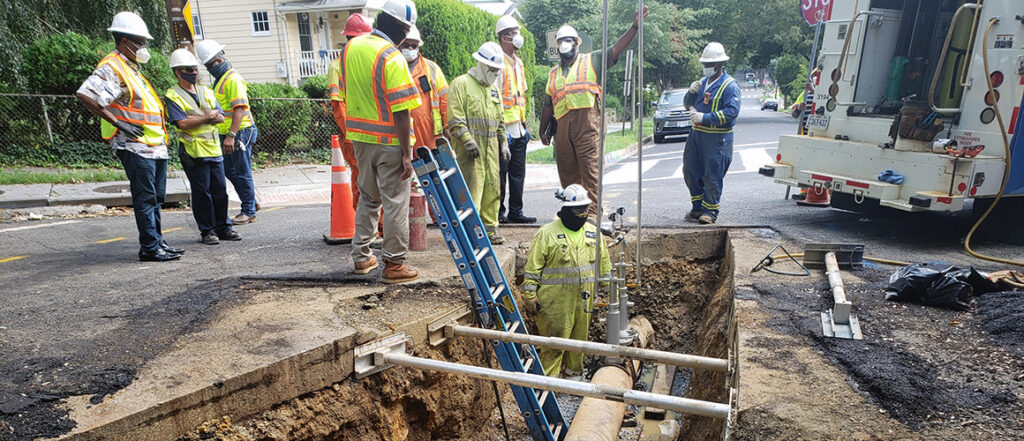
Washington Gas officials said approximately 37 percent of the hike is due to a large-scale project to replace aging, cast- and wrought-iron pipelines in the city.
Other natural gas customers in Maryland and Virginia will also see a jump in their bills.
In Northern Virginia, about 568,000 Washington Gas customers will see their bill increase by $9.61 a month. Part of the increase, about $1.74, is for work to replace aging pipes. Utility officials said the rest, about $7.87, is temporary, until final rates are approved by the Virginia State Corporation Commission.
Monthly bills for another 270,000 customers of Columbia Gas of Virginia will rise by an estimated $1.63.
In Maryland, bills for about 489,000 customers of Washington Gas may go up $1 a month, depending on an upcoming decision from the public service commission in the state, according to Washington Gas officials. And 700,000 customers of Baltimore Gas & Electric will see an increase of about $2.65 a month.
“Utilities face the same economic pressures as most other businesses,” said Tori Leonard, a spokeswoman for the Maryland Public Service Commission, which regulates utilities in the state.
The gas bill hikes come on top of a tough economic year for the region. Inflation has hit consumer pocketbooks, tens of thousands of workers in the D.C. region lost their jobs, and a federal takeover of D.C. law enforcement slowed spending at hotels, restaurants and entertainment venues. Plus, there’s continued worry of more economic instability going into the new year.
In D.C., at a public service commission meeting earlier this month, demonstrators interrupted the proceedings with chants and songs to protest the bill changes and pipeline project. Some demonstrators held signs that read “PSC Do Your Job.”
“This is going to hit all of us very noticeably,” said Petworth resident Charles Spring, who attended the December hearing. “It comes at a time when other prices are going up and many people are losing their jobs. This is not a time to be maximizing profits.”
Rev. Glenna Huber, who is part of the Washington Interfaith Network and pastor at the Church of the Epiphany on G Street in Northwest Washington, said parishioners and other D.C. residents have told her they’re worried about rising prices.
“The reality is that gas bills are rising faster than wages,” she said. “Everything is skyrocketing.”
Huber is particularly concerned about the disproportionate impact on senior citizens and people in low- and moderate-income housing: “We’re seeing people who have to choose between, ‘Do we pay for food, pay for rent or pay energy bills?’”
Some consumer and environmental groups have also questioned the cost, efficiency and need for the Washington Gas pipeline replacement project.
Others worried about the slow pace of the Washington Gas project and said pipeline replacement has not reduced complaints about leaks over the past few years — criticism that Washington Gas officials dispute.
“We want accountability, and we want regulators to finally wake up,” said Claire Mills, D.C. campaigns manager at the Chesapeake Climate Action Network. “It’s really disappointing to have regulators increase charges and see the impact on families trying to heat their homes.”
Residents and advocacy groups said replacing gas pipelines doesn’t help the city’s effort to move toward clean energy and reach its climate goals of reducing greenhouse gas emissions.
In a February letter to the public service commission, D.C. Council member Charles Allen (Ward 6) suggested the commission have the utility company “prioritize repairing only those gas pipe segments necessary for keeping District communities out of harm’s way.” Allen, who chairs the Committee on Transportation and the Environment, also urged the commission to more closely examine the utility’s expenditures to “avoid saddling ratepayers with the costs of soon-to-be obsolete infrastructure.”
Washington Gas said their pipeline project in D.C. is part of a 2011 national “safety call to action” from the U.S. Department of Transportation to repair and replace cast- and wrought-iron pipelines — many of which were installed more than 60 years ago — after some major natural gas pipeline incidents. Officials with Washington Gas said D.C., compared with other areas, has a “higher percentage” of those types of pipes.
Since it launched its pipeline replacement program in 2014, Washington Gas officials said, crews have replaced 40 miles of pipe in D.C. and in the past five years, they believe their work has “been successful in reducing leaks” by 29 percent. The D.C. pipeline replacement project’s latest phase is seeking $215 million in funding and runs through December 2028.
The post D.C. customers face nearly 13 percent hike on gas bills this winter appeared first on Washington Post.