China’s military on Monday announced a major live‑fire drill encircling Taiwan, intended to send a “stern warning” to the island following Beijing’s fierce public condemnation over the approval of a landmark $11 billion U.S. arms package to the self‑governed territory.
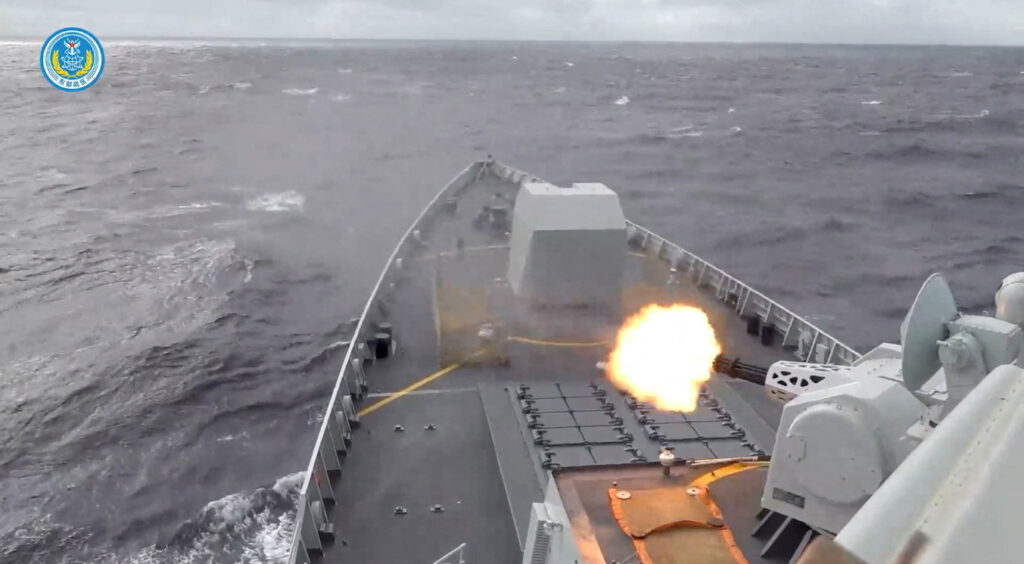
The exercise, dubbed “Justice Mission 2025” and involving the People’s Liberation Army’s navy, air force and rocket force, will take place in seven zones around the island and test Beijing’s ability to rapidly coordinate attacks in a simulated blockade of Taiwan’s key ports, according to notices published on state media outlets and a statement from the PLA’s Eastern Theater Command spokesperson.
The snap exercise showcasing China’s military might follows a familiar playbook, with Beijing responding aggressively to what it perceives as overt support for Taiwan’s independence. The live-fire exercises — coming after the largest-ever approved U.S. weapons package for Taiwan and amid escalating tensions with Japan — also arrive as Beijing approaches a self-imposed 2027 deadline for its military to be ready to invade Taiwan by force.
“The drills are a punitive and deterrent action against separatist forces who seek Taiwan independence through military buildup. … Anyone who tries to arm Taiwan to contain China will only embolden the separatists and push the Taiwan Strait closer to the peril of armed conflict,” Chinese foreign ministry spokesman Lin Jian said at a regular press conference Monday.
A spokesman for the PLA’s Eastern Theater Command said vessels and aircraft would approach Taiwan in “close proximity from different directions” and “engage in joint assaults.” The PLA published coordinates of the drills, showing they would take place over five large stretches of ocean encircling Taiwan, including to the east of the island, where key ports are most likely to receive support from external allies in the event of an invasion.
An additional map from China’s Maritime Safety Administration highlighted two more warning zones, making it the largest such exercise ever measured by total area, effectively encircling most of Taiwan.
Movements related to the exercise began within an hour of the PLA announcement, and by Monday afternoon, Taiwan’s defense ministry said it had detected 28 Chinese navy and coast guard ships and almost 90 military aircraft marshaling as part of the exercise.
“We strongly condemn the PRC’s irrational provocations and oppose the PLA’s actions that undermine regional peace,” the Taiwanese defense ministry said Monday, adding that rapid response exercises were underway and forces were on high alert.
Taiwan’s Civil Aviation Administration said more than 100,000 travelers are expected to be affected as the drills disrupt nearly 1,000 flights, with commercial airlines avoiding international airspace designated by the PLA for the drills.
The PLA did not share how long the drills would run, but it warned that exclusion zones should remain active through Tuesday.
Chinese state media on Monday characterized the major exercise as a direct response to the approval of the $11 billion U.S. weapons package to Taiwan, which it said represented a serious shift toward providing offensive capabilities.
“This would turn Taiwan’s regional forces into an extension of the US combat system, significantly increasing the risk of direct conflicts between China and the US,” said Fu Zhengnan, a researcher at the PLA’s Academy of Military Science, who was cited in state media newspaper China Daily.
“The U.S. blatantly announced its plan to sell massive advanced weapons to China’s Taiwan region. This move grossly violates the one-China principle and the three China-U.S. joint communiqués … undermines peace and stability in the Taiwan Strait, and sends a gravely wrong signal to ‘Taiwan independence’ separatist forces,” the Chinese Embassy in Washington said in a statement.
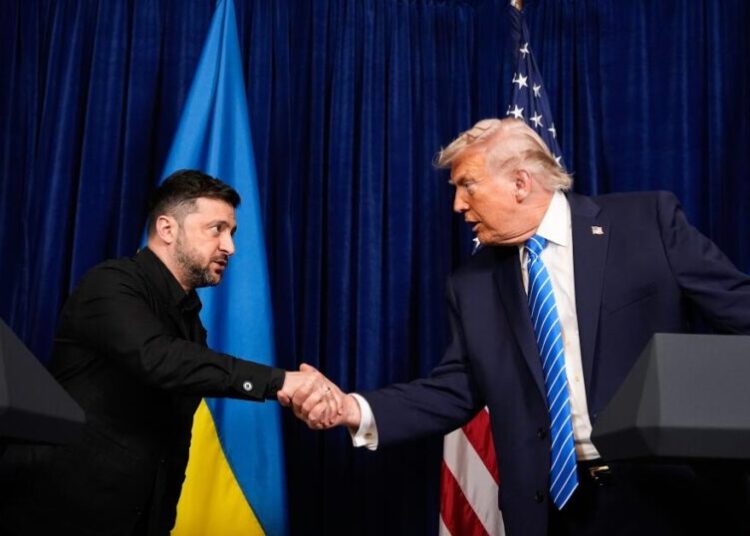
China’s military response to U.S. support for Taiwan comes as President Donald Trump is planning a visit to Beijing next year and his administration shifts its China strategy to emphasize trade and economic issues. Last week, the Pentagon released a report that said China was escalating its aggression over Taiwan and employing increasingly coercive measures to retake the island, but it noted the goal of stabilizing ties.
Beijing has sought closer defense ties with Russia amid what it sees as a growing consensus among U.S. allies on defending Taiwan. Last month, Japan’s new prime minister, Sanae Takaichi, warned that a Chinese attack on Taiwan would represent a “threat to Japan’s survival,” drawing an angry backlash from Beijing.
In a Sunday interview with Russian state media outlet TASS, Foreign Minister Sergei Lavrov reaffirmed Moscow’s support for Beijing’s plans to reunify Taiwan, saying that if China were to invade the island, it would have Russia’s backing.
Chinese military drills around Taiwan are not unusual, though they have intensified in scale in recent years. This week’s exercises mark the sixth major drill since 2022, when Beijing responded to a visit by then-U.S. House Speaker Nancy Pelosi with a unprecedented four-day mock blockade of the island.
The post China launches massive military drills off Taiwan after U.S. arms package appeared first on Washington Post.