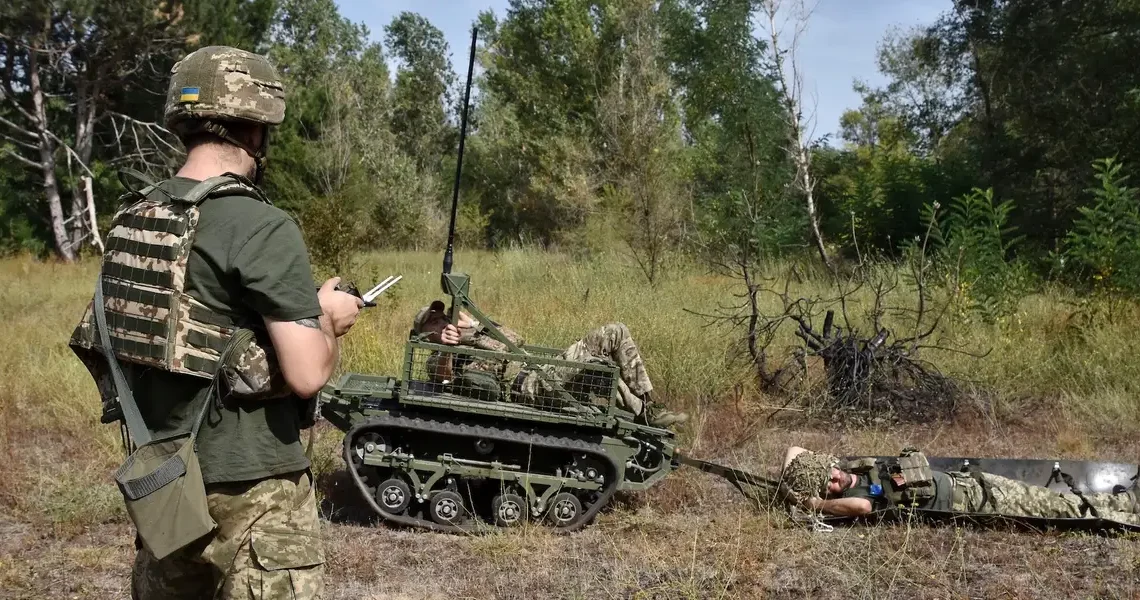
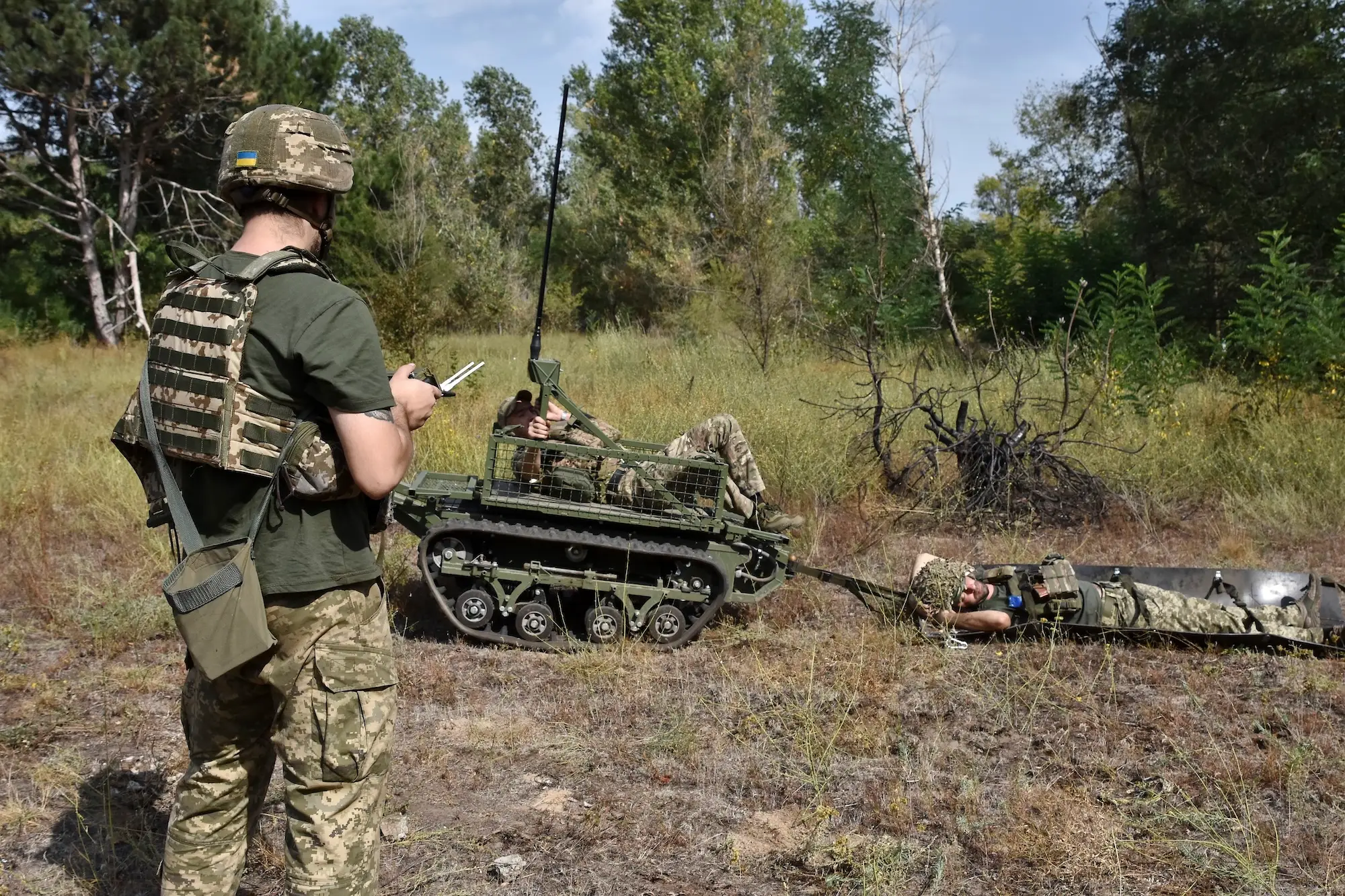
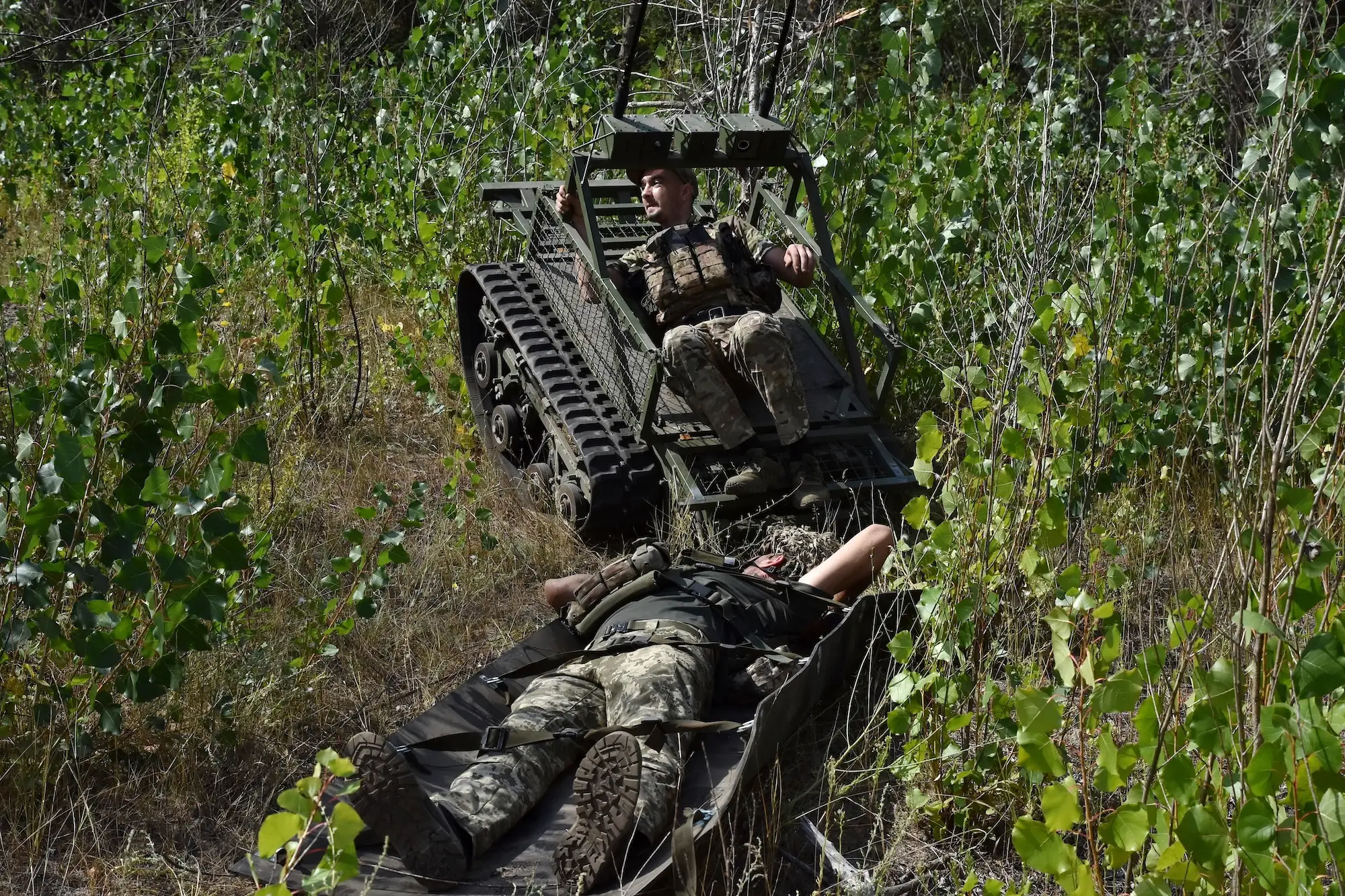
With drones always buzzing overhead, ready to dive bomb soldiers or relay targeting data to an artillery gun crew, it can be far too dangerous to send a human being to rescue the wounded, so Ukraine is turning to robots to evacuate injured troops.
A US veteran in Ukraine who saw them in action told Business Insider they’re effective — and said Ukraine is right to keep them simple and cheap, given that many may not make it back.
Ukraine is using a growing number of ground robots, a kind of drone, to combat Russia’s invasion by carrying supplies, acting as bombs, and evacuating injured soldiers.
Many of these systems come from Ukrainian companies and manufacturers located within Ukraine’s European partners. It’s technology that militaries are increasingly paying attention to, seeing it as a solution that could save lives on the modern battlefield, though across NATO and Western forces, the focus is mainly on doctrine, testing, and prototyping.
Even in Ukraine, uncrewed ground vehicles (UGVs) only make up a small fraction of the drones in use in battle.
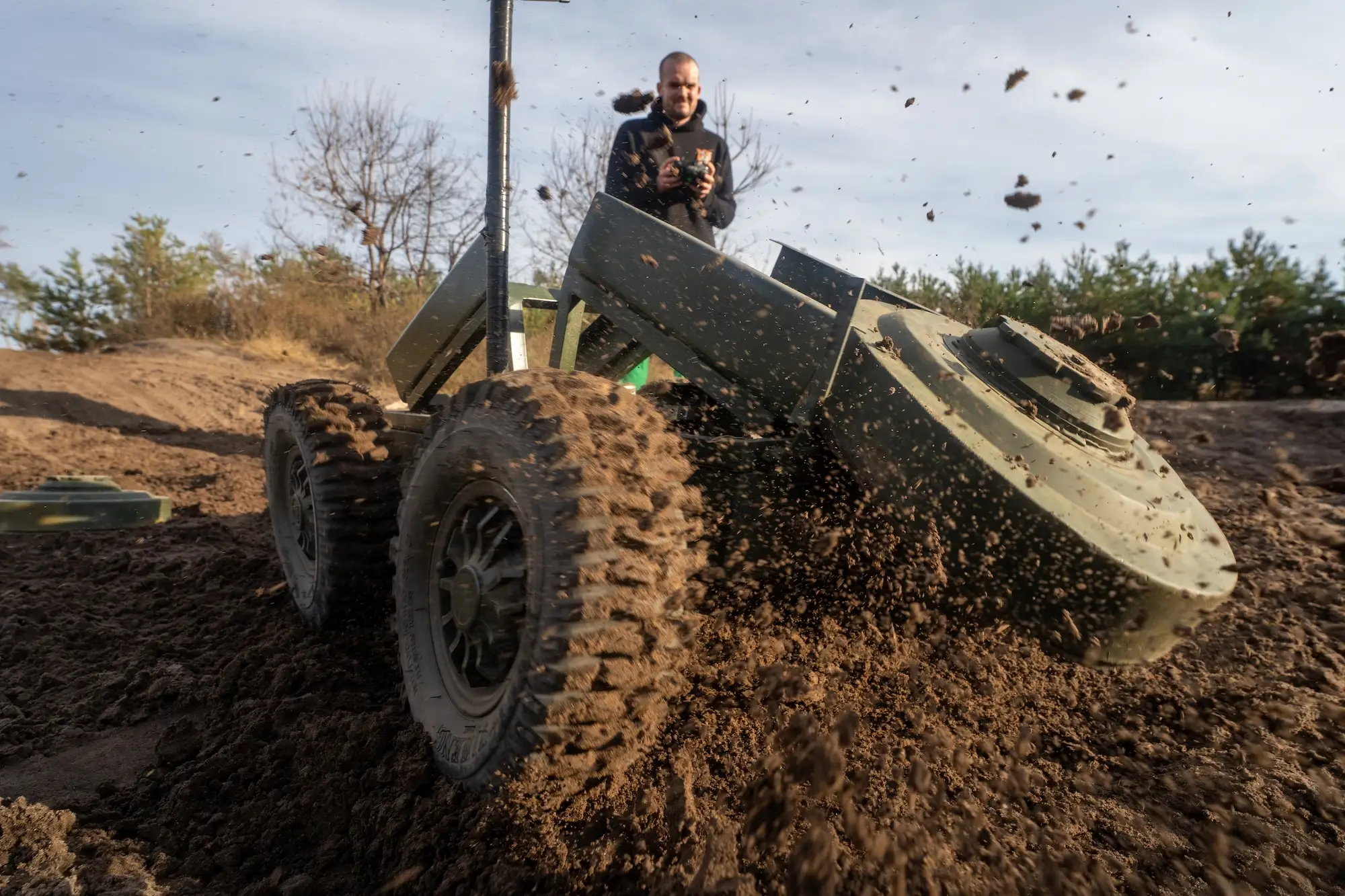
Jeffrey Wells, a US Navy veteran with experience in Afghanistan and Iraq, is now helping out a nonprofit in Ukraine. He told Business Insider that using ground robots for casualty evacuation isn’t perfect, but it’s useful. He said that the West should take note but avoid overengineering or overspending on these kinds of systems.
The robots are “not always a success, but at least it’s something,” he said.
The casualty evacuation robots function like remote-controlled stretchers, but rescuing wounded troops is far from foolproof: with so many drones overhead, they’re easy to spot — and just as easy to attack.
Ukrainian soldiers have pointed to the limits of ground robots in evacuating the wounded, noting that while they can be a lifeline for a wounded soldier when it is too unsafe for their comrades to come get them, they can be jammed, they break down, and they can be targeted just like anything else moving in battle.
Oleksandr Yabchanka, head of robotic systems for the Da Vinci Wolves Battalion, previously told Business Insider that they are a last resort tool because a wounded soldier could wind up in “an even worse situation.”
They are a “last hope kind of thing,” Wells explained. “And that shouldn’t cost a lot of money and should be something that’s easily developed, replaced, and deployed.”
Wells’ work in Ukraine aims to help civilians survive the war. He is there with Task Force Antal, a nonprofit organization run by US veterans that provides medical training, supplies, and evacuation support to civilians, especially in front-line areas.
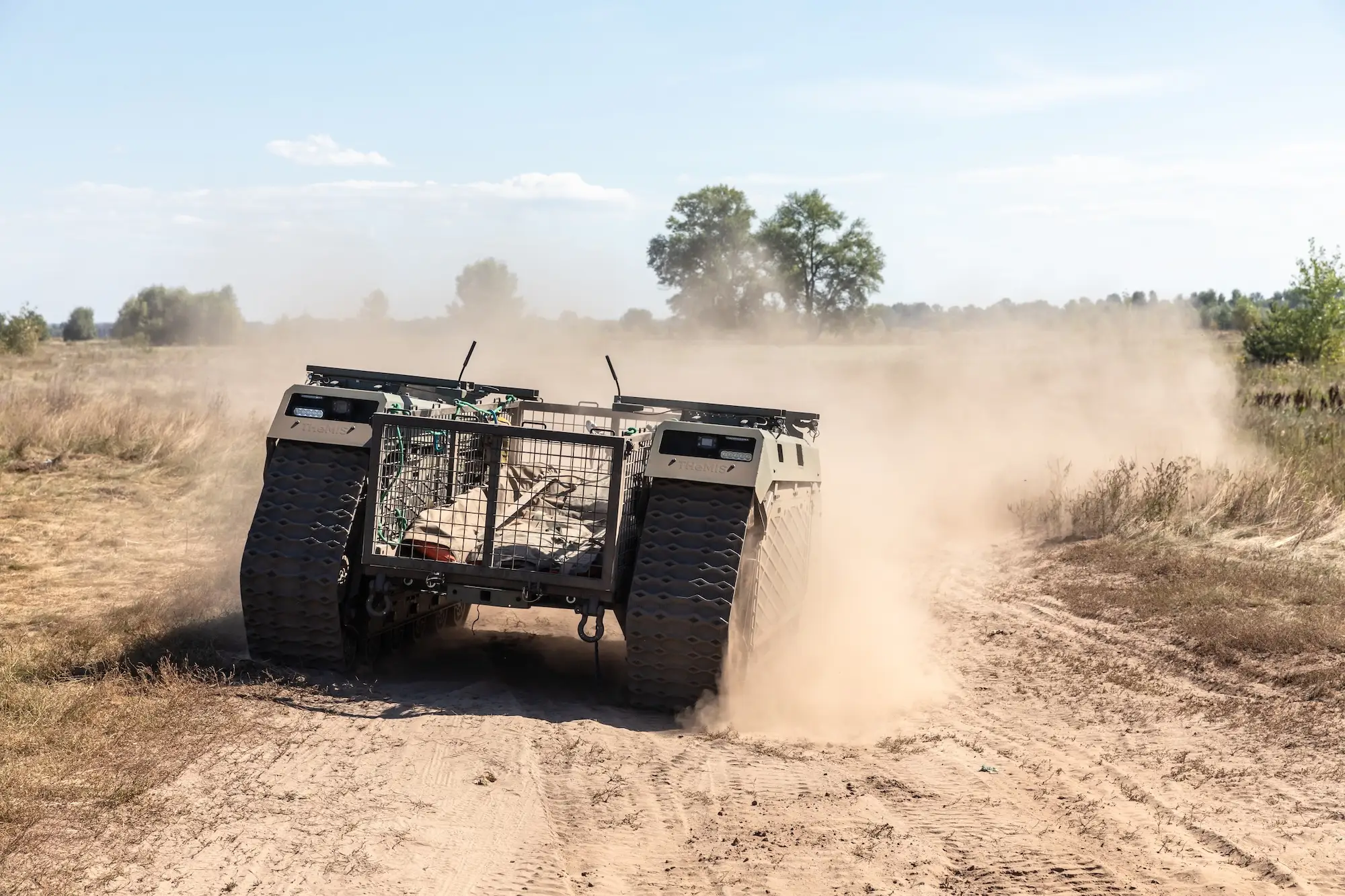
He said that the evacuation robots don’t need to be flawless technology — the tech is evolving so fast that whatever works today may well be redesigned next week anyway. What matters, he said, is getting something usable into the field now, because saving lives outranks engineering elegance.
More of the cheap robots
Wells said the robot he saw in action was “low tech” but got the job done, explaining that he would rather have 10 robots worth $1,000 than one that was more advanced and worth $100,000.
“You kind of just need something that’s effective, essentially a stretcher with wheels that gives hope to the person that’s injured.” It doesn’t need to be more complicated than that.
In talks with Business Insider, Ukrainian soldiers, foreign volunteers, and arms makers have emphasized key lessons for the West: prioritize more cheap systems over a few exquisite ones, don’t pour money into technology that may quickly become obsolete, and resist the urge to overengineer and overspend on gear meant for a battlefield that changes every week.
When it comes to robots for evacuation, Wells said that the best thing is to keep technology cheap and expendable so troops don’t think they “have to use this because it costs so much money.”
Western militaries are increasingly concerned and thinking about casualty evacuation in a high-intensity fight, recognizing that it won’t look like it did in the Middle East, where they controlled the skies.
For decades, Western forces have counted on the “golden hour,” the crucial first 60 minutes after injury when prompt treatment dramatically boosts the chances of survival. But Ukrainian troops often don’t get care within that window, and militaries warn it could vanish in a high-intensity fight with Russia or China as well.
In this kind of combat, it’s harder to get wounded troops off the battlefield. Without air superiority, flying a Black Hawk into medevac an injured soldier to care at a field hospital simply isn’t possible without putting even more troops at risk.
That’s why an increasing number of Western militaries are turning to robots for these missions.
The US Army, for instance, has been exploring using uncrewed systems for casualty evacuation for years. In a 2016 test, the Army’s Telemedicine and Advanced Technology Research Center used a ground robot to evacuate a casualty to an uncrewed aircraft, which then flew the patient to a medical facility for treatment.
After a 2025 event that experimented with drones in casualty evacuation, an Army aeromedical officer said drone technology could “be used to transport wounded soldiers to ambulance exchange points. That capability could preserve the ‘golden hour’ in large-scale combat operations and drastically increase survivability.”
US Army Col. Johnny Paul, a Medical Service Corps officer, wrote in an article this past summer that UGVs are “the next big thing in battlefield CASEVAC,” but the ground robots don’t need to be strictly for casualty evacuation operations.
“Developing medical-only UGVs could be a mistake. Single-use platforms may limit operational flexibility and make them vulnerable to targeting,” he said, writing that the Army should pursue multi-role platforms.
Cost, however, is also a key consideration, as Wells pointed out. US Army Secretary Dan Driscoll made that point this year when explaining the problems with the Robotic Combat Vehicle program, which was looking into robots worth hundreds of thousands of dollars. “We can’t sustain a couple-million-dollar piece of equipment that can be taken out with an $800 drone and munition,” he said.
Some Ukrainian uncrewed systems also cost hundreds of thousands of dollars, but many are far cheaper. Tencore’s Termit robot, for example, runs about $14,000, and commanders say many of the machines their units use cost under $10,000. Even at that low price point, one commander said that three or four might be destroyed in a week — meaning costs add up fast.
Read the original article on Business Insider
The post Robots are evacuating soldiers in Ukraine. A US veteran said they’re best when they’re cheap. appeared first on Business Insider.