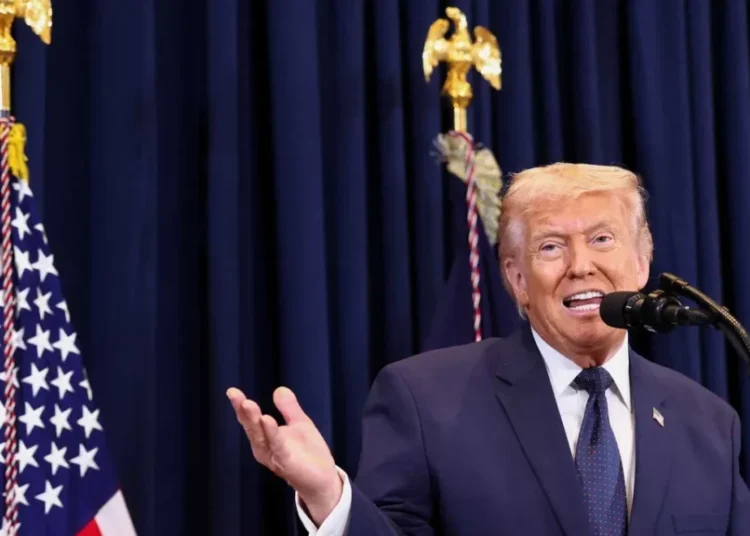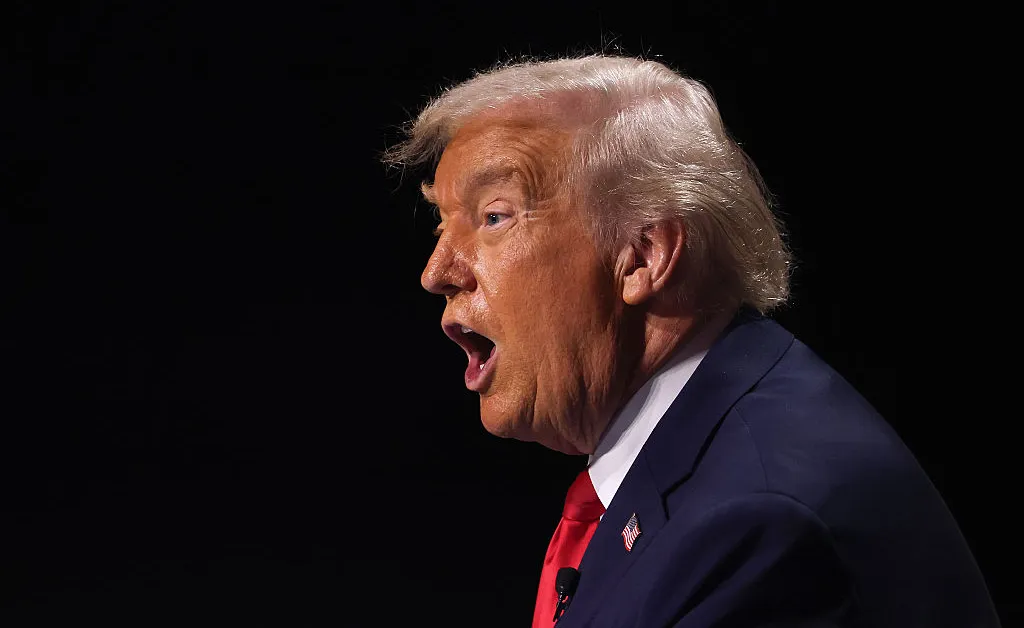
In 2025, Donald Trump returned to global center stage with big plans. In Year One of his second term, he expanded the formal and informal powers of the presidency in ways that challenge the American political system itself. In 2026, he looks set to up the ante at home. But the disruption he has created abroad is set for a sharp turn next year, as Trump discovers the limits of his (and American) power.
[time-brightcove not-tgx=”true”]
No one should ever use the word revolution lightly. It implies a fundamental change in the way a nation is governed—an effort to overthrow what exists and replace it with something new. The motives driving a revolution might be ideological, clashing ethnic or tribal identities, competition for wealth, or a combination of all these. But whatever the force that draws the battle lines, a true revolution always depends on the ability and willingness of powerful actors to seize an opportunity created by a belief across society that the existing system is broken, and therefore illegitimate. Trump has done exactly that.
His revolution is not an economic one. Yes, he has imposed the highest tariffs since the 1930s, moved to undermine the independence of the Federal Reserve, and dabbled in an American form of Chinese-style state capitalism—for example, by acquiring for the federal government golden shares in U.S. Steel, a stake in technology giant Intel, and a percentage of sales by chipmakers Nvidia and AMD. But these policies are tactical changes. They don’t transform how the U.S. economy functions.
Political revolution is another matter, and there is one under way in the U.S.: In 2025, the President consolidated executive authority by pushing the boundaries of the law. He usurped powers traditionally left to Congress, the courts, and the states. He launched a sweeping purge of America’s professional bureaucracy and replaced career civil servants with political appointees personally loyal to the President. He weaponized the “power ministries”—the FBI, the Justice Department, the IRS, and many regulatory agencies—against his domestic political adversaries. He has secured executive impunity from the rulings of an independent but no longer coequal judiciary.
And yet, U.S. institutions may check the President’s power in 2026. The Pentagon’s purges of some high-level military officers have made headlines, but there’s no evidence they have undermined the military’s core operational integrity. Multiple courts have ruled against the President’s expansion of powers, and they may do so again when the Supreme Court rules on his use of emergency powers to impose sweeping tariffs. U.S. governors and mayors still govern independently of Washington. Recent election setbacks for Republicans in several states have gotten the President’s attention. In short, the fate of Trump’s political revolution remains uncertain.
The evolution in 2026 of his influence abroad is easier to predict. The President’s second term began with a push to transform America’s role in the world by unilaterally upending the existing global trade and security order, halting foreign aid, and ending Washington’s promotion of democracy abroad. The goal remains to restructure international relations into a hub-and-spoke model of U.S.-centric bilateral relations that profit America. The message to other governments was plain: Get on board or else.
But many of Trump’s efforts have provoked unexpected outcomes. In particular, he expected that an effective boycott of Chinese goods would force an economically weaker Beijing to accept trade terms more favorable to the U.S. Instead, China placed restrictions on rare earth minerals, which are essential ingredients for a vast array of digital-age consumer and military technologies. That move forced President Trump to back down and offer concessions in the form of Chinese access to American-made semiconductors and other technologies—a move that Trump, and President Biden before him, have been determined to restrict.
In the process, this confrontation revealed that the U.S. still needs help from its allies. In 2026, Trump will engage Xi Jinping to try to stabilize the U.S.-China relationship, but he also wants to pursue a longer-term decoupling strategy that requires consistent coordination of investment and policy with traditional U.S. partners, including the development of alternative rare earth supplies. In months to come, that means that other countries—from Japan, South Korea, and Australia to Brazil and Saudi Arabia—will have a newfound bargaining power in trade talks with Washington.
Then there’s the stubbornly high cost of living. Trump secured the most extraordinary political comeback in American history in 2024 in part because a majority of voters believed he’d manage the economy and rein in inflation. But polls now show those voters’ expectations have been dashed, and consumer sentiment continues to darken. That, in turn, will limit his foreign policy options—and other governments know it. The Administration has already been forced to back down on tariffs on food imports from Brazil, Argentina, Ecuador, El Salvador, and Guatemala, with other countries also positioned to benefit. These pressures on Trump will intensify if retailers raise prices to cover higher import costs. It’s another reason we can expect Trump to be significantly less aggressive on trade terms in 2026 as fears grow of a possible Democratic victory in the November midterms.
Another limit on the President’s power: much to his continuing consternation, Trump will also discover in 2026 that none of his threats and promises against Ukraine or Russia will end their war. His strategy for most of 2025 was to present Russia’s Vladimir Putin with carrots and to threaten Ukraine’s Volodymyr Zelensky with sticks. This early approach forced European leaders to take greater diplomatic and economic leadership on Ukraine’s defense, and the result has been more European defense spending, more financial support for Ukraine, and a growing appetite for the seizure of hundreds of billions of dollars in Russian assets frozen in Europe. This new reality has boosted Europe’s ability to keep Ukraine in the fight in 2026 no matter what path Trump chooses next. Putin sees no advantage in making a deal, and Trump will lack the leverage to force him to compromise in 2026. Zelensky doesn’t have the domestic backing necessary for a deal that cedes territory.
In the Middle East, Trump’s signature success has been securing a lasting Gaza cease-fire—despite intransigence from Israeli Prime Minister Benjamin Netanyahu—and Hamas’ release of the remaining Israeli hostages. Arab allies had quickly vetoed Trump’s stated plan in February to rebuild Gaza as the “Riviera of the Middle East” and its proposed displacement of Palestinians. As a result, Trump has learned that lasting peace will demand a multilateral approach, one that gives Gulf Arabs new negotiating leverage with the White House.
In short, 2025 marked the peak of unilateral Trump on the global stage. In 2026, his foreign policy tactics will need greater buy-in from other governments to achieve his election-year goals. There is downside risk here, to be sure. As the President becomes frustrated with constraints on his power, he could lash out in areas that trigger more instability than he bargained for—against Nicolás Maduro’s Venezuela, for example. The chaos that might follow possible regime change there could send new waves of refugees flowing across the region’s borders.
No, Trump’s inability to maintain a unilateralist foreign policy won’t force him to become a liberal internationalist, talking up the indispensability of America and its alliances, cutting a new U.S.-Mexico-Canada trade deal, taking leadership on the postcarbon energy transition, or paying back dues to the U.N. But this will be the year the bubble bursts on the President’s vision of a Trump-dictated global trade and security order.
The post How Trump’s Power Will Be Checked in 2026 appeared first on TIME.