Texas is known for its deep devotion to private ownership and staunch aversion to government spending. So why, for much of the past year, has the state been on a land-buying spree to expand its park system?
The answer might seem like a one-liner: A Republican megadonor and an environmental activist got into an argument on social media about the role of wind turbines in harming birds.
Four years ago, Doug Deason, a Dallas megadonor, posted about how wind energy injured eagles and other raptors. Luke Metzger, the leader of Environment Texas, jumped into the thread, noting that carbon pollution would kill far more birds.
“I couldn’t help myself,” he recalled. “He and I went back and forth on it.”
Their brief online spat turned into an unlikely friendship, and a political alliance. The story of their success, which the two men agreed to tell in detail, illustrates the promise of social media to bridge political divides — while also underscoring just how rare such connections actually are.
“I hardly ever see what the left thinks about any issue,” Mr. Deason said in an interview, “because most of the people I follow are on the right. So I get that fed back at me.”
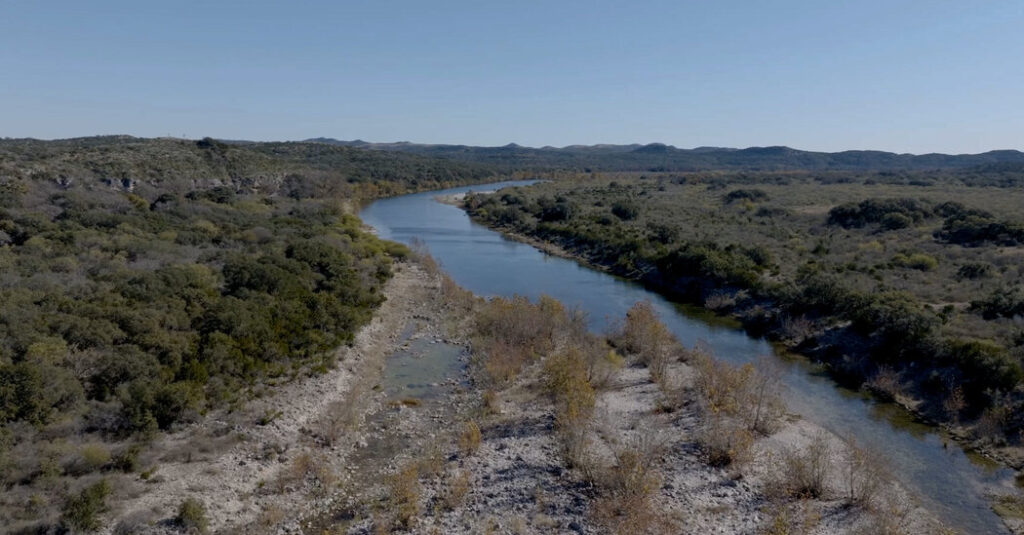
Their improbable connection eventually paved the way for a $1 billion state fund created in 2023, which is now poised for its first major deployment as part of the acquisition of a 54,000-acre ranch in the Texas Hill Country about two and a half hours west of San Antonio.
It will be the largest addition to the Texas park system in decades.
The land, with its bucolic rolling hills and streams, will be the state’s second-largest state park. A commission gave approval for the acquisition last month, though the deal is still being finalized.
The largest portion of the ranch belongs to the Moody Foundation, which is donating it to the state. If approved by a legislative board, the new fund could be used to acquire the rest of the land, said Rodney Franklin, the director of state parks for the Texas Parks and Wildlife Department.
“As my granddad used to say, they’re not making any more land,” Mr. Franklin said. “The things we’re doing now are going to impact the next generation of Texans.”
The new park would be the latest use of the fund to develop new parkland and expand existing parks, including in the Hill Country. And it would make up for the loss in 2023 of a popular park in between Dallas and Houston that the state had been leasing. The owner sold to a private developer who planned to replace the park with luxury homes and a golf course.
Demand for outdoor recreation in Texas has grown with the population. The state park system drew nearly 10 million annual visitors in 2022, up from around eight million in 2015, according to the parks and wildlife agency.
For years, environmental groups have been pushing the Legislature to set aside money for expansion. “And for many, many years, the Legislature ignored us,” said Cyrus Reed of the Sierra Club Lone Star Chapter.
Then Mr. Metzger and Mr. Deason made their push, demonstrating that, even in a large and diverse place like Texas, the business of politics is often about who you know. No matter how you met.
A year after their first online interaction, Mr. Metzger recalled their brief first interaction when environmentalists were brainstorming ways to convince Republicans to support their plan to expand the state’s park system.
He didn’t know Mr. Deason, but he researched him online, learning that he was an outdoorsman. More consequentially, he had once boasted to a Dallas magazine about having the cellphone number of every statewide official.
“And I knew he really cares about birds,” Mr. Metzger said. So he decided to take a shot, following up on their public exchange by sending Mr. Deason a private message on Twitter.
Environmentalists and conservatives have often found common ground on land conservation, and the pitch was simple: Texas had fallen behind. Lawmakers had not made a major investment in new parkland since the 1960s. The money had all but dried up decades ago, leaving Texas in the bottom tier of states in terms of parkland per capita. The following year, 2023, was the 100th anniversary of the Texas park system, and the state had a multibillion-dollar budget surplus. It was the right time to make a big funding push.
“In this work I often send shots in the dark, and nine times out of 10 I get no response at all,” Mr. Metzger said. “I was ecstatic that he actually responded.”
Not only did Mr. Deason respond, he threw himself into what became known as the Centennial Parks Conservation Fund. “I got really passionate about it because it made so much sense,” Mr. Deason recalled. “It’s embarrassing that we’re 35th in the country. It’s an absolute travesty.”
Mr. Deason said he had called the lieutenant governor, who was quickly brought on board, as well as the speaker of the State House and several representatives. And he talked to the governor about it.
“I meet with him quite often,” Mr. Deason said. “He was super pro.”
He also called Tan Parker, a state senator from the Dallas area, who eventually shepherded the bill. Because the plan involved dedicated spending outside the state’s constitutional limits, an amendment was required — and that would have to go to the voters.
Mr. Parker recalled the effort as a rare and welcome instance of bipartisan agreement in the State House. He also argued to his Senate colleagues that more parks would help address the mental health problems plaguing young people who spend too much time on social media.
“Get them with their families and their buddies in the great outdoors is the best thing we can do,” Mr. Parker said in an interview.
Mr. Metzger said that he worried about their chances as some Republican members of the State House had balked at the $1 billion price tag. But Mr. Deason insisted that they hold firm.
“I was like, ‘We’re not budging, we need a billion,’” he said. The pair also helped ensure passage by keeping environmentalists and other lobbying groups from trying to push additional parks projects as part of the effort.
“Luke on his own probably wouldn’t have gotten it done, because he’s a Democrat and an environmentalist, and there are a lot of Republicans who wouldn’t take him seriously,” Mr. Deason said.
The measure passed with overwhelming support in both chambers in the spring of 2023, and voters approved funding for the new parks later that year. The environmentalist and the donor who made it happen have stayed in touch. “I consider him a friend,” Mr. Metzger said.
“Luke is a great guy,” Mr. Deason said. “He and I agree on so many things and have so much in common. But you’ve got to figure that out. You’ve got to get to know the other side.”
J. David Goodman is the Houston bureau chief for The Times, reporting on Texas and Oklahoma.
The post How a Left-Right Social Media Tiff Pushed Texas to Fund Parks appeared first on New York Times.