As Israeli Prime Minister Benjamin Netanyahu flies to Florida for a Monday meeting with President Donald Trump at Mar-a-Lago, the White House’s focusis on unveiling a technocratic Palestinian government and International Stabilization Force. But there’s plenty of other unfinished business to discuss, including the shaky ceasefire in Lebanon.
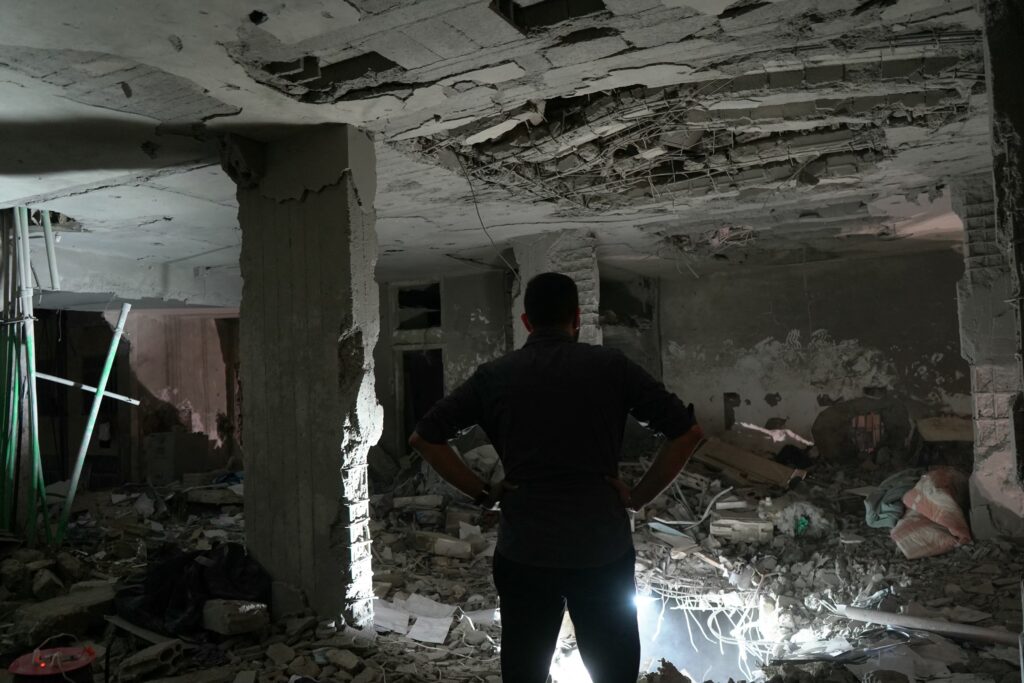
Lebanese Prime Minister Nawaf Salam insists his government is on track to meet an end-of-year deadline to disarm Hezbollah south of the Litani River, a key requirement of its deal with Israel. But many are skeptical about the sincerity of the government’s commitment to full disarmament. Israel continues to routinely launch strikes while complaining that not enough progress has been made, as Lebanese officials express fear of a large-scale Israeli military operation.
Some level of Israeli involvement in ongoing disarmament is inevitable, but there’s plenty the U.S. can do to minimize the risk of reigniting a broader war. The more the Lebanese government is pressed to accomplish on its own, the less Israel must do — and the less Hezbollah can use Israel as a scapegoat to justify its existence.
Doubts remain about the ability of the Lebanese Armed Forces (LAF) to get the job done. Last month, they refused to search private property in the south for weaponry. Even if the Lebanese manage to fulfill their promise by the end of the year, there is no clear timetable or strategy for disarming Hezbollah in the north.
Meanwhile, Hezbollah continues taking steps to rebuild with help from Iran. The mullahs in Tehran are funneling money through Dubaito reconstitute their favorite terrorist proxy force. This rebuilding effort is part of the reason Israel felt compelled to take out Hezbollah’s military chief of staff, Haytham Ali Tabatabai, in a suburb of Beirut last month. On Thursday, the IDF said it killed Hussein Mahmoud Marshad al-Jawhari, a senior member of Iran’s Quds force, in southern Lebanon.
Lebanese leaders remain in a difficult position. In a country haunted by memories of civil war, the government doesn’t want a direct confrontation with Hezbollah, whose political party maintains influence among the Shiites who make up about a third of the population. Going into May’s parliamentary elections, Hezbollah’s politicians will argue to war-weary Lebanese that they need their weapons to protect national sovereignty while Israel continues to strike.
The most important thing Trump can do is apply consistent pressure on the government in Beirut. Hezbollah and Iran will bide their time, hoping America loses interest. Trump’s envoys deserve credit for encouraging ongoing dialogue between Lebanese and Israeli officials. The administration can bolster their efforts by rolling out an Iran strategy that curtails its ability to help Hezbollah gets off its back foot.
Trump can also condition aid to the Lebanese on measurable outcomes. The newly enacted defense bill stipulates that U.S. aid to the LAF must go towards efforts to disarm Hezbollah. The LAF has received more than $3 billion in U.S. support since 2006. The defense policy bill also requires a review of Lebanon’s progress come June, with “options for suspending assistance” if they’re not moving quickly enough “to disarm Hezbollah.” That’s a good stick for Trump to have in his back pocket.
The U.S. can also flex its influence in forums like the International Monetary Fund, which help prop up Lebanon’s failed economy, by demanding that loans and financial assistance are tied to strict accountability in rooting out government corruption. If the Trump administration goes forward with the sale of F-35s to Saudi Arabia, the president could ask Riyadh to hold off on new trade deals with Lebanon until Hezbollah’s arsenal is diminished.
The end of one war in the Middle East kicks off the countdown to the next. If the president wants credit for a lasting peace, he cannot turn his attention away from the region in 2026.
The post Unfinished business in the Middle East appeared first on Washington Post.