Venezuela has been commandeered by a group of criminals masquerading as a government. A nation that continues to be run by Nicolás Maduro and his cronies will continue to sow instability, encourage migration and enable illegal armed groups that endanger the United States. A free and democratic Venezuela, on the other hand, could be a source of stability and economic growth for the entire Western Hemisphere.
If, as the Trump administration has laid out in its new National Security Strategy, there is to be a renewed focus in the hemisphere, then restoring democracy in Venezuela must be a top priority. Mr. Maduro has presided over a narco-trafficking boom and allowed armed criminal groups to operate within Venezuelan borders; he has cultivated relationships with other authoritarians; he is under investigation by the International Criminal Court for crimes against humanity; he has ignored election results that independent monitors said he lost and hardened his dictatorship. Settling for anything short of his exit risks undermining American credibility, encouraging our adversaries and demoralizing those fighting for liberty and democracy.
It is far from certain whether Mr. Maduro will leave power. If he does, his departure may be the easiest part of bringing Venezuela back into the democratic fold. Rebuilding the country will require a focused regional effort, particularly from the United States. It will also present serious challenges that can only be overcome with sustained support.
This may be our last chance to get it right.
Since President Barack Obama was in office, every administration in Washington has declared that Venezuela represents an extraordinary threat to the United States. It’s one of the rare issues that has enjoyed bipartisan support in Congress. When I was ambassador to Venezuela from 2018 to 2023, we used a campaign of maximum pressure during President Trump’s first term to isolate Mr. Maduro and compel him to allow democratic voices to be heard. During the Biden administration, I used a combination of pressure and incentives to enter into negotiations that eventually led to a national election that the available evidence shows the opposition clearly won. Yet neither negotiation nor pressure has yielded the outcome the people of Venezuela deserve.
In his current administration, Mr. Trump has tried both tactics. Initially, the administration used backdoor diplomacy to help Chevron regain its license to sell oil, secure the return of illegally detained Americans and get Venezuela to accept the return of some of its citizens. The policy quickly returned to maximum pressure with the deployment of a large percentage of the U.S. Navy and the targeting and destruction of suspected drug trafficking boats in the Caribbean. Serious questions about the legality and efficacy of those strikes has now thrown bipartisan support for change in Venezuela into doubt. The policy also isn’t likely to age well: Drug trafficking organizations will almost certainly simply change how they move drugs north, and our regional partners in tackling transnational criminal organizations may be less likely to share intelligence moving forward.
Going after sanctioned vessels, stateless ships and the global ghost fleet operating clandestinely without proper identification is a more effective and acceptable way to start peeling back the funding the Maduro regime uses to remain in power. Not only does the interdiction of stateless vessels enjoy some basis in international law, it can also have a chilling effect on any entity thinking about trading in black market oil from Venezuela. The administration should go a step further and seek international agreement with the International Maritime Organization and key partners to stop the ghost fleet that operates in sanctioned oil everywhere in the world. Squeezing this revenue stream would help force a tough decision by those around Mr. Maduro to recognize that life without him in power is preferable to him remaining.
Washington should approach dismantling the Maduro regime as we would any criminal enterprise. Venezuela is a failed state riddled with illegal armed groups and foreign terrorist organizations. FARC dissident factions, ELN and Tren de Aragua, among others, operate there in an environment where the state is either complicit in their activities or incapable of halting them. The Trump administration should create an interagency task force, drawing on the authorities of the intelligence community and the Treasury and Justice Departments, to work with the democratic opposition and identify trusted elements in Venezuela’s armed forces to take charge of security during a political transition if and when Mr. Maduro leaves power. We learned the lesson of de-Baathification in Iraq, when disaffected former members of the military fueled a costly insurgency that slowed the rebuilding of Iraqi society.
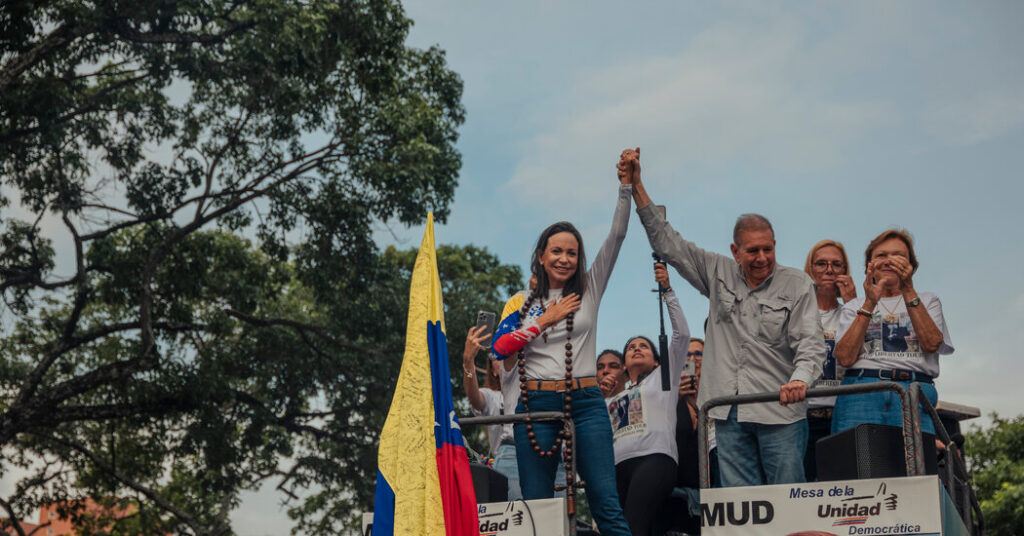
The task force could work with President-elect Edmundo González and the leader of the opposition, the Nobel Prize laureate María Corina Machado, to game out how to quickly re-institutionalize the country in a way that represents all democratic points of view. While over 25 years of Chavismo has left Venezuelan institutions bereft of funding and knowledgeable and independent leadership, the country for many years had some of the best hospitals, universities and basic infrastructure in the region. This can be rebuilt with focused effort and investment, although the loss of expertise from the dissolution of the U.S. Agency for International Development may complicate our support. The task force could also help to restructure the vast debts of the Maduro dictatorship to jump-start Venezuelan reconstruction.
Most democratic transitions in the Americas have been accompanied by some form of transitional justice program that has included amnesty. If there is a transition to democracy, the Venezuelan people will have to decide what is acceptable to them. Granting amnesty to generals involved in crimes against humanity, narcotics trafficking and illegal detention and murder is likely too tall an ask, but others who benefited from the corrupt system may need an opportunity to be rehabilitated for a transition to be successful.
Mr. Maduro is as isolated as he has ever been. His apologists are finding it increasingly difficult to come to his defense. But shows of force alone are unlikely to convince Mr. Maduro of the inevitable end to his illegitimate reign. As a former diplomat, I believe in the power of negotiation, but that negotiation must be based on Mr. Maduro’s exit. The Trump corollary to the Monroe Doctrine cannot become “talk brashly and merely show the stick”; it’s unlikely that we will bluff our way into policy success. Economic pressure coupled with clearly defined offramps for regime insiders, an appealing package to those clamoring for change within Venezuela and the credible use of targeted force may all be necessary elements for a successful outcome.
We have raised the hopes of the people of Venezuela. We can’t let them fall again.
Jimmy Story is a retired U.S. ambassador to Venezuela and a founding partner of Global Frontier Advisors.
The Times is committed to publishing a diversity of letters to the editor. We’d like to hear what you think about this or any of our articles. Here are some tips. And here’s our email: [email protected].
Follow the New York Times Opinion section on Facebook, Instagram, TikTok, Bluesky, WhatsApp and Threads.
The post This May Be Our Last Chance to Get It Right in Venezuela appeared first on New York Times.