The election was divisive, pitting an established moderate against an upstart progressive in the large, Democratic city. For a while it seemed like it would be close, but in the end the progressive won definitively, powered by a relentless focus on affordability and adept use of short-form video.
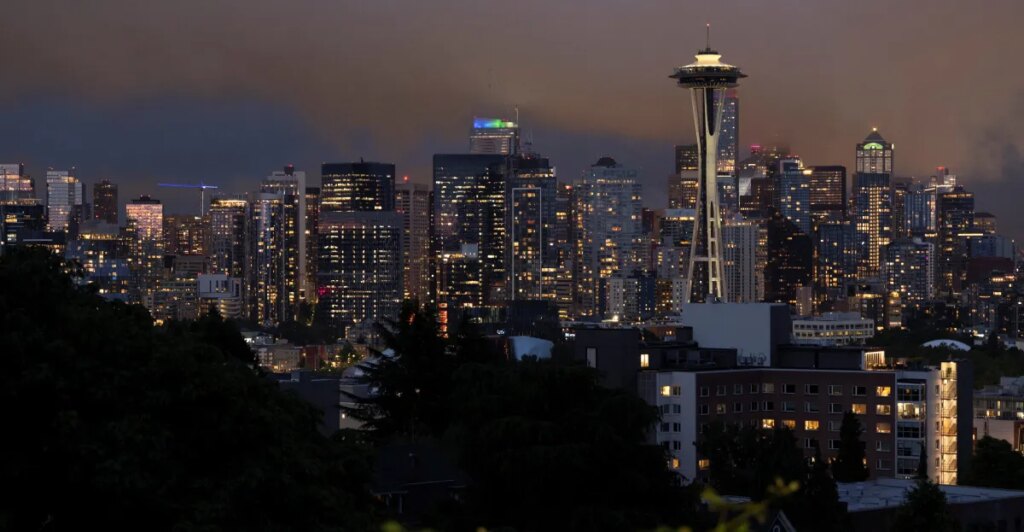
Mamdani? New York? You must be confused — I’m talking about Seattle mayor-elect Katie Wilson.
The 43-year-old political neophyte, whose term begins next month, joined Today, Explained guest host Astead Herndon to talk about her social media strategy, why she thinks the popular new political strategy known as abundance is insufficient on its own, and the other most famous new mayor in America. Below is an excerpt of the conversation, edited for length and clarity. There’s much more in the full podcast, so listen to Today, Explained wherever you get podcasts, including Apple Podcasts, Pandora, and Spotify.
Can we get a sense of how you arrived at this point, for those who are unfamiliar with you? How did this race come to be, and how did you win?
It’s been a wild ride this year. One year ago today I had absolutely no thought of running for any elected office, let alone mayor.
Key takeaways
- Katie Wilson, a young democratic socialist and political newcomer with a background in community organizing, is Seattle’s mayor-elect.
- Like Zohran Mamdani in New York City, she won by focusing on affordability, particularly around housing, and with a slick online campaign featuring short-form videos — but she had little experience with social media before.
- She says many of the abundance movement’s ideas have been popular on the left in Seattle for years, and are useful — but that the movement is missing a few ideas about what’s necessary to realize its vision.
I’ve spent the last 14 years as a community organizer and coalition builder running an organization called the Transit Riders Union, and I jumped into this race in March. In February, we had a special election on approving a funding source for our new social housing developers. So we had this social housing developer in Seattle, which was approved by voters last year. And this year, there was a citizens’ initiative to enact a tax on wealthy corporations to fund that social housing developer. And our current mayor was kind of the face of the opposition campaign to that measure, which passed by a landslide in February.
So to me, that kind of showed that our current mayor was very out of touch with the challenges that Seattle residents are facing around affordability and specifically housing affordability. And I realized that there was a lane there.
I think coming into this year, everyone basically assumed that he was going to coast to reelection, because he’d been very successful at building the kind of institutional business-labor coalition that’s considered necessary to win an election in Seattle.
And so I jumped in and quickly realized that it was part of a larger moment, with Mamdani in New York City and the affordability crisis that people around the country, and especially in high-cost cities like Seattle, are facing today.
You mentioned the Mamdani comparison, which I know has happened frequently. Should we see this as a kind of win for Democrats seeking ideological change, generational change — or is it both?
I think there’s a lot of aspects to it. I think that the affordability crisis really is a big part of this. Coming out of the pandemic, we saw these high rates of inflation, and it’s gotten to the point where in cities like Seattle, it’s not just the lowest-income households that are feeling the pinch. People who have decent jobs, who consider themselves to be middle-class, are just looking around and saying, “I don’t know how much longer I can hold on in this city.”
Housing costs, child care costs, grocery costs, restaurant costs — everything is so expensive. And so I think that’s a really important part of the moment that we’re in.
There’s also local factors, and here in Seattle we have an escalating homelessness crisis. Our rates of unsheltered homelessness are just off the charts, even compared to our peer cities. And so that was also a factor here.
And then obviously there’s kind of a generational aspect to this, and there’s to some extent a reaction against Trump’s election. This is maybe related to the generational shift, where people are looking for a new, bolder kind of leadership that can meet the moment. There’s a certain kind of transactional establishment-Democratic Party politics that obviously failed to meet the moment last year that people are kind of reacting against, and looking for something new.
You mentioned that you think this doesn’t happen without the kind of focus that you and some others have put on the question of affordability. I wanted to go back to your history in community organizing. It seems as if you’ve been living with these issues for a long time.
How will we define the affordability issue in general? Are we talking housing costs, health care costs? What do you think is under the umbrella that is really pinching people right now?
It’s really all of the above, but I think in cities like Seattle, housing is really at the core, and it’s also at the core in terms of the levers that the government can pull to make things better.
I moved to Seattle over 20 years ago, and my husband and I rode the Amtrak with our stuff in boxes and found an apartment, or just a room in someone’s basement, that we could rent for $400 a month and got part-time jobs, and [we] kind of found our feet.
That kind of story is just not possible today. It’s this kind of pressure-cooker environment.
Yeah, I was thinking, $400. Great!
I mean, this was back in 2004, but there’s this sense of just immense pressure where you’re just hustling 24/7 just to pay your basic bills. And I think that the housing crisis is really kind of at the core of that. Again, in cities like Seattle where housing costs have risen much faster than inflation, much faster than wages.
I want to also ask about how you translate that into a campaign: Activating people as a “coalition of renters” — a term I’ve heard people use — and bringing folks to the ballot box is a little bit of a different thing.
One of the things we noticed was a campaign ad that you ran about a high cost of pizza. Can you tell me how you took your focus as a community organizer and translated it into the mayoral race? And specifically about that ad? The pizza ad, I’ll say — it is funny because I’m totally not a social media person in my personal life at all. And so then having to become a social media person and be in videos was a little bit of a thing for me, but I did it and with some success … We’re all YouTubers now! Get used to it.
I think it’s so important — and this is really something that I hope to carry into the mayor’s office — that we’re able to really have an honest conversation with the public where we’re educating people about policy. And it’s not just about slogans. It’s actually about, okay: Why is the cost of pizza so high? How is this related to housing costs? And we have to treat voters like adults and believe that they can actually understand things, and you need to make things simple enough that you can explain it in a few-minute video. But you can actually communicate quite a lot in a few-minute video.
I really think that that kind of public education and having a real conversation with the public about the challenges that we’re facing and why they exist and what the solutions are — I think that’s super important, and I think that that’s something that I really want to continue for the mayor’s office.
We talked to Ezra Klein about his book Abundance, and it made an argument that rings true to some of our conversation. One of its core points is that blue cities have not delivered for their constituents, and that they prioritize things like process or red tape over the kind of delivering that you’re talking about.
I wanted to know what you thought of that argument. He specifically makes one point in relation to housing, saying how people need to embrace the supply side, or the role of real-estate markets, to build new housing supply.
Is that a transition that you had to come to, or was that something that was natural to you to see?
I feel like some of the book’s themes are not at all new in Seattle for some years. We’ve had an urbanist left in Seattle that’s basically on board with the abundance agenda when it comes to housing, that really recognizes the role that zoning and land use laws have played in slowing housing production. And that [group] is 100 percent there on changing those laws and on permit reform. That’s something that has been in the air here for some time.
I do think that there are some limitations in the kind of desire to have this narrative around our problems, [that they exist] because well-meaning liberals, progressives put all these rules and regulations in place. I think there’s a lot of other big factors too that are also important.
I would love to hear you draw out what you think are some of the things that go beyond that, and the ways you try to shape your politics around other forces too.
They begin the book with this description of life in 2050 once the abundance agenda has been achieved. And it sounds great. And one of the things that they mentioned is that we have a lot more leisure time now. The work week has been shortened because productivity is so much higher. And when I got to that, I just immediately began thinking of the level of social upheaval and frankly, class struggle that would have to take place in the next quarter-century in order for major productivity gains to actually result in a shorter work week.
So I think there’s just a power analysis maybe that is a little bit missing from their narrative, which is fine if they’re just aiming to be like, “Here are a few things that we should do.” But if they’re pitching it as more of a story that explains everything, then I think that there’s definitely some things that are missing.
Why do you think national Democrats were at such distance from their own voters in the last year, and what do you think they should take from campaigns like yours?
I think it goes back to a lot of the things that we’ve been talking about. To use this mayoral election as that capsule, the incumbent mayor had kind of built all the interest groups around him who were going to support his reelection, but he didn’t realize that his constituents were worried about paying the rent or paying for their child care, and he wasn’t speaking to that effectively.
So I really think it’s about really just understanding where people are at and speaking in a way that resonates with them, and also painting a picture of a future that we want and that we can build together. And there needs to be this sense that you actually believe in it.
This is not just like, message-tested, focus group-tested, consultant speak, or whatever, that you’re putting out into the world, but it’s actually something that you believe in and that you feel yourself. People want that genuineness and that sense of integrity and vision, and that’s what wins. That’s something you can’t buy.
The post America’s other populist, socialist big-city mayor appeared first on Vox.