Politicians say they want a manufacturing renaissance, but their visions of massive factories employing thousands of people are going to be few and far between in real-life America.
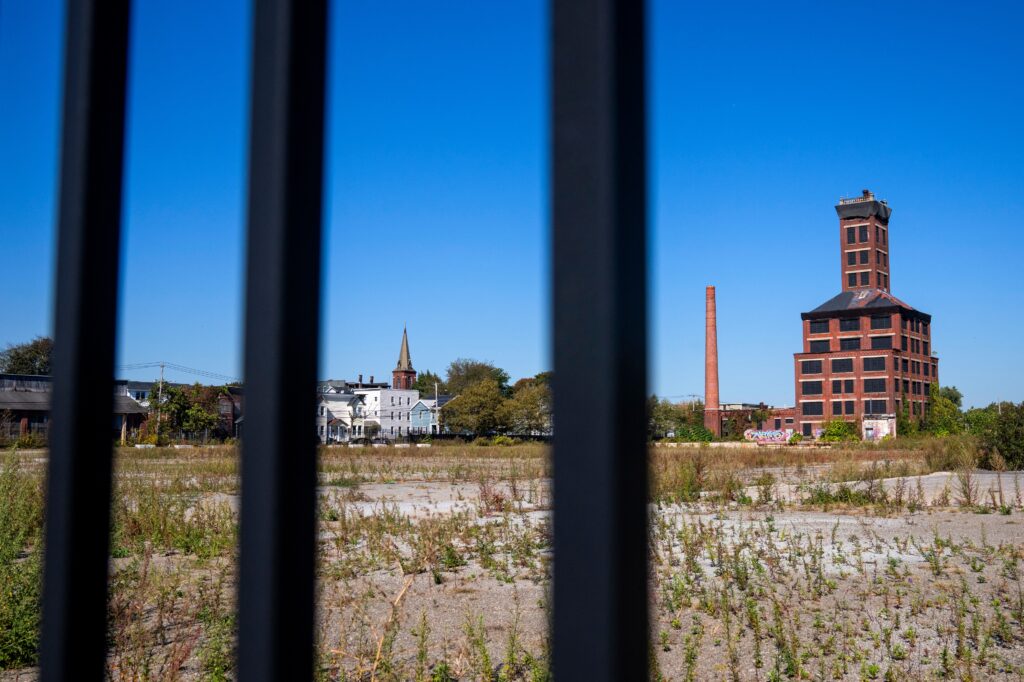
Some places have had manufacturing renaissances. The Post recently covered one: Bridgeport, Connecticut. “An old manufacturing city sputters back to life,” the headline said, and the manufacturing industry has indeed improved since the covid pandemic.
The story highlighted successful vocational education programs that are allowing workers who don’t attend college to develop skills as welders and technicians. Employers are scooping them up and paying them well. New companies are taking over old industrial sites and putting them back into service. Bridgeport, the one-time home of Remington and divisions of General Electric, filed for bankruptcy in 1991 but has gotten back on its feet.
It’s the feel-good story politicians want to hear. At the same time, it barely registers in the overall data on Bridgeport’s economy. Manufacturing employment in the Bridgeport-Stamford-Danbury metropolitan statistical area (MSA) has seen a small bump but remains near 30-year lows, according to the Bureau of Labor Statistics.
Real manufacturing output in the Bridgeport metro are a has been rising but is also quite low compared to before the Great Recession, according to the Bureau of Economic Analysis.
The turnaround in the past few years is that manufacturing is no longer a drag on Bridgeport’s GDP growth, as it was during most years since the Great Recession. It flipped positive in 2021 and has remained barely above zero since then.
That’s not the feel-good story politicians want to hear. Why aren’t these obviously succeeding businesses showing up more in the data? The answer lies in the story itself.
Bridgeport’s success has been in cultivating low-volume, high-skilled manufacturing. The companies mentioned are building accessories for rowing or advanced ceramics for semiconductors, not mass producing consumer goods. And they employ dozens of people, not thousands.
It is because the jobs are relatively few in number that they are relatively high in compensation. These newer, successful manufacturing companies in Bridgeport don’t have assembly lines with workers performing repetitive tasks. They have high-skilled workers meeting exacting specifications for a relatively small number of picky customers.
That’s what most American manufacturing firms look like today. Ninety-eight percent of U.S. manufacturing firms employ fewer than 500 people, and 93 percent employ fewer than 100, according to 2022 data.
These workers receive a lot of help from robots. Automation is what helps them be as productive as they are, and more productive workers are paid more. Overall, real value added by U.S. manufacturing is at all-time highs, even though fewer people work in manufacturing than in the past.
Pro-manufacturing politicians face a choice. They can applaud the success of places like Bridgeport while conceding that manufacturing isn’t a jobs juggernaut. Or they can continue to yearn for the mass-production plants of yesteryear, which aren’t coming back. Even if they did, they would yield worse, lower-paying jobs than the high-tech manufacturing plants of today.
Those who are inclined to see Bridgeport as a success should welcome AI-powered technological advances as yet another tool that will make American workers more productive. They should see wisdom in Bridgeport’s enterprise zone that reduces the tax burden for businesses. And they should grasp that local conditions such as an educated workforce and access to highways matter more than trade or immigration policy.
Not every U.S. manufacturing success story will look like Bridgeport. But in the 2020s and beyond, they will look more like Bridgeport than pre-1960s Detroit. And that’s a good thing for American workers, who deserve better than the jobs of the past.
The post More American manufacturing won’t mean that many more jobs appeared first on Washington Post.