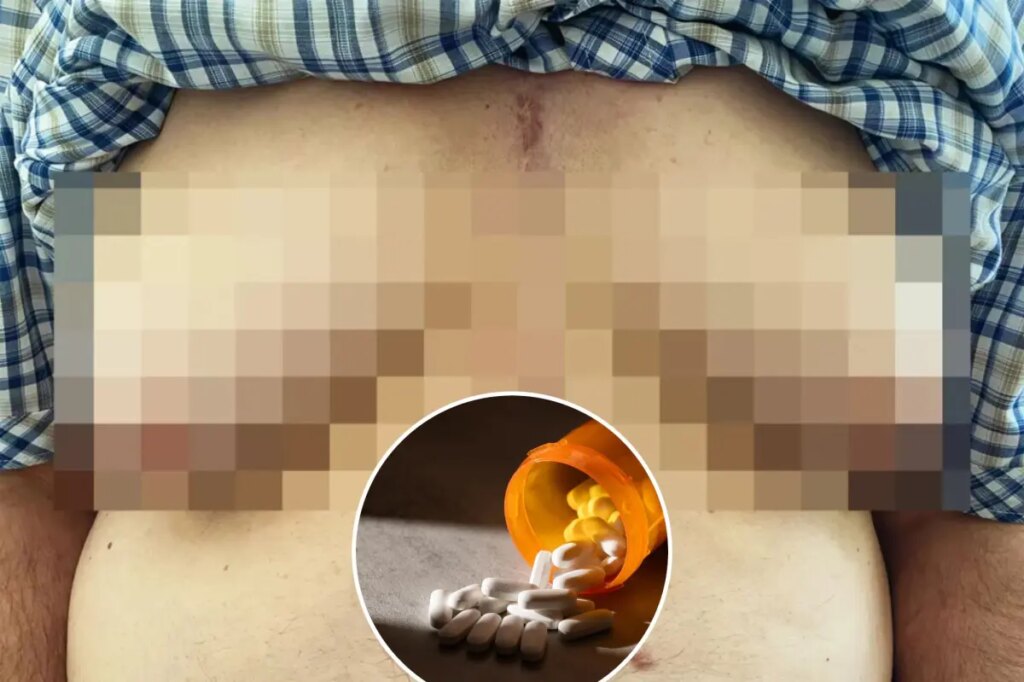
Some medications can cause surprising side effects.
One man learned this firsthand when, after taking a medication for heart failure, he developed a new physical feature — enlarged breasts.
The condition, known as gynecomastia, occurs when there’s a hormonal imbalance due to certain medications or puberty.
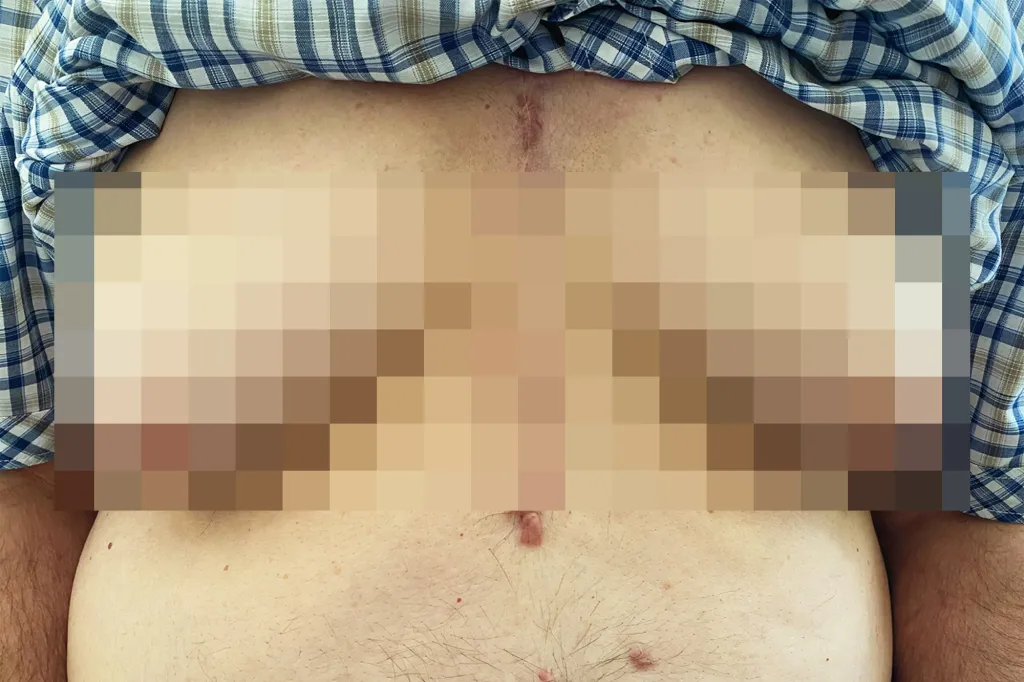
After experiencing tender, swelling breast tissue for the past eight months, the cause of the 76-year-old’s diagnosis was from a medication he’d been taking for several years — spironolactone.
The drug is one of the most commonly prescribed medications in the US, with more than 12 million prescriptions overall.
While FDA-approved to treat cardiovascular issues like high blood pressure as well as hormone-related conditions in men, the drug does come with risks.
Many of the side effects are common, including dehydration, dizziness, headache or fatigue.
Others, like breast tenderness or increased growth of breast tissue, may not be what men expect when taking this drug. But these more rare effects are not entirely unusual, with a reported 10% of men seeing breast growth.
This is because the medication decreases male sex hormone production — like testosterone — which can promote hair growth in women, but also lead to larger breasts in men.

And at least half of all men will have enlarged breast tissue at some point in their lives. For some, the condition can resolve iteself. But when it’s caused by medication, the best course of action to reduce breast growth is by changing the drug dose or stopping use and switching to a new medication.
Meanwhile, men who deal with gynecomastia not from medication side effects are increasingly turning to breast reduction surgery.
“Since 2020, I’ve definitely seen a steep increase in men doing consultations and going forward with gynecomastia surgery,” Dr. Claudia Kim, chief medical officer and lead cosmetic surgeon at New Look New Life in Manhattan, previously told The Post.
It’s now the most popular plastic surgery among men in the US, according to the American Society of Plastic Surgeons. The group reported its doctors performed 26,430 male breast reductions in 2024, up from 20,955 done in 2019.
Surgical intervention can involve liposuction (for excess fat) or an incision (to remove excess glandular tissue). Many men have both, meaning both liposuction and excision are needed.
However, spironolactone continues to be a top treatment for men’s blood pressure.
Other side effects that may affect men more include decreased libido, erectile dysfunction and nausea.
The post 76-year-old man grows breasts after taking common medication used to treat high blood pressure, hair loss appeared first on New York Post.