Oanh Ngo Usadi is author of the memoir “Of Monkey Bridges and Banh Mi Sandwiches: From Sai Gon to Texas.”
Many cultures have a holiday cake, a once-a-year treat everyone looks forward to. I got my first taste of what I thought was an American version soon after my family arrived from Vietnam in the mid-1980s. In the Texas town where we settled, my brothers and I had an after-school job delivering our local newspaper, the Port Arthur News. Around Christmas, customers sometimes left little gifts for us on their porches. One day, someone left a fruitcake wrapped in green cellophane.
The brightly colored loaf, studded with candied fruit and nuts, reminded me of a savory holiday cake back in Vietnam. Sticky rice, filled with mung bean and pork belly, and wrapped in banana leaves, banh tet is synonymous with Tet, the Lunar New Year — a big holiday. In those days, our village had little beyond the basics. Families saved the ingredients over weeks, then pooled what they had and got together to make the bahn tet.
So I had high hopes for the American cake. But after just a few bites I gave up. Impossibly sweet, with a bitter aftertaste of alcohol and stale nuts, it joined the list of new foods I couldn’t appreciate. At my middle school, hot dogs, hamburgers and pizza filled my stomach but were unsatisfying. But then, to my surprise, I discovered that fruitcake was not exactly adored here either. It was the Christmas gift that everyone joked about passing on to the next person, hoping never to see it again.
I did like fruitcake, though, for helping me understand English. “Nutty as a fruitcake” made me laugh and helped explain similes. Who knew “nutty” had a different meaning beyond food, and that the whole phrase could be shortened to just “fruitcake” to mean crazy? Understanding what felt like inside jokes made me feel a little more American.
As my experiences with American food expanded beyond school cafeterias, I discovered a whole new world of flavors. A hamburger off a backyard grill, a hot dog under Fourth of July fireworks and apple pie at a block party tasted so much better. Even the flavors and smells of cheese grew on me, slowly, after many abandoned attempts. I decided that new foods were worth a try, that old dislikes deserved a second chance.
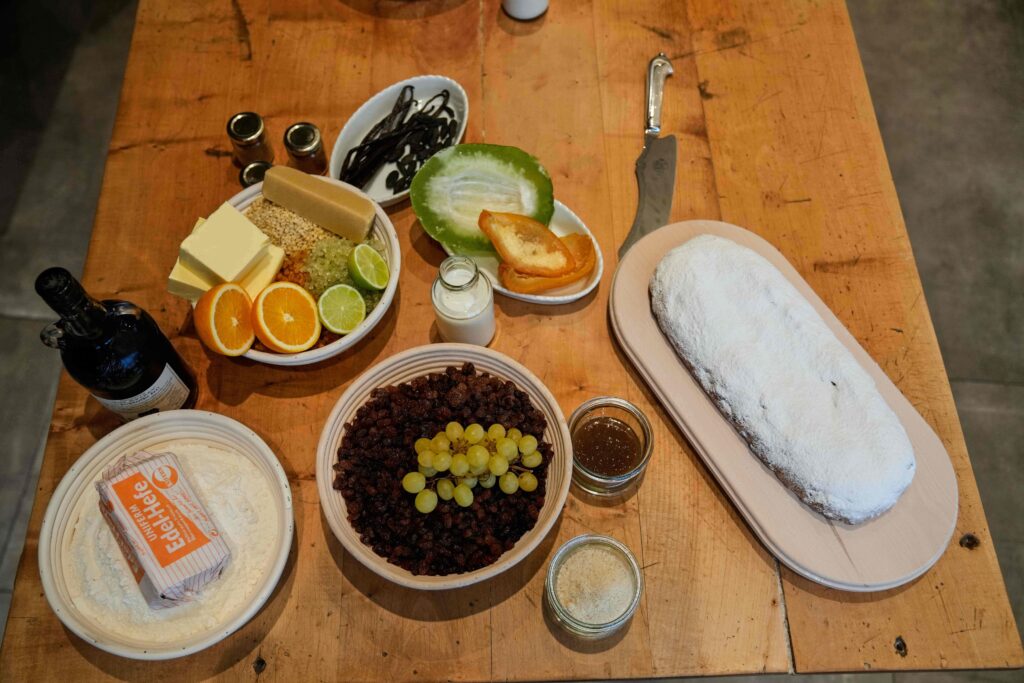
One Christmas season, a friend who had recently arrived from Germany confided how much she missed home, especially the holiday treats. She raved about a cake called stollen. Filled with fruits and nuts, it sounded suspiciously like fruitcake, but she insisted the secret was using only quality ingredients and following every step, no shortcuts. She offered to show me how her Oma had taught her to make it.
On baking day, she arrived at my house early, raisins already marinated in rum. We got to work: chopping almonds, kneading dough, waiting for it to rise and then rise again, and finally shaping the loaves. So many little tasks, much waiting in between.
Our hands, hard at work, reminded me of my family and neighbors making banh tet back in Vietnam. In our village, children fetched firewood and cleaned banana leaves, while the adults wrapped the cakes and boiled them overnight, kids begging to stay up just a little longer. East and West, the circumstances couldn’t be more different, but the shared joy of cooking together felt much the same.
By late afternoon, my German friend and I saw our efforts finally paid off. Fresh from the oven, two golden loaves sat on the counter, dusted with powdered sugar. The stollen tasted as good as it looked — crunchy on the outside, buttery and flaky on the inside. “Even better after a few days,” my friend promised.
But it had taken us practically the entire day. I couldn’t recall another time in America when I’d devoted that much effort — or felt such anticipation — for a single dish. In our modern busy lives, convenience so often wins out. And maybe that’s the point of holiday baking and cooking. Preparing the dishes, the time and labor they require, stands apart from the ease of everyday life. The point isn’t just how good the food tastes, it’s that the care and preparation leave us with stories and memories, something fruitful to pass around.
The post What a Christmas fruitcake or stollen shares with banh tet appeared first on Washington Post.