It’s been three months since the assassination of Charlie Kirk, long enough that the country has since endured several successive news cycles of spectacular violence. And long enough for the right-wing response to the shooting — including President Trump blaming it on liberals and left-wing rhetoric, the suspension of Jimmy Kimmel from ABC and the disciplining of 600 Americans for public statements about Kirk — to abate somewhat. The picture we have of the alleged killer, Tyler Robinson, has changed a lot, too, and the more we have learned about him, the more disconcertingly normal he seems.
What do I mean by normal? No one who is accused of taking up a sniper’s position to murder a public figure can be called unexceptional. But we are living through a harrowing step-change in public and political violence in America, and lately, some suspected perpetrators have not appeared to be lost-cause social outcasts or mentally unwell in ways that alarm those around them. They do not seem politically radical, are not members of extremist groups and do not offer elaborate manifestoes or chase revolutionary goals, the way perpetrators of political violence in earlier eras did (such as the anarchists of the 1910s, student and Black radicals of the 1960s and Islamist and right-wing terrorists in recent decades).
These recent suspects have not exhibited to their friends and family any signs of interest in political violence, let alone an obsessive or overwhelming one. They do not appear to turn to murder out of genuine nihilism (like, say, Nathan Leopold and Richard Loeb) or sadistic psychosis (like, say, James Holmes, who killed 12 people in a mass shooting in Aurora in 2012 — though a jury notably rejected his insanity defense). They have not expressed deeply felt hate — like, say, those who shot up the Emanuel African Methodist Episcopal Church in Charleston, S.C., or the Tree of Life synagogue in Pittsburgh. Instead, this new archetype appears motivated by a much more familiar and casual moralism, citing complaints about the current state of our politics shared by at least tens of millions of other Americans. This is not a salutary development.
Most of those who find MAGA figures like Kirk hateful, or believe that insurance executives like Brian Thompson, who was the head of UnitedHealthcare, are exploitative, don’t pick up guns to make their point, thank God. But what can we say about what distinguishes those few who do? In recent years, researchers have embraced the term “stochastic” to describe the apparent randomness of spectacular violence in America and the difficulty of responsibly attaching social meaning to any event in particular. But though it often seems random, this new kind of violence isn’t really stochastic, either, since it doesn’t appear to stem from pure nihilism, sadism or sociopathy. What makes the attacks seem so random is not how rare but how familiar the underlying convictions seem to be — and how improbable it seems that those common convictions should produce such spectacular violence.
A year and a half ago, after Trump narrowly avoided assassination in Butler, Pa., I wrote about the way that the desperate hunt for the political motivation of the shooter, Thomas Matthew Crooks, obscured what seemed to be pretty obvious already: that the would-be assassin was a kind of cipher whose motivations were not likely to become especially legible to us, no matter how much we dug into his sparse social media profiles. But while Crooks remains a disconcerting figure, from what we now know, he also looks like a common archetype, familiar from the history of American violence: a loner, perhaps suffering from mental health crises.
When Robinson was first apprehended for the murder of Charlie Kirk, a similar story about him spread to fill the void of meaning the shooting had opened up: that Robinson was an awkward misfit, perhaps even friendless, caught up in a feedback loop of violent radicalization online. In the days after the shooting, Gov. Spencer Cox of Utah, where the shooting took place, urged Americans to get off their phones and “touch grass,” a homiletic call echoed by Pete Buttigieg and many others in the days and weeks that followed.
Three months on, and Robinson seems increasingly miscast in that role. A soft libertarian who’d taken a liberal turn, he also didn’t exhibit any longstanding, deeply felt or radical political commitments. He doesn’t appear to have endured a psychic break, nor to have been a nihilist in the mold of Stephen Paddock, who, in 2017, shot and killed concertgoers in Las Vegas, or a homebound monster like Adam Lanza, who killed children at Sandy Hook Elementary School in 2012.
As best we now understand, Robinson did spend a lot of time online, but it was mostly outside the familiar dark corners of the internet, bantering instead apolitically in gamer chats on Discord. In certain ways he was an internet kid, perhaps more comfortable socializing there than IRL. But he still had plenty of friends, some online and some offline. The Washington Post recently interviewed 21 of them and reviewed their conversations in an eye-opening portrait of Robinson that doubles as a sketch of his social circle, his place in it and the sense those people tried to make of the shooting.
“In the years leading up to that day,” Samuel Oakford, Evan Hill, Sarah Blaskey and Aaron Schaffer of The Post reported, “Robinson betrayed no sign of passions that might suggest a capability for violence, much less murder. To many, he appeared to hold unremarkable political opinions, and he told some he was no fan of either major party.”
Some close to Robinson observed him taking a few steps to the left from his conservative family as he aged out of adolescence and into young adulthood during the Trump and Covid years. But his politics did not seem to dominate his social life or leave a memorable impression on those who knew him best. And to the extent that his politics had grown more visible, they were not radical as much as pretty normal: against Covid disinformation, disappointed in the casual cruelty of Republican leaders, in defense of the dignity of trans people. “I had enough of his hatred,” Robinson allegedly told his transgender roommate, according to charging documents, with whom he’d grown romantically involved, of Kirk. Other friends told The Post “they noticed no such changes in Robinson’s politics and never heard him talk about transgender issues.”
Perhaps this was a sign of sociopathic compartmentalization, and we will learn of some longer and more secret period of radicalization, obsession with Kirk or violent fantasy life at trial. But according to text messages released by authorities, Robinson told his roommate that he’d been planning the shooting for just “a bit over a week.” When the roommate was told Robinson was the shooter, the response was shock and disbelief. Which is ultimately among the most disconcerting things about his story: This was a brazen act of political violence that apparently emerged from someone who, to those around him, seemed to be pretty unexceptional.
The same can be said for Luigi Mangione, the suspect in Thompson’s killing — though, as with Robinson, there may be much we do not yet know. Here was an accomplished prep-school kid from a well-to-do family with an obvious glide path to a life of comfort and security. When he stepped away from that path, moving to Hawaii to surf, hike and read, it wasn’t in an act of spectacular self-destruction or as part of a disturbing emotional break but in pursuit of what many Americans would quickly recognize as a familiar vision of the good life (if also a recognizably privileged one). In the book clubs he arranged in Hawaii and in reading groups he participated in online, Mangione sometimes leaned toward big questions about the shape and value of contemporary society, but he does not seem to have done so in ways that were alarming or even off-putting to his friends and fellow travelers, who all felt warmly toward him back then. Nobody seems to have thought, There goes the next Unabomber, even though Mangione read and discussed Ted Kaczynski’s writing.
Just after Mangione’s arrest, there was a lot of speculation about a back injury and the possibility that he held a personal grudge against the American health care system, insurance especially. But according to Reddit posts that appeared to have been written by Mangione, it turns out that after a period of pain, his back surgery had been a success, and there were no apparent insurance complications that came from it. There was also a lot of speculation about how he’d seemed to drop out of sight for a period before re-emerging, armed, in midtown Manhattan. But he had spent many of those missing months doing some backpacking, meditating and journaling in Thailand and Japan. Maybe this was not exactly what was expected of a recent computer science graduate from the University of Pennsylvania, but it didn’t seem to mark a dark break, either, at least from what we can see from the way he corresponded in those months with friends. What are we supposed to do with these facts?
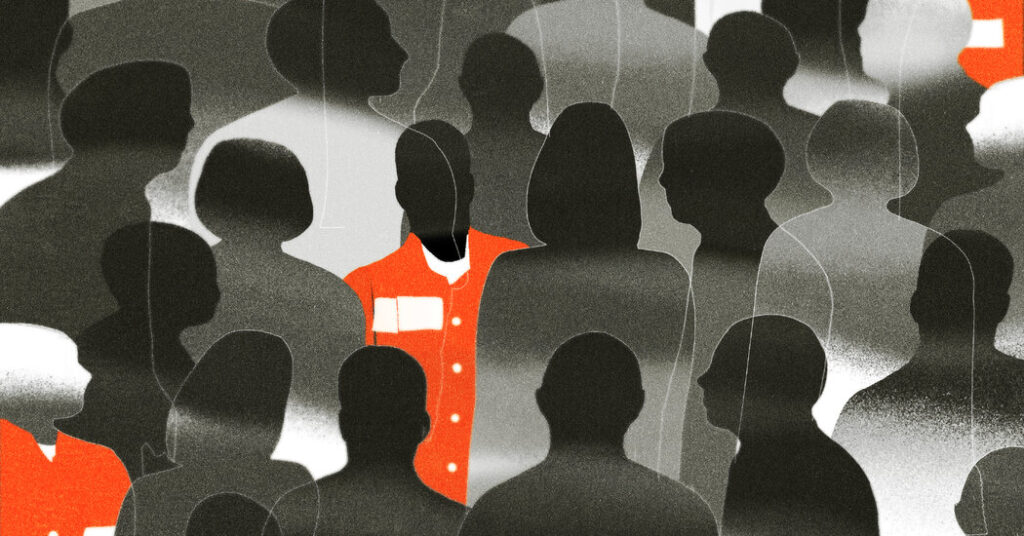
Not everyone suspected of spectacular violence in America is a Mangione or even a Robinson, but the arrival of this new archetype complicates not just our political narrative but our hopes for safety and justice, too — making it seem comparatively hopeless to identify such actors ahead of time and comparatively difficult after a attack to follow the red flags that might lead to a suspect. We talk a lot these days about the “normalization” of violence in America, but the suspects themselves seem to be growing more normal, too — apparently tipping toward violence without first passing through extremism, paranoid delusion or nihilistic despair.
The post Luigi Mangione and Tyler Robinson Are a Worrying New Archetype appeared first on New York Times.