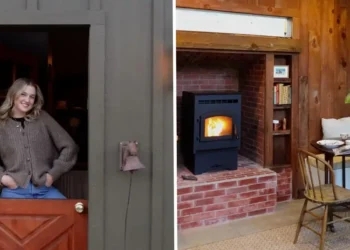
From luxury listings to dramatic home makeovers, Netflix’s expanding lifestyle lineup is beginning to look unmistakably HGTV-inspired.
In recent years, the streaming giant has steadily built out its home and real estate catalog, adding fan-favorite series like “Selling the City,” “Owning Manhattan,” “Selling the OC,” “Selling Sunset,” and many more.
As Netflix has more than doubled down on real estate reality TV, HGTV has moved in the opposite direction.
The longtime home-renovation network has significantly scaled back its lineup, recently cutting shows such as “Bargain Block,” “Married to Real Estate,” and “Christina on the Coast.”
Once the go-to destination for renovation and design television, HGTV now faces competition from an unlikely successor—raising the question: Is Netflix the new HGTV?
The shift reflects broader changes in viewer habits, as audiences increasingly turn to streaming platforms for the kind of comfort TV that once defined cable.
The streaming service first tapped into the home improvement and real estate makeover realm in 2018 with the series “Stay Here.”
One year later, “Selling Sunset” premiered on Netflix and quickly rose to the platform’s No. 1 watched series.
After “Selling Sunset” became a breakout hit, the streaming service tightened its grip on the real estate reality genre with many spinoffs, including, “Million Dollar Beach House” (2020), “Selling Tampa” (2021), “Selling the OC”(2022), “Selling the City”(2025), and “Owning Manhattan” (2025).
The success of these shows prompted Netflix to build out a mini-franchise and a broader real estate slate, making it a go-to destination for bingeing real estate TV.
In recent years, Netflix has unquestionably reached a larger audience than the majority of platforms in the US.
According to Nielsen’s, Netflix garnered a total TV viewership share of around 8% to 9% in 2025, making it one of the top media distributors overall.
Netflix’s viewership numbers represent hours watched across content worldwide. The streamer has hundreds of millions of subscribers.
HGTV’s viewership is based on traditional linear cable ratings in the US, a smaller and shrinking market segment.

Meanwhile, HGTV’s audience has significantly declined in recent years.
A July 2025 report from Deadline says the decreasing number of viewers is partly to blame for the removal of the shows.
The outlet, which spoke to numerous sources that produce for the network, said that HGTV averaged about 1.5 million viewers in 2017, citing Nielsen.
However, since then, the network has struggled to bring in audiences, with its average viewership last year coming in at 773,000.

The US Television Database lists HGTV as the 11th most popular TV channel, with an average of 503,000 viewers.
According to Deadline’s story, the company is struggling to attract viewers aged 18 to 49, losing 26% among that demographic in the last year.
In 2017, viewers aged 18 to 49 averaged 425,000, while 2024 saw only 101,000.
The outlet noted that part of the reason for HGTV’s troubles is the large budget it takes to produce and put on a home renovation show.
The overhaul shows reportedly cost upward of $500,000 per episode.
One source told the outlet, “Home reno shows are expensive because all of the materials are jacked up and on delay, the price of wood and marble and everything else is going up, so these shows don’t make as much sense anymore.”

An unnamed producer who makes the network’s renovation shows come to life said, “Stuff wouldn’t arrive on time; we had wood floors, for instance, that would come in six weeks after we started production, and then we’re also depending on contractors.
“Everyone knows if you’re doing construction on your home, you never come in on budget. So, try to apply that to a show that has really strict budgets. Some of our episodes took 16 weeks to shoot; it’s more labor-intensive than doing a real estate show.”
Real estate shows reportedly cost around $200,000 to $300,00 per episode and take a shorter amount of time to film.
HGTV is also struggling to compete with social media creators who show off their DIY renovations on TikTok, Instagram, and YouTube.
Since June 18, the hosts of “Bargain Block,” “Married to Real Estate,” “Farmhouse Fixer,” and “Izzy Does It” have all shared the heartbreaking news about their shows’ cancellations.
Netflix has overtaken cable as the dominant way viewers engage with TV, and is set to premiere several real-estate-focused series in 2026.
The post Here’s how Netflix is becoming a real estate TV powerhouse as streaming giant competes with HGTV appeared first on New York Post.