BERLIN — European political leaders and tech watchdogs pushed back sharply against what they called “an act of repression” after the State Department blocked five Europeans from entering the United States for allegedly censoring digital free speech.
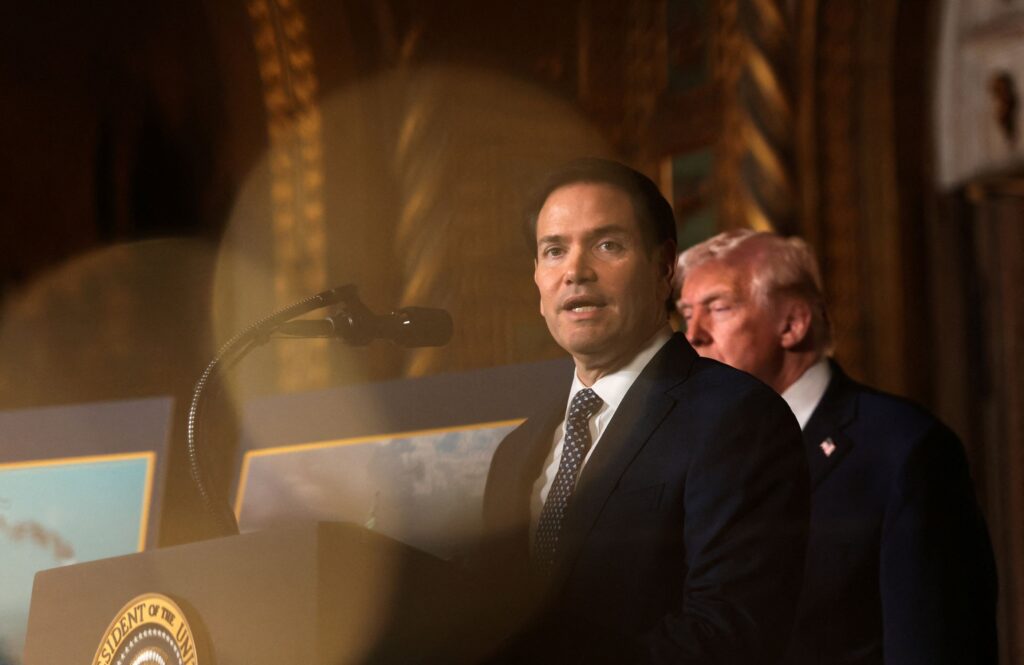
In an escalation of the Trump administration’s attacks on European regulators, Secretary of State Marco Rubio announced Tuesday that the State Department would “bar leading figures of the global censorship-industrial complex from entering the United States.”
Visa sanctions were imposed on Thierry Breton, the former top tech regulator at the European Commission, and the leaders of organizations that monitor digital hate and disinformation.
On Wednesday, the European Commission, the E.U.’s executive branch, condemned the travel restrictions and defended the E.C.’s “sovereign right to regulate economic activity in line with our democratic values and international commitments.”
The commission said in a statement that “if needed, we will respond swiftly and decisively to defend our regulatory autonomy against unjustified measures.”
Two of the Europeans restricted from entering the U.S. — Josephine Ballon and Anna-Lena von Hodenberg, co-CEOs of the German human rights organization HateAid — described the move as an “act of repression by a government that is increasingly disregarding the rule of law and trying to silence its critics by any means necessary.”
In an emailed statement, they added, “we will not be intimidated by a government that uses accusations of censorship to silence those who stand up for human rights and freedom of expression.”
Breton responded to his travel sanctions by asking on X, “Is McCarthy’s witch hunt back?” He added, “To our American friends: ‘Censorship isn’t where you think it is.’”
French Foreign Minister Jean-Noël Barrot “strongly condemn[ed]” the visa restrictions on Breton and the four other Europeans. He said the European Union’s Digital Services Act, which regulates social media and other digital platforms and has attracted the ire of the Trump administration, “has absolutely no extraterritorial reach and in no way concerns the United States. The peoples of Europe are free and sovereign and cannot have the rules applying to their digital space imposed on them by others.”
The other targets of the U.S. visa sanctions are Imran Ahmed, CEO of the London- and Washington-based Center for Countering Digital Hate, and Clare Melford, head of the U.K.-based Global Disinformation Index (GDI).
Undersecretary of State Sarah B. Rogers accused GDI of using U.S. taxpayer money “to exhort censorship and blacklisting of American speech and press.” A spokesperson from the group said that the visa sanctions “are an authoritarian attack on free speech and an egregious act of government censorship,” adding that it was “deeply ironic” for the administration to decry censorship while using “state power to silence critics engaging in protected speech.”
In May, Rubio announced a new visa restriction policy targeting “foreign nationals who censor Americans.” Tuesday’s sanctions appear to stem from that policy.
Trump administration officials have mounted an escalating offensive against what they see as European attacks on free speech. In February, Vice President JD Vance delivered a speech at the Munich Security Conference accusing Europeans of bullying and censoring social media companies and criticized Germany’s mainstream political parties for sidelining the right-wing Alternative for Germany.
Earlier this month, the administration released a National Security Strategy that accused the E.U. of “censorship of free speech and suppression of political opposition” and warned that Europe risked “civilizational erasure” by permitting high levels of migration.
European regulators fined X — the social media platform owned by former top Trump adviser Elon Musk — $140 million this month for alleged violations of the Digital Services Act. Trump officials slammed the fine, with Vance writing on the platform, “The EU should be supporting free speech not attacking American companies over garbage.”
Adam reported from London. Ellen Francis in Brussels contributed to this report.
The post Europe condemns U.S. move to bar individuals over tech monitoring appeared first on Washington Post.