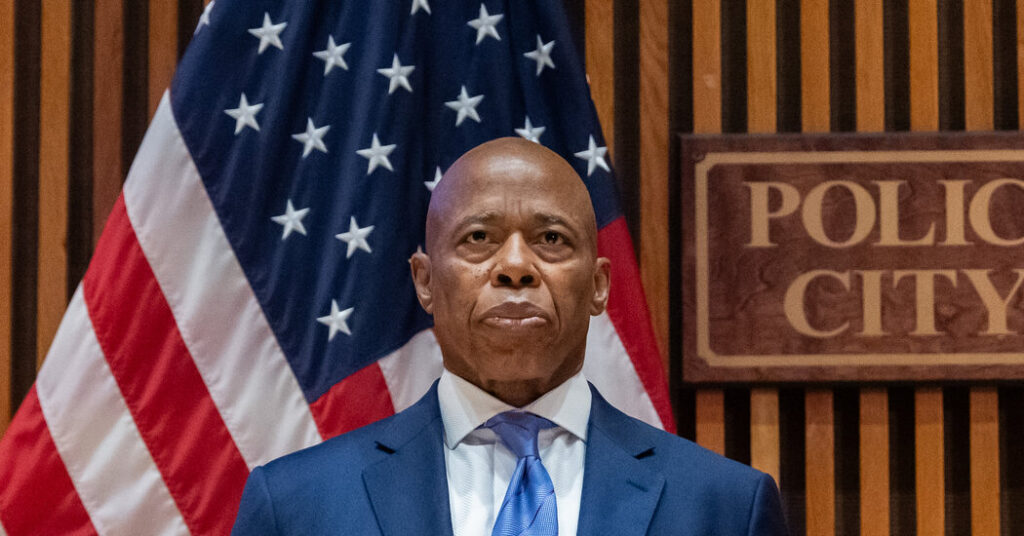
Four years ago, Eric Adams stood in front of Brooklyn Borough Hall, flush with victory and promise, after emerging as the winner of a heated Democratic primary for mayor of New York City.
In a flash of swagger, he boldly pronounced that his brand of leadership would not only benefit the city, but the rest of the nation.
“I am the face of the new Democratic Party,” he told reporters, drawing cheers from civil servants as they headed to work. “I’m going to show America how to run a city.”
New Yorkers were largely rooting for Mr. Adams, the city’s second Black mayor and a charismatic cheerleader for the city after the dark days of the coronavirus pandemic. Even his progressive critics were hopeful that he would help working-class neighborhoods, like the one in Queens where he grew up.
Much of that good will has been squandered.
Mr. Adams, 65, will leave office at the end of this month after a single tumultuous term. He delivered on some campaign pledges, fell short on others and suffered the ignominy of becoming the first modern-era New York City mayor to be indicted.
There were achievements: the city’s economic recovery from the pandemic, fewer shootings, progress on affordable housing and moving trash off the curbs. His administration also navigated an influx of more than 200,000 immigrants from the southern border with little assistance from the federal government, and a city mandate to find them housing.
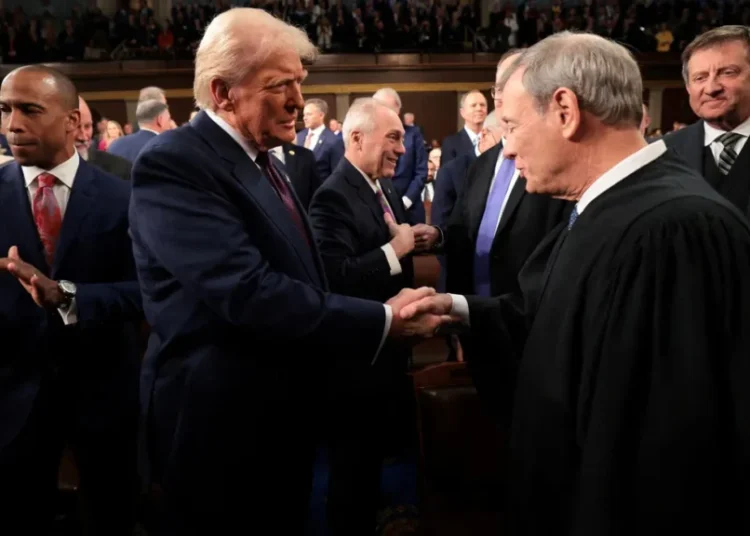
But scandals undermined his leadership. He faced a five-count indictment on bribery and fraud charges; he courted President Trump, a Republican whose administration dropped the charges; he surrounded himself with loyalists, some of whom were accused of using their positions to benefit themselves; four deputy mayors resigned together in protest of his cooperative stance toward Mr. Trump’s immigration crackdown.
But well before his indictment, many New Yorkers had already soured on Mr. Adams and his leadership style. By the end of his second year, his approval rating had plunged to 28 percent, the lowest for any New York City mayor since 1996. More than half of voters said he was not honest or trustworthy.
He also allowed concerns over affordability to fester, providing an opening for a little-known state lawmaker, Zohran Mamdani, to win June’s Democratic primary and the mayoralty by seizing on that issue.
Looking back on his tenure, elected officials and civic leaders said there were many disappointments. Adrienne Adams, the City Council speaker who was once his friend, gave him a grade of C-minus and criticized his cuts to libraries. The Rev. Al Sharpton, an ally, said that the mayor delivered on safety but not on making the criminal justice system more fair.
Jumaane Williams, the city’s public advocate who sought early on to work with the mayor on gun violence, said that Mr. Adams deserved a grade of D for putting his own interests above New Yorkers’.
“The difference between who he said he was and who he turned out to be — I don’t think there’s ever been such a gap in recent history,” he said.
Mr. Adams declined a request for an interview but held a news conference at City Hall last week to tout his legacy. When a New York Times reporter asked him about his record afterward, he said, “You know I’m not answering any questions from you,” and walked away.
A rocky start
When Mr. Adams arrived at City Hall in January 2022, he faced a choice that would prove consequential: install longtime friends in top posts or steer his administration toward experienced technocrats. He chose the first route.
He hired Ingrid Lewis-Martin to be his chief adviser, despite warnings from close allies about ethical concerns. He selected Philip Banks III as his deputy mayor for public safety, ignoring that he had been an unindicted co-conspirator in a federal corruption investigation. The inquiry stemmed from accusations that Mr. Banks doled out favors as a police chief in return for gifts.
A senior adviser, Timothy Pearson, came aboard despite simultaneously collecting salaries from a casino and the city. He later got into a physical altercation at a migrant shelter. Winnie Greco, his director of Asian affairs, had ties to China’s communist leadership.
All four officials resigned last year while facing state and federal investigations. Ms. Lewis-Martin was charged with using her position to secure a role on a television show and to help her son buy a Porsche. Ms. Greco was forced to leave the mayor’s re-election campaign after handing a reporter cash in a potato chip bag.
Mr. Adams also tried to hire his brother, Bernard Adams, to oversee the mayoral security detail. He sought to pay his brother more than $200,000 a year but was thwarted by city nepotism rules; Bernard Adams eventually worked as a volunteer and left after a year.
Other issues of integrity arose. Mr. Adams, a former police captain, began to tell a story about how he carried in his wallet a photo of Robert Venable, a police officer who was killed on the job in 1987. When The Times asked to see it, he provided a forged copy: His staff printed it from Google and stained it with coffee to make it look weathered.
And in his sixth week as mayor, Mr. Adams acknowledged that he was “perfectly imperfect” after it was discovered that he had been dining on fish while professing to be vegan.
More substantive concerns arose, as his budget negotiations with the City Council grew tense over his priorities. Mr. Adams received a wave of criticism over slashing funding for libraries and a popular free preschool program for 3-year-olds, known as 3-K.
Grace Rauh, executive director of Citizens Union, a good government group, said that he failed to appreciate how families were worried about child care costs and the city’s lack of affordability.
“Mayor Adams could have embraced 3-K,” she said. “Instead, it felt like this very frustrating and demoralizing attempt to undercut it.”
By the end of his first year, an unforeseen crisis gripped the city: Buses filled with immigrants were arriving from the southern border. The influx soon consumed his administration, which was required by law to provide free shelter and services.
City Hall cast its efforts as a herculean if underappreciated response to a global humanitarian crisis, without much help from the Biden administration. The mayor angered some Democrats by challenging the city’s right-to-shelter mandate and adopting harsh language — he said the migrant influx would “destroy” the city — that was being used by Republicans.
A focus on public safety and housing
In January 2024, Mr. Adams held a news conference at Police Headquarters to draw attention to major drops in shootings and homicides the previous year. One of the architects of the success, Keechant Sewell, Mr. Adams’s first police commissioner, was not there to celebrate: She had resigned over the summer amid frustration that the mayor would not let her do her job.
Her successor, Edward Caban, who stood next to the mayor that day, stayed for roughly a year before resigning while under investigation. Thomas Donlon, who then stepped in as the interim commissioner, lasted two months and later filed a federal lawsuit accusing Mr. Adams of running City Hall and the Police Department as a criminal enterprise.
Mr. Adams found more stability with his fourth commissioner, Jessica Tisch, a billionaire heiress who Mr. Mamdani is keeping in the job.
Through it all, crime continued to fall. Rodneyse Bichotte Hermelyn, an ally of the mayor and chair of the Brooklyn Democratic Party, praised Mr. Adams’s record on crime and his hiring of Ms. Tisch and Maria Torres-Springer, a first deputy mayor who worked on housing issues.
“He elevated women who are visionaries and who could execute on the city’s most pressing challenges,” she said.
Mr. Adams primarily based his mayoral campaign on two ideas: safety and justice. As a former police officer, he said he knew what it would take to restore order in New York City. But as someone who said he was once beaten by the police as a teenager, he said he recognized the importance of safeguarding people’s civil rights.
Yet the practice of stop-and-frisk encounters, which Mr. Adams once criticized, increased under him, as did misconduct complaints against officers.
Mr. Sharpton grew frustrated when Mr. Adams appeared to defend Daniel Penny, a former Marine who killed Jordan Neely with a chokehold as they rode on the subway in 2023. Mr. Neely was a 30-year-old former Michael Jackson impersonator who struggled with his mental health.
“I thought it was outrageous that we made a precedent that a civilian can choke a guy to death,” Mr. Sharpton said. “Eric Garner was wrong, but Neely was right?”
The Adams administration’s instability continued. At the end of 2024, the mayor secured another major win — the approval of the City of Yes rezoning that could make way for 80,000 new homes over the next 15 years. He held a triumphant news conference at City Hall with Gov. Kathy Hochul.
“We showed the nation that government can still be bold and brave by passing the most pro-housing piece of legislation in city history,” he said.
Roughly two months later, Ms. Torres-Springer, who oversaw the City of Yes, resigned with three other deputy mayors as Mr. Adams worked with the Trump administration to drop his corruption charges.
A mixed record on other priorities
As Mr. Adams nears the end of his term, he has tried to defend his legacy in interviews and the increasingly rare news conference. Last week, he stood in the rotunda of City Hall on Tuesday for a spirited 90-minute presentation to counter the narrative that his mayoralty had mostly been a failure.
Taking no questions, he boasted of his “trash revolution” to vanquish rats by moving garbage from the curb into cans and European-style bins in the street. He talked about growing up with undiagnosed dyslexia and moving the city toward phonics-based literacy instruction.
He highlighted how he delivered on a campaign promise to provide tax relief to working class New Yorkers, cutting personal income taxes and expanding the earned-income tax credit.
He did not mention unmet campaign vows, like a pledge to create an ambitious app called MyCity where New Yorkers could apply for benefits like food stamps. The idea cost the city more than $70 million with little to show for it.
Councilwoman Jennifer Gutiérrez, a Democrat who chairs the technology committee, said that MyCity had wasted taxpayer money.
“It doesn’t do what they said it was going to do,” she said. “I don’t think any part of it went according to plan.”
Mr. Adams also made no mention of how poverty rose during his tenure. David R. Jones, the president of the Community Service Society, an antipoverty nonprofit, said that the mayor’s decisions hurt poor New Yorkers, like opposing expanding housing vouchers and half-price MetroCards for working-class riders.
“There’s no question that things have deteriorated for people,” he said. “The homelessness numbers have gone through the roof.”
Mr. Adams concluded the event by burying some artifacts of his tenure in a time capsule. Hours later, he jetted off to Mexico on vacation, the fourth country he has visited in the last three months, perhaps unwittingly honoring another campaign promise made after he won the primary.
“You guys,” he said to reporters, “are going to have so much fun over the next four years.”
Emma G. Fitzsimmons is the City Hall bureau chief for The Times, covering Mayor Eric Adams and his administration.
The post The Complicated Legacy of Eric Adams appeared first on New York Times.