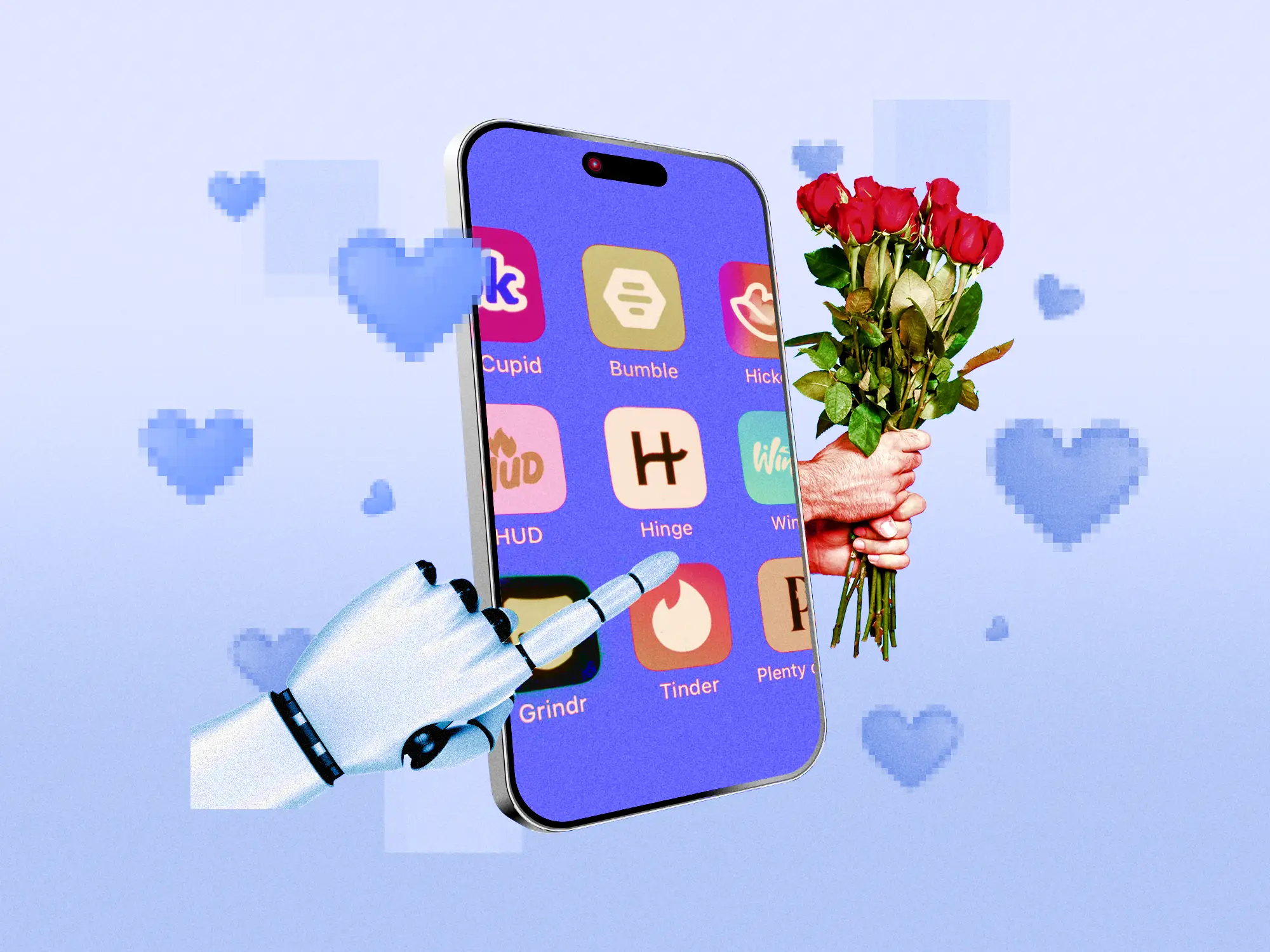
Dating apps’ original pitch was to match you with anyone.
“Swipe. Match. Chat. Date.” That was Tinder’s promise when it launched more than a decade ago, forecasting the endless cycle so many of its users now bemoan.
Now they want to match you with the one.
The giants in the dating space — Match Group’s Hinge and Tinder, Grindr, and Bumble — are investing tens of millions into artificial intelligence, hoping to beat each other and the new AI-driven upstarts in the ultimate dating game.
While, technically speaking, AI and machine learning have been used by dating app algorithms for years, these generative AI features take it further.
The result, the companies say, will be meaningful: better matches, fewer swipes. Nothing short of “magical,” as Grindr’s CEO George Arison put it on a recent earnings call.
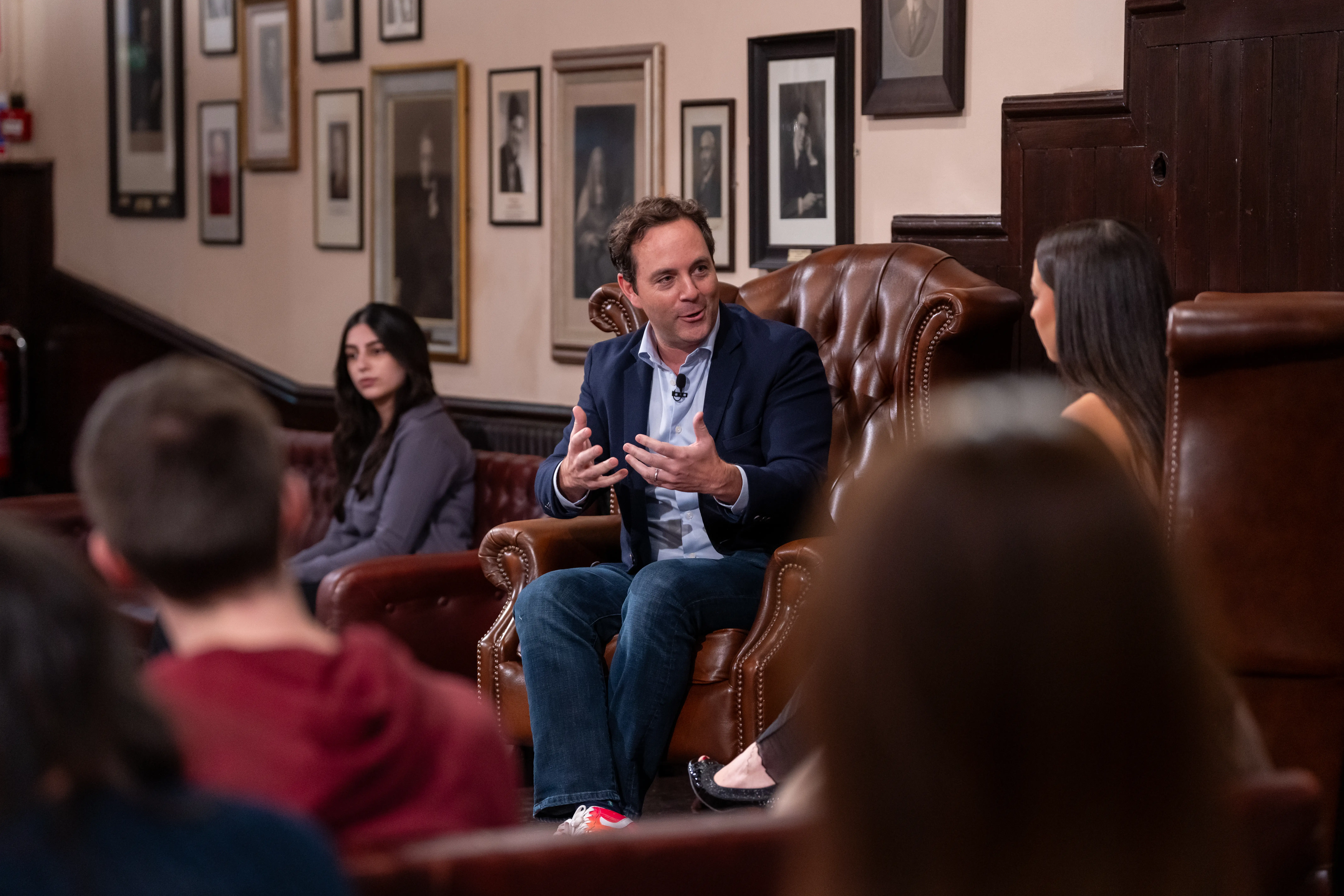
“We’re entering a platform shift with AI,” Match Group CEO Spencer Rascoff said during a Los Angeles Tech Week panel in October. AI is “changing everything” about the company’s dating apps, he added.
The space is ripe for change. The big players are struggling. There’s frequent churn, the result of “swipe fatigue,” and many users are unwilling to shell out for premium features.
“It’s been a really long time since there’s been a new reason — whether technology, platform, brand, whatever — for consumers to be excited about dating,” Sam Yagan, cofounder of OkCupid and former CEO of Match Group, told Business Insider.
Match Group’s stock is down more than 75% over the past five years. Last month, the company reported quarterly results that missed Wall Street’s earnings and revenue estimates. It is struggling to convert users into paying customers, a category that declined 5% last quarter compared to the same period a year ago.
The share price for Bumble, meanwhile, is down more than 50% this year alone. The company laid off 30% of its staff over the summer, and last quarter, the app’s paying users fell 18% from the same period last year.
“They’ve gone through this period over the past few years where users have started to contract, and there’s been this question of why,” Morgan Stanley analyst Nathan Feather told Business Insider. “Simply, the product doesn’t work as well as people expect it to.”
Startups are hoping to capitalize on that weakness. Several new apps have raised millions over the past couple of years. Just this month, Hinge founder Justin McLeod stepped down as CEO to found his own AI dating platform.
Robot, robot, make me a match
Cupid, matchmakers, classifieds, dating websites, swiping apps.
No matter how you slice it, they all attempt to solve the same problem: helping you find the perfect match. AI, companies say, will do that better than all of the above.
It makes sense for AI to infiltrate the space, Rick Heitzmann, the cofounder of VC firm FirstMark, which is not invested in any dating companies, told Business Insider. Matchmakers are a type of agent, and anything that can be agentified is a good match for AI, he said.
For the biggest players, finding the “better fit” is the ultimate goal of their AI investments.
Hinge is working on improving its match-making algorithm, and Bumble has an AI product scheduled to roll out next year. They are also using AI for profile creation, flirting, and trust and safety — in service of expediting the match-making process.
Tinder is plowing ahead. The app is piloting Chemistry, a matchmaking feature that gives users a “daily drop” of ideal matches based on a dater’s camera roll and answers to a series of prompts. The goal is matches driven more by values, less by how hot a photo is — and ultimately fewer of the swipes that used to be at the heart of its branding.
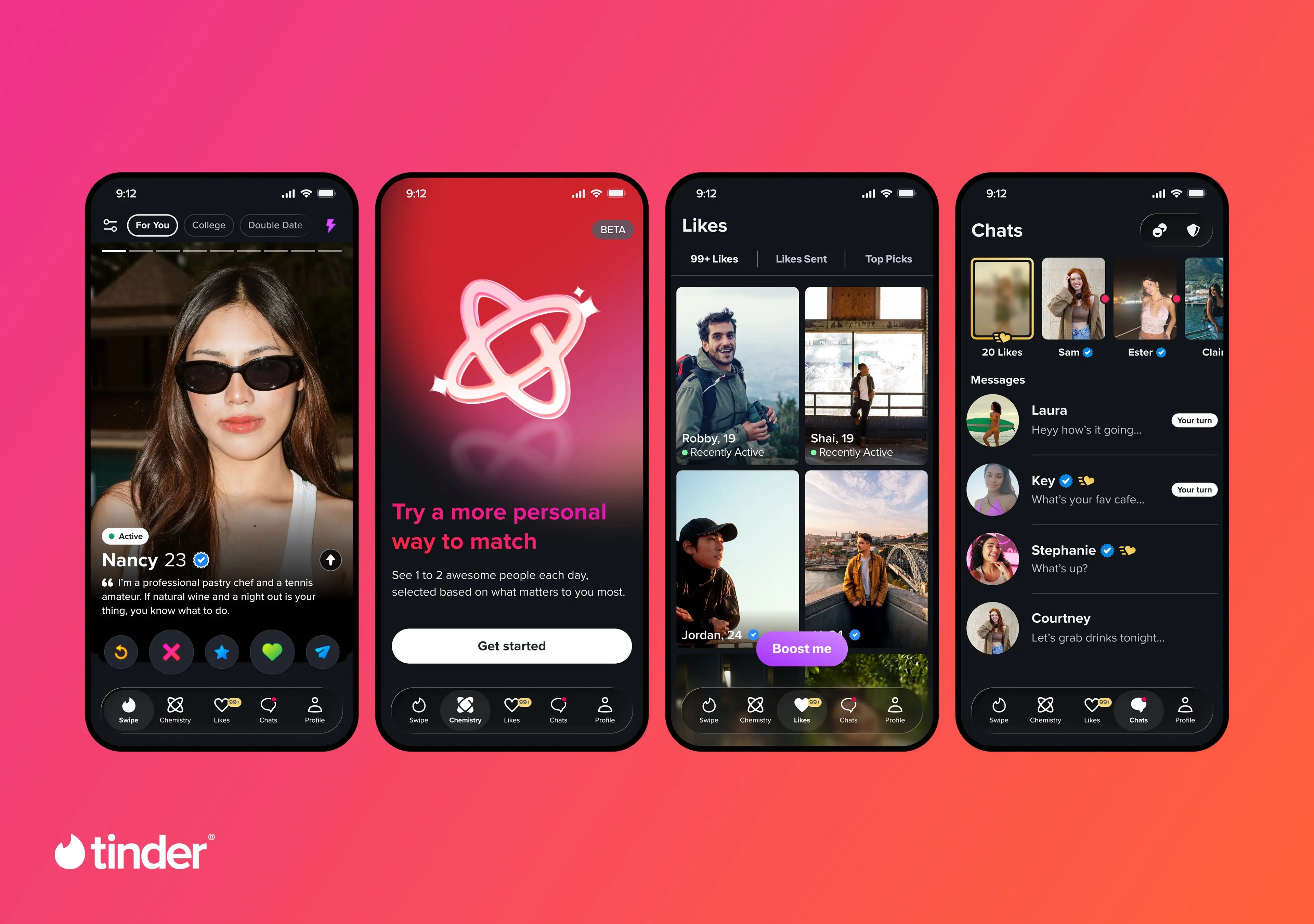
That fewer swipes part is key. Hilary Paine, Tinder’s VP of product, told Business Insider that AI-driven matchmaking is a way to stay competitive in the attention economy.
“AI is pushing every consumer app toward personalization,” she said. “The more that we can do to get you efficiently to a spark and a connection, a conversation, hopefully a date, that’s a better experience for you.”
Even Grindr — long considered more of a hookup marketplace than a matchmaker — is trying its hand at AI.
Grindr, which gained a reputation as a place where gay men go to seek short flings with faceless profiles, has added a recommendation feature using AI. There’s a “For You” feed with profiles of users who might be a good match, and “A-List,” another matching recommendation feed based on profiles with which the user has already chatted.
It’s still an open question about whether these AI features will work — and whether they’ll be popular. Tinder’s Paine said that Chemistry is performing well with Gen Z, the app’s key demographic. Grindr’s chief product officer AJ Balance said that recommendations are a “very strong early hit.”
As Raymond James analyst Andrew Marok put it: “You can’t just take a product that’s out of favor, put AI on top of it and say, ‘OK, now we have a product that’s in favor.”
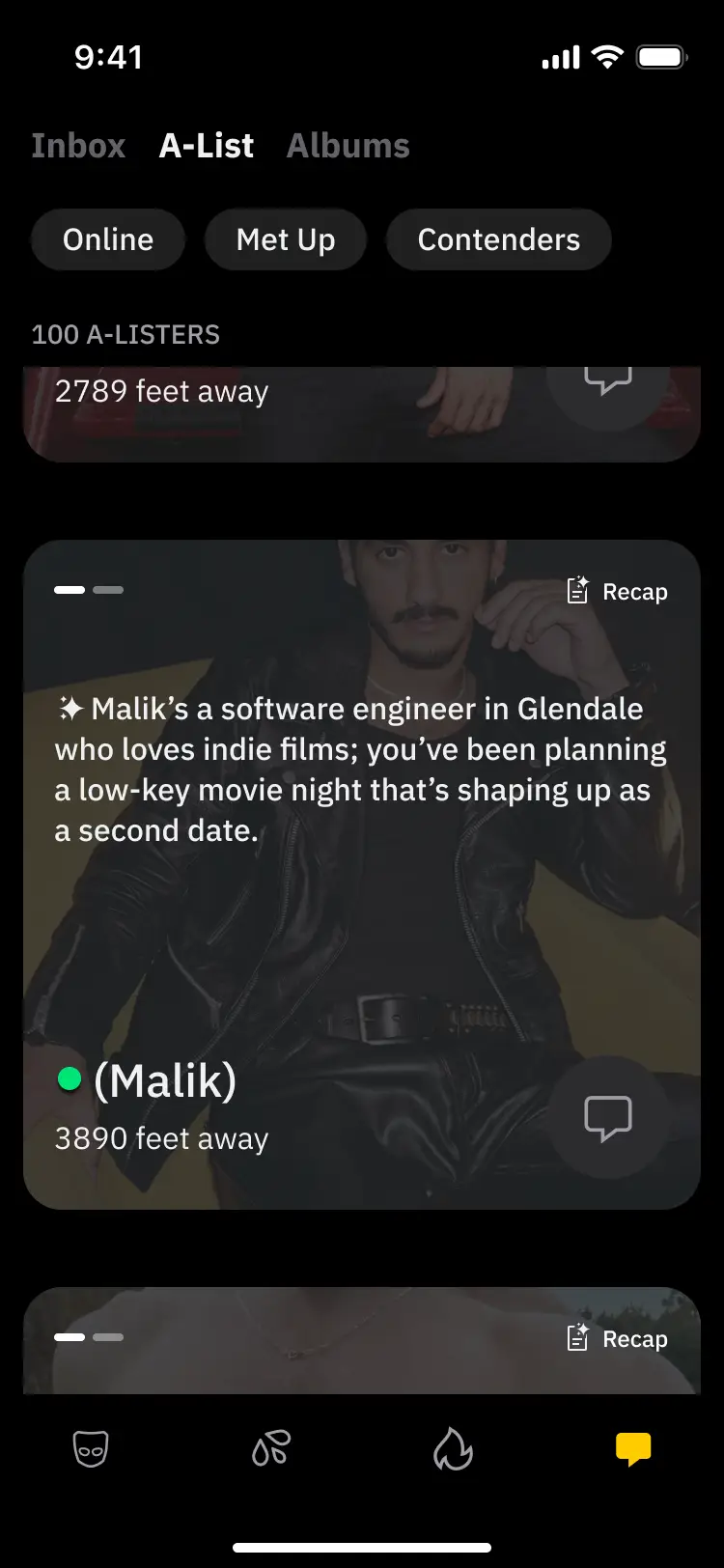
One longtime Grindr user, Paul Lazo, isn’t impressed. The 33-year-old video editor from Philadelphia has been on the app for 11 years and now pays $19.99 a month for the Pro version.
He’s found its recommendations lackluster.
“I’m very much into bears and larger men,” Lazo told Business Insider. But Lazo said his “For You” page is filled with young, fit men.
The feature is new this year and could still improve. A Grindr spokesperson said the For You product still runs on older machine learning.
Other fish in the sea
Waiting in the wings is a new batch of AI-first dating startups seeking to attract dissatisfied users before Tinder, Hinge, and the like can catch up.
“In the same way that mobile gave birth to Tinder and Bumble, AI could give birth to two multibillion-dollar companies,” said Yagan, the cofounder of OkCupid and former CEO of Match Group.
The app Sitch, for example, has raised a total of $9 million since launching in 2024 and charges users $90 for three matches. Its AI is trained on cofounder Nandini Mullaji’s experience as a real-life matchmaker; it brings daters a handful of “set-ups” each week and provides an AI matchmaking chatbot.
“We understand people have been burned in the past,” Mullaji told Business Insider in April. “We are coming in and saying, ‘Hey, we have a business model shift, and we have a total platform shift.'”
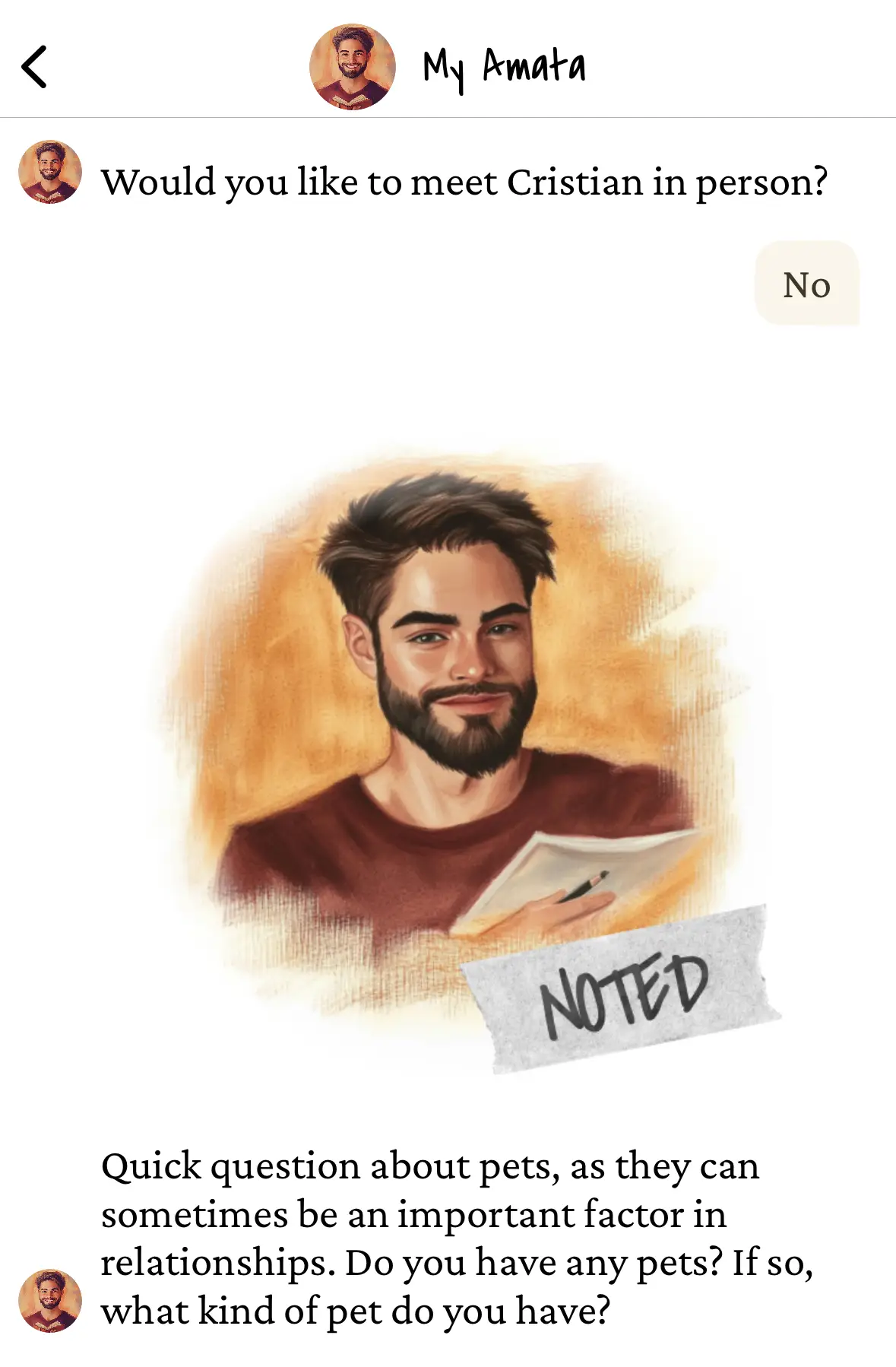
There’s a new fleet of similar apps pitching AI as a Hail Mary for dating apps. Known, Ditto, and Amata each launched AI-matchmaking apps this year.
Plus, traditionally non-romantic players are trying their hand.
Facebook has introduced an AI dating assistant that acts like a matchmaker, combing through the platform’s rolodex of users to find “someone that I could bring home to my parents” or “a Brooklyn tech bro who would go to EDM concerts with me,” product manager Neha Kumar told Business Insider in October.
Some big names are lining up behind Facebook. Amanda Bradford, who founded The League before selling it to Match Group in 2022, put her money on the “dark horse” for the incumbent to best leverage AI.
“They’re the only actual ‘tech company’ of the bunch, and the only one who seriously invests in and has true product, engineering, and AI talent,” Bradford said.
Still, it will be an uphill climb for the startups. Dating apps need to reach a critical mass of users to be successful.
“Incumbents have a huge benefit,” said Heitzmann, the venture capitalist.
Read the original article on Business Insider
The post The AI dating arms race: Dating apps are betting millions that you’ll fall back in love with them appeared first on Business Insider.