One of the more peculiar fads of the last decade was the rise of the “land acknowledgment.” This ritual usually involves affluent liberals apologetically paying homage to Native American tribes in a given region.
In 2022, a University of Washington professor, Stuart Reges, mocked the practice on his syllabus. He was subject to a months-long disciplinary investigation. Last week, the U.S. Court of Appeals for the Ninth Circuit ruled that this violated the professor’s First Amendment rights. It’s an encouraging sign, as the grip of identity politics on America’s colleges and universities continues to relax.
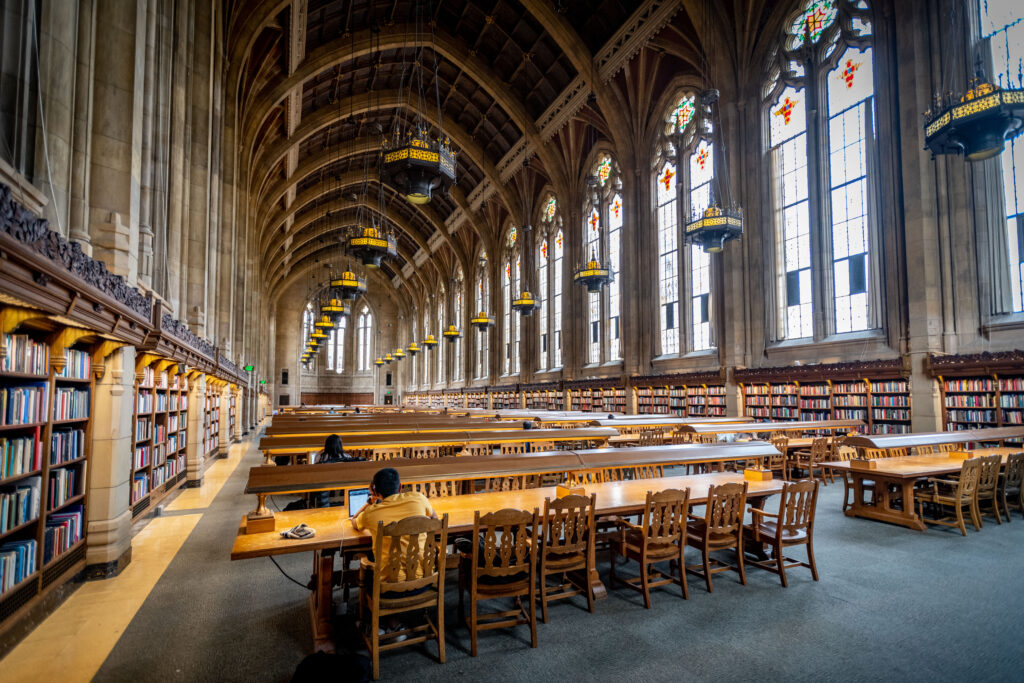
The school in this case started using a land acknowledgment in 2015. It declares: “The University of Washington acknowledges the Coast Salish peoples of this land, the land which touches the shared waters of all tribes and bands within the Suquamish, Tulalip and Muckleshoot nations.” The diversity office said the purpose was “to acknowledge that our campus sits on occupied land.” Starting in 2019, the university’s Paul G. Allen School of Computer Science and Engineering recommended that professors include one on their course syllabi.
Reges, who taught an introductory course on computer science, “thought the land acknowledgment expressed ‘that UW’s presence is somehow illegitimate, shameful, morally wrong, or unlawful,’ and considered it ‘an empty, performative act of moralism’ ripe for parody,” according to the opinion. His 2022 syllabus instead said: “I acknowledge that by the labor theory of property the Coast Salish people can claim historical ownership of almost none of the land currently occupied by the University of Washington.”
This was during the depths of a cultural revolution on campuses. Offended students mobilized. The public university pronounced itself “horrified” by Reges’ syllabus, launched an investigation and withheld his pay increase.
The Ninth Circuit ruled that this amounted to unlawful government retaliation for Reges’ speech. Public employee speech can be limited if it significantly disrupts the workplace. But the panel held, by a 2-1 vote, that student offense by itself doesn’t count as legally-relevant disruption. “First Amendment protection that rises and falls depending on how upset students become at a professor’s message is little protection at all,” the opinion says.
The dissent counters that land acknowledgment debates have nothing to do with computer science. That’s true. But as the majority notes, it was the computer science school that pushed for syllabi to include these incantations in the first place. Once universities try to impose political orthodoxy in science classes, professors have to be free to dissent from it.
Whatever you think of land acknowledgements, they are not particularly important. But it is important that universities allow for open debate, and this sound legal ruling furthers that cause.
The post Parody is protected in the Pacific Northwest appeared first on Washington Post.