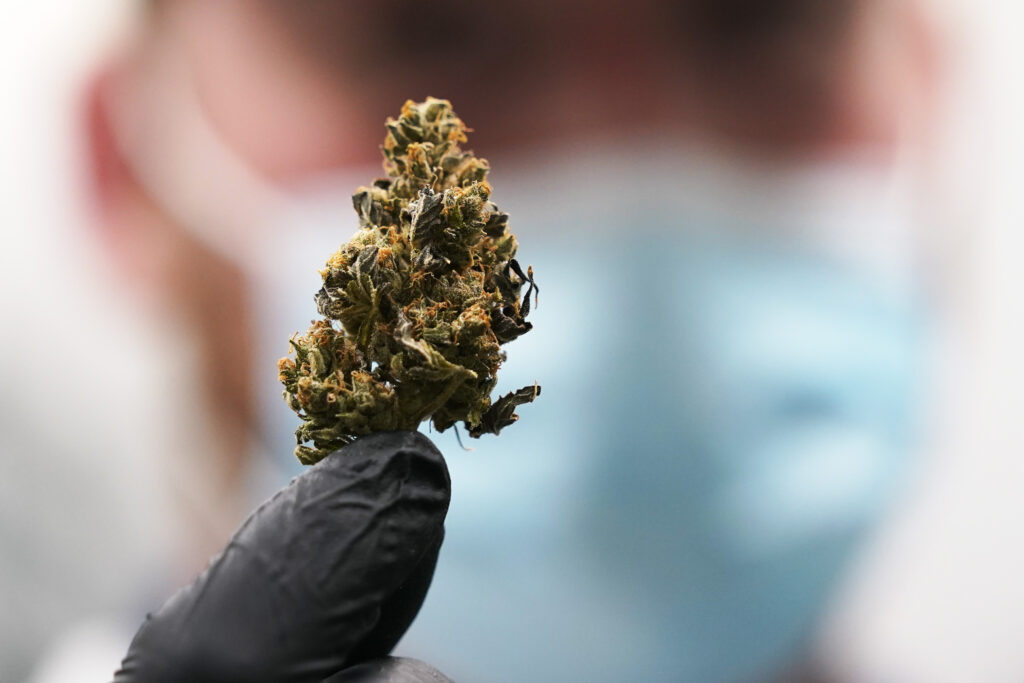
These days, it’s hard to miss cannabis dispensaries. In the 40 states (plus D.C.) that have legalized medical marijuana, storefronts and advertisements promote cannabis as a treatment for virtually every condition, from chronic pain to anxiety to (ironically) drug addiction. Many consumers appear persuaded. In one survey, more than a quarter of adults in the United States and Canada have tried cannabis for medical purposes.
But how well-supported are these claims? A new review published in JAMA, which attempted to examine every high-quality study from the last 15 years alongside guidelines from major medical societies, came to a sobering conclusion: For most uses, the evidence was limited or inconclusive. In many cases, medical organizations recommend against using cannabis because the evidence for harm outweighed potential benefits.
The review was careful to distinguish cannabis from specific cannabinoids. Cannabis refers to the plant and its various forms, including dried leaves and extracts, which contain dozens of biologically active compounds in unpredictable amounts. Cannabinoids are the individual chemical components, some of which have been rigorously studied and approved by the Food and Drug Administration for specific medical uses.
These approved uses include treatments for severe nausea and vomiting caused by chemotherapy, loss of appetite in people with advanced HIV, and certain rare forms of epilepsy that cause frequent, hard-to-control seizures. These medications are prescribed in standardized doses and monitored as part of routine medical care.
That is not the case for most cannabis products sold in dispensaries. These products are not regulated by the FDA; instead, oversight occurs at the state level, where standards for testing, labeling and quality vary widely. Potency can differ substantially from product to product, and testing in some products has identified contaminants such as mold, pesticides, lead and arsenic.
Kevin Hill, a co-author of the JAMA paper and the director of addiction psychiatry at Beth Israel Deaconess Medical Center, told me that many people mistakenly think of cannabis as a wellness tool. “If they are going to be using it medically, we want them to be using it for conditions that have some evidence,” he said. “And we’re learning that there really aren’t that many conditions that have evidence right now.”
For instance, one of the most common uses of cannabis is pain relief, yet rigorous studies have not shown clear benefit. A 2023 Cochrane meta-analysis concluded that cannabis products were likely ineffective in relieving severe cancer pain compared to a placebo. And while some cannabinoid compounds have shown the promise for treating chronic non-cancer pain, the data have not been positive for cannabis, leading medical societies such as the International Association for the Study of Pain and the American College of Physicians to recommend against cannabis as first-line treatment for pain.
Another common use of cannabis is to address mental health conditions, such as anxiety, depression and post-traumatic stress disorder. Here, again, large randomized-controlled trials have not found evidence of benefit. As a result, the American Psychiatric Association and the American Society of Addiction Medicine recommend against such self-treatment. They note that cannabis use may in fact worsen or trigger psychoses and increased suicide risk.
What about sleep? A meta-analysis of 39 trials found that cannabis use may be associated with a small improvement in sleep among chronic pain patients; however, that came with notable side effects, such as dizziness and daytime fatigue. Reflecting these findings, World Sleep Society issued guidelines against using cannabis for insomnia.
Similar patterns appeared across other conditions reviewed, including dementia, glaucoma and multiple sclerosis. In all these cases, evidence of benefit was at best limited or inconsistent.
Meanwhile, plenty of studies documented serious harms from cannabis use. Cannabis intoxication can impair judgment, perception and coordination, and has been shown to increase motor vehicle fatalities. With longer-term use, there is a substantial risk of cannabis use disorder, which affects about 30 percent of regular users and is itself an addiction marked by cravings and withdrawal symptoms that make it difficult to give up the drug even as it disrupts work and relationships. Multiple studies have also linked regular use to higher rates of bronchitis, heart attack and stroke.
None of this is an argument for prohibition or criminalization. But it is a case for caution, especially as the Trump administration seeks to ease restrictions in ways that would further accelerate growth of the cannabis industry. People who choose cannabis should be clear-eyed that they aren’t using a wellness product, just as smoking cigarettes and drinking alcohol aren’t health-promoting decisions. As cannabis use soars, what’s needed is far more public education that cannabis, too, is an addictive drug with real risk for harm.
The post ‘Medical marijuana’ may be causing more harm than good appeared first on Washington Post.