A slow-starting race to build underground salt caverns could hamper the AI data center boom and weaken power delivery for the massive computing facilities that typically require 99.999% reliability. About half as much new gas storage is planned than will be needed in the future, industry sources estimate. Yes, you read that correctly, salt caverns. Manmade reservoirs thousands of feet below the surface are ideal storage structures for the volume of natural gas required to power AI data centers being built by hyperscalers and to feed the rapid growth of gas-exporters along the U.S. Gulf Coast. U.S. natural gas output is projected to spike another 15-25% from 2024 through 2030—and continue rising—because of a doubling of gas exports and a surge in domestic demand from the data center construction wave, ongoing electrification, and manufacturing onshoring.
The lack of underground storage now threatens to become a bottleneck in the AI race against China. Without nearby gas storage facilities, customers are reliant on gas pipelines for their supplies. Pipes can fail due to weather events, landslides, and corrosion, leaving facilities without power even if gas is available elsewhere.
A wave of construction for new pipelines and power plants is underway—despite a shortage of gas-fired turbines for power generation—but hardly any new gas storage has been built in over a decade.
“I don’t want to be a bomb thrower or a Chicken Little, but it just seems like everybody in the data center world is in a great big giant hurry, and they haven’t thought about all the things that can happen on the gas side,” said Edmund Knolle, president of Gulf Coast Midstream Partners, which is developing a major salt cavern gas storage project near Houston slated to come online by the end of 2030.
Electricity and gas heating costs already are on the rise because of higher gas demand, and the lack of storage is expected to add to the volatility and rising utility bills going forward, according to energy analysts and developers.
“I think we’re going to be way short of storage,” Knolle added. “Once the light bulb turns on for a lot of people, we’re going to be looking at years to create storage.”
Slowly speeding up
Enbridge (No. 397 on the Fortune Global 500) is North America’s largest pipeline and energy storage company, and it is currently in the process of building more new gas storage than anyone—all from expanding its existing salt caverns in Texas and Louisiana. Caitlin Tessin, vice president for Enbridge’s gas transmission, told Fortune she isn’t losing sleep over storage just yet, but it is a growing issue.
“Our pipes are full. There is an incredible demand from a natural gas perspective, and our existing infrastructure and assets are full,” Tessin said. “There’s some concern around supply of storage.”
“This [growth] is absolutely unprecedented from a gas storage and demand perspective,” she added.
Tessin said natural gas pipelines and storage will prove to be the “backbone” of digital infrastructure AI, even pairing gas with renewable energy to power AI. “Foremost for that crowd is reliability for powering those data centers, offering that 24/7 baseload power, and rapid deployment.”
Energy analyst Jack Weixel, of East Daley Analytics, said there around more than a dozen gas storage projects underway—with a couple recently completed—but some will fall short of the necessary financing to break ground, and others may not be completed for another five years.
About twice as much storage capacity is needed than the roughly 300 billion cubic feet of storage currently planned, Weixel said. The need for data centers, electrification, and gas exports is huge, but the key is still to maintain a strong grid overall, he said, and that requires more gas storage for steady reliability.
“The No. 1 rule there for utilities is don’t freeze grandma,” Weixel said.
Salt of the earth
Unlike with the U.S. Strategic Petroleum Reserve for crude oil, there’s no federal backstop for natural gas storage.
That means the industry must build commercial storage itself with the promise of revenues years away—a key reason why there’s a wait-and-see approach to commencing projects only once there are strong enough demand and pricing signals.
There are two main options for developing storage. The first involves drilling into naturally occurring salt domes in the earth and injecting water to pump and hollow out the space. This “leaching” of the caverns is time consuming, often requiring four years of construction.
The cheaper and faster option is using existing gas wells that are dried up, essentially pumping gas back into the depleted reservoirs. But such reservoirs are not as structurally sound as salt caverns and cannot handle higher pressures, so companies cannot inject and withdraw gas as frequently from them. Typically, injection occurs during the summer and fall, and the gas is pumped back out for winter when heating demand spikes.
Weather disruptions can range from fog to pipes freezing, but the biggest fear is a massive hurricane aimed right at the gas-exporting infrastructure concentrated along the Texas and Louisiana Gulf Coast, Weixel said. That could lead to a lot of stranded gas—nationwide, storage is already near capacity.
“Typically, those hurricanes hit late in injection season, so there may not be room for the gas. It’s operational chaos,” Weixel said.
With adequate storage, companies can “save the gas and squirrel it away like an acorn. And then pull it out in the winter once operations are normal.”
What’s being done?
Knolle’s FRESH project (Freeport Energy Storage Hub) southwest of Houston aims to commence construction in the back half of 2026 to 26 billion cubic feet of gas capacity between two salt caverns.
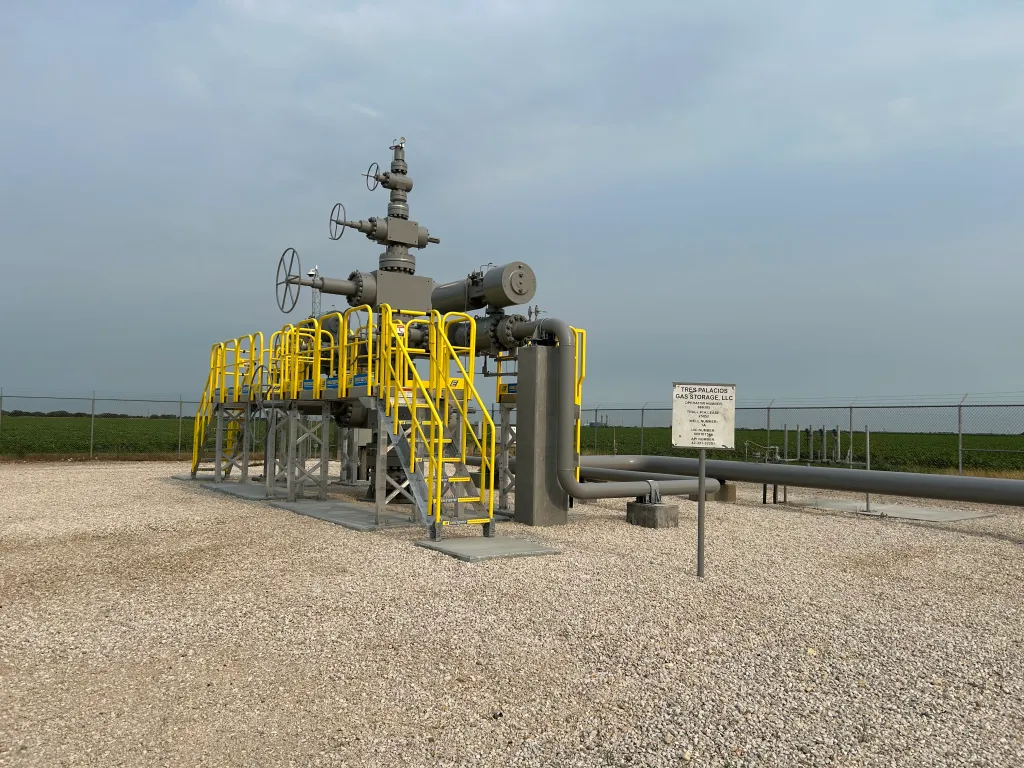
Enbridge is expanding its Moss Bluff and Egan storage facilities in Texas and Louisiana, respectively to add a combined 23 billion cubic feet, Tessin said, coming online incrementally from 2028 to 2033. Enbridge also recently completed an expansion of its large Tres Palacios hub in South Texas and just announced more growth expected there—three new caverns adding 24 billion cubic feet from 2028 to 2030.
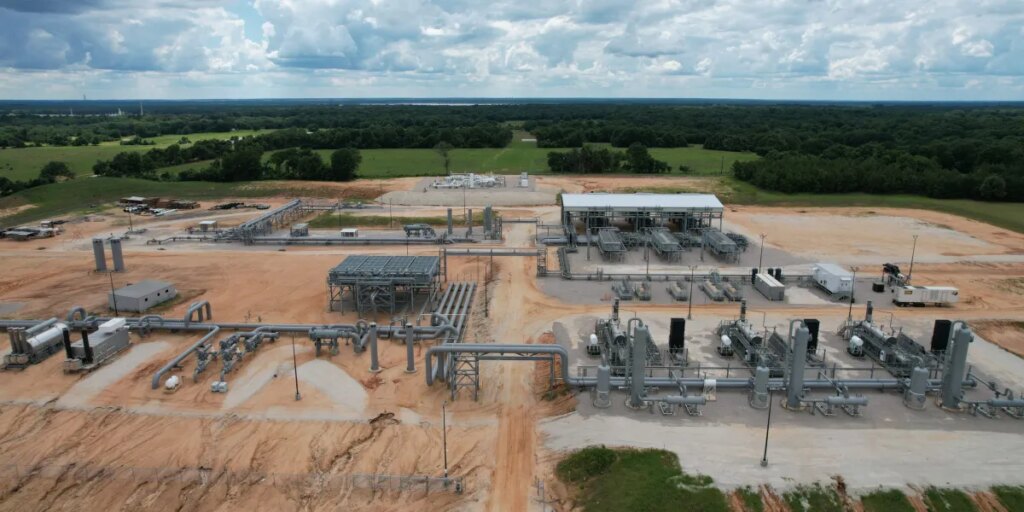
But the only major storage project recently completed is Trinity Gas Storage’s brand-new East Texas facility with 24 billion cubic feet of storage. In December, Trinity just approved an expansion to add another 13 billion feet by late summer 2026. Trinity’s approach is one of the only projects using depleted reservoirs instead of salt domes.
Trinity CEO Jim Goetz told Fortune that more storage built quickly is critical to keep up with the pace of the data center boom, especially because so many of them require building their own temporary gas-fired power before they can be connected to the power grid. The storage provides necessary redundancies for any gas or power disruptions, he said.
The industry built up enough storage for the early days of the shale gas boom through 2010 or so, but it completely stagnated from then until now. He called this a wave of construction growth for “gas storage super-cycle 2.0.”
“The market is kind of like a pendulum, and we seem to go from one extreme to the other,” Goetz said. “Now we’re caught behind the eight-ball here, and we have to catch up.”
He worries the industry isn’t moving forward with enough storage projects quickly enough. And, yet, he’s oddly confident that capitalism will find a way—just as it has in the past.
“It’s a problem that will get solved,” Goetz said. “How? I’m not necessarily sure. But it must get solved; I think it’s just there’s too much riding on it.”
The post Little-known underground salt caverns could slow the AI boom and its thirst for power appeared first on Fortune.