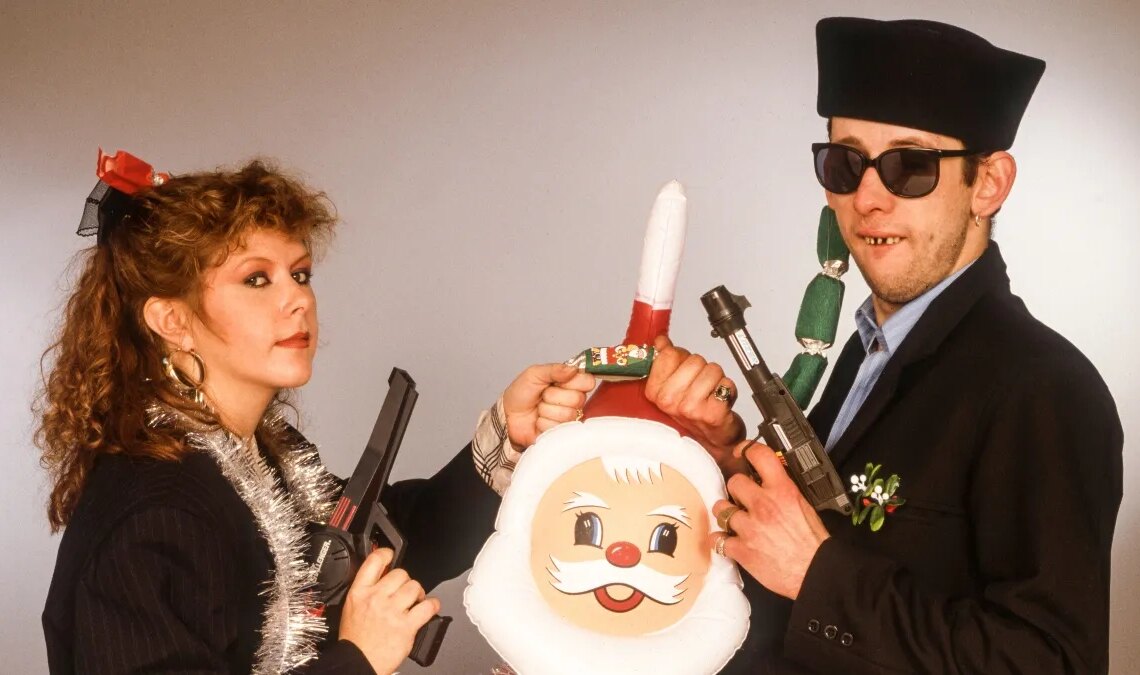
The Pogues’ 1987 hit song “Fairytale of New York” makes the rounds again every holiday season. It’s a rowdy, bare-knuckle kind of song, ground against the pavement by Shane MacGowan’s gritty vocals. Kirsty MacColl’s contribution is a gentle caress of the cheek, until she rears back and slaps you, too.
Overall, it’s a very typical Pogues-ish song. It’s also a very typical product of its time, that being the late 80s. The f-slur is sung by MacColl in the third verse as part of an insult to her fictional male counterpart. This caused controversy years later. Its use was often defended, including by MacGowan, who clarified that “Fairytale of New York” was not a homophobic song.
“The word was used by the character because it fitted with the way she would speak and with her character,” MacGowan said in a 2018 statement, per NME. “She is not supposed to be a nice person, or even a wholesome person. She is a woman of a certain generation at a certain time in history, and she is down on her luck and desperate.”
While Others Defended The Slur, The Pogues Made Their Stance Clear
Having a fictional person use a slur as a deliberate character choice is something that’s often up for debate. Is it necessary? Does the character’s morality, or lack thereof, come across without it? Additionally, some art forms are more accepting of those character choices, such as literature or film. This was noted by the surviving Pogues when they spoke to NME in 2024.
“If those lines were delivered in a play, it would be different, but a song puts words into people’s mouths to drunkenly sing, and they might not even realize what they’re singing, but suddenly it’s in the tube station,” said Jem Finer.
Before frontman Shane MacGowan’s passing in 2023, there were a few debates about “Fairytale of New York” in particular. In 2020, BBC Radio 1 announced that it would censor the slur during broadcasts around Christmas. BBC Radio 2 did the same in 2022.
Some contemporaries of The Pogues didn’t agree with the censorship. For instance, Nick Cave felt it erased the “outlaw spirit” and “dignity” of the song. The BBC replaced it with “haggard,” which shows up in some covers. In a 2020 post on his Red Hand Files website, Cave wrote, “[it] destroys the song by deflating it right at its essential and most reckless moment, stripping it of its value. It becomes a song that has been tampered with, compromised, tamed, and neutered, and can no longer be called a great song.”
“You [Have] To Be More Mindful”
Now, The Pogues are just James Fearnley, Jem Finer, and Spider Stacy. Notably, they continue to keep MacGowan’s spirit alive in the music. But there’s no denying that things are different from what they were in 1987.
“When the BBC announced they were censoring that lyric, I was looking at Twitter where a guy said that he loved The Pogues but every Christmas when he hears drunk blokes shouting that word in the street – when they’re singing along to ‘Fairytale of New York’ – he’s reminded of the number of times he heard it when having the s*** kicked out of him at school for being gay,” Stacy said in 2024.
He continued, “My personal point of view is that people shouldn’t have to put up with that, so I took it upon myself to say we were in agreement with the BBC’s decision. Times change and you [have] to be more mindful of what you’re saying and when you’re saying it.”
Photo by Tim Roney/Getty Images
The post How The Pogues Responded to Censorship of Their Hit Song ‘Fairytale of New York’: ‘Times Change’ appeared first on VICE.