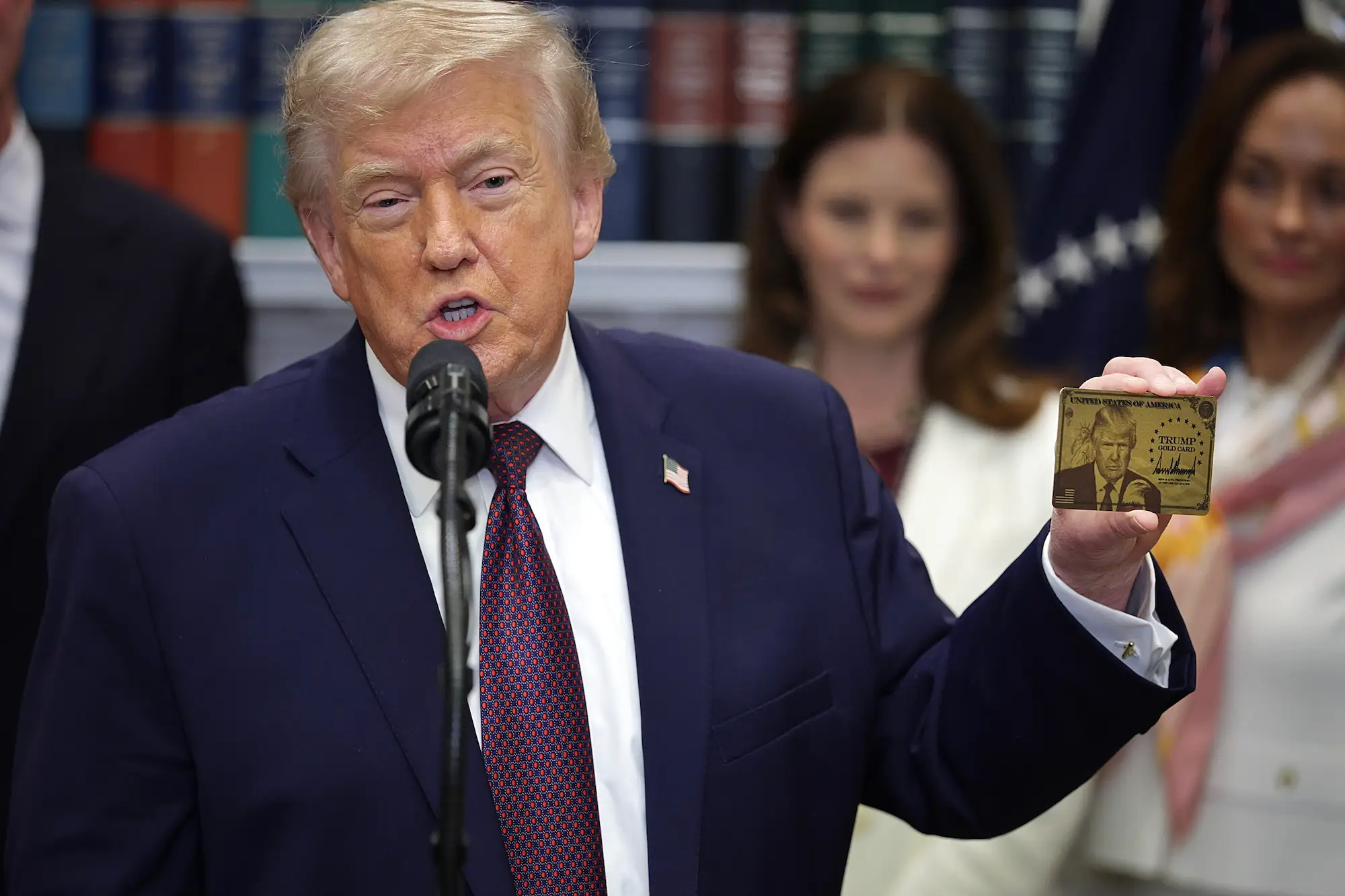
For the hefty price of $1 million — plus at least $15,000 in fees — you could potentially get permanent residency in the United States.
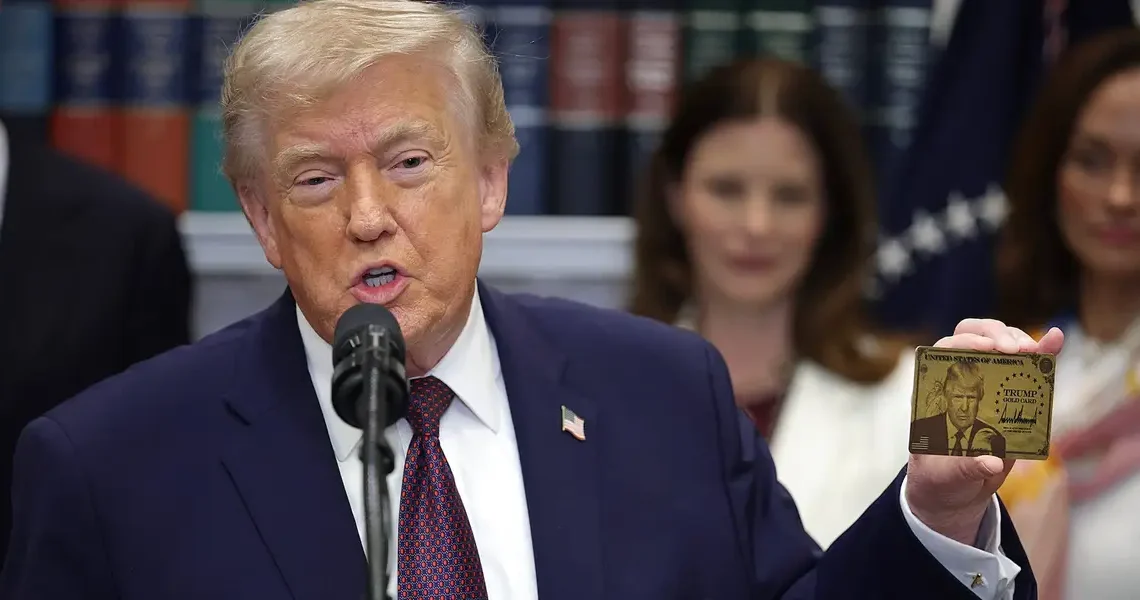
That’s the promise of President Donald Trump’s “Gold Card” visa program, which formally launched in early December.
The program is designed to attract wealthy foreigners to the US. Commerce Secretary Howard Lutnick said at an event on Friday that the program had already raised $1.3 billion since launching.
Yet it also comes at a time when the Trump administration is otherwise cracking down on other legal forms of immigration.
Trump signed an executive order establishing the Gold Card program in September. Here’s what to know about the program.
It costs $1 million — or $2 million for a corporate sponsor
According to the Trump administration’s official website for the Gold Card, individuals can receive US residency in “record time” if they:
- Pay a $15,000 process fee to the Department of Homeland Security;
- Receive background approval;
- Make a $1 million gift to the US Department of Commerce.
Prospective Gold Card holders can also include their spouses and children on their application, but for a price — specifically, an additional $1 million plus $15,000 in DHS fees per person.
There’s also a “Corporate Gold Card” program, which allows a corporation to give one of its employees US residency for a $2 million gift.
That program also allows the Gold Card to be transferred to another employee, for a fee.
According to the website, approved cardholders receive EB-1 or EB-2 visas.
The EB-1 visa — known colloquially as the “Einstein visa” — was originally intended for foreign nationals with extraordinary abilities, outstanding professors and researchers, and multinational managers and executives.
The EB-2 visa is for foreign nationals with advanced degrees or exceptional abilities.
It comes as Trump cracks down on immigration broadly — including for high-skilled workers
Even as Trump rolls out the red carpet for foreigners who can pay $1 million, his administration has sought to crack down on other visas.
The most notable example is the H-1B visa, which is for high-skilled foreign workers, many of whom work in the tech sector.
The administration moved to impose a $100,000 fee for new H-1B visas in September, which initially caused chaos at major tech companies amid confusion over whether that fee would apply to current employees who leave the country.
Even more chaos came as the administration rolled out social media screening requirements for visa holders, prompting some companies to warn their employees against travel.
Last week, the administration also said it would pause the DV1 diversity visa lottery program.
Several other countries offer residency in exchange for investment
The US wouldn’t be the first country to establish a residence-by-investment program.
In fact, there are several countries that offer foreigners residency in exchange for payment or investment.
They include countries like Thailand, Panama, Latvia, Portugal, Italy, and Greece.
There’s a $5 million ‘Platinum Card’ in the works
The Gold Card website also teases a “Platinum Card,” which they say is “Coming Soon.” The September executive order does not mention a Platinum Card.
Under the proposed plan, foreign nationals will be able to pay $5 million and the $15,000 DHS fees in exchange for a visa allowing them to stay in the US for 270 days without being subject to US taxes on non-US income.
That $5 million sum mirrors the $5 million originally floated by Trump officials for the Gold Card, which has since been lowered to $1 million.
The website includes a waitlist, along with a note that there’s “no assurance that the Platinum Card contribution will remain at $5 million.”
Read the original article on Business Insider
The post What to know about Trump’s $1 million ‘Gold Card’ visas appeared first on Business Insider.