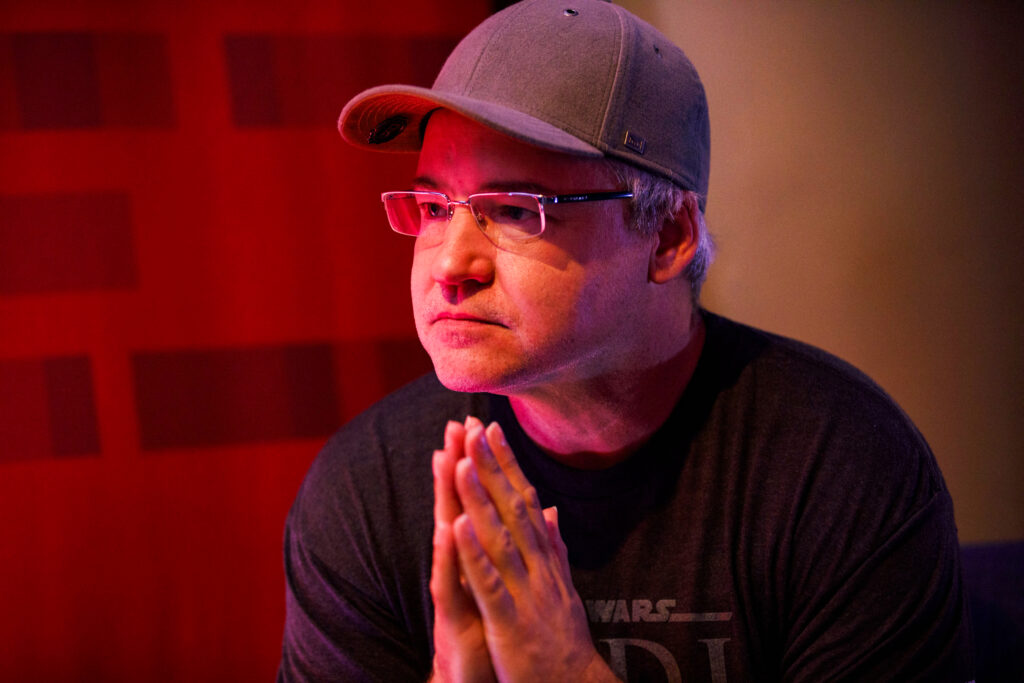
When I think about Vince Zampella, and it’s often, I don’t think about him as just the founder of studios that “created several of the world’s best-selling video games,” as NBC4 Los Angeles reports in its story about his fatal car crash Sunday.
I don’t even think about how the 55-year-old game developer co-created Call of Duty, an intellectual property worth tens of billions of dollars and consistently the best-selling game series almost every year since 2009. Any cold reporting of his death, or even an obituary of his accomplishments, couldn’t hope to perfectly paint his legacy, which is nearly immeasurable.
I think about the first time I played “Medal of Honor: Allied Assault,” the game he helped make in 2002 with the now-defunct company 2015 Inc. The Medal of Honor game concept started under Steven Spielberg’s direction, fresh from finishing the “Band of Brothers” series with Tom Hanks. Spielberg saw his son play “GoldenEye 007,” the groundbreaking first-person shooter console game. Spielberg, of course, wanted to recreate the dread and energy he captured in “Saving Private Ryan.”
When I think about Zampella, I always think about “Saving Private Ryan.” It was 1998, and I was alone in an empty theater in the middle of nowhere, namely Stanislaus County, California. I was alone, a 17-year-old traveling up and down California looking for the right, cheap and accessible state college. It was stressful, but for a few hours, Spielberg and Tom Hanks helped me time travel back to Omaha Beach in 1944.
That indelible feeling would come again four years later as a college student at my chosen campus, Cal State Fullerton. The first few Medal of Honor games were pretty good, but it wasn’t until Zampella and his team made “Allied Assault” that Spielberg’s vision was fully realized. I went to the Fullerton library to boot up my copy since my own laptop wasn’t powerful enough to run it. I put on headphones, and once again, I was transported back to Omaha Beach.
It wasn’t just how the game looked, how that beach felt impossibly large. It wasn’t just a video game level. It was an experience that made forward motion feel like a fatal mistake. Until then, first-person shooting games like “Doom” were power fantasies, but when that ramp dropped to reveal the horrors of D-Day, I was pushed into screams and gunfire. The ping of reloading the M1 Garand rifle reassured me that I was still alive, even after hearing bullets whiz by my ear and seeing them cut thin white lines through the ocean water. This was the first time I realized video games can place the audience into moments of history with great fidelity.
There was nothing like this before in video games or entertainment. It felt like video games as an art form starting to crest and peak. Zampella and his team didn’t just make a hit video game. Their vision leaped off the screen and felt like our own memories. They were the new dreamweavers of the 21st century.
Rest in peace Vince. As one of the founders of Infinity Ward and Call of Duty, you will always have a special place in our history. Your legacy of creating iconic, lasting entertainment is immeasurable. Our deepest condolences to Vince’s family and loved ones upon this…
— Infinity Ward (@InfinityWard) December 22, 2025
Unhappy with their experience under publisher Electronic Arts, Zampella and a few developers left 2015 to form Infinity Ward under another mega-publisher, Activision, which is now owned by Microsoft. Their intention was to create the “Medal of Honor killer” series. It would be called “Call of Duty.” The earliest games in the series were excellent but felt like evolutions of the older concept, including “Call of Duty 2,” which was basically a better version of “Allied Assault.”
“Call of Duty 4: Modern Warfare” in 2007 would not only change the trajectory of the series, but become a titan in the arts. Every online video game today owes its existence to “Modern Warfare” and its eternal incentive loop for continuous, addictive online play.
Under Zampella, “Modern Warfare” wasn’t afraid to portray a misguided military leading young American men to senseless death. It devoted an entire video game level to the American protagonist, Sgt. Paul Jackson, dying inside a nuclear attack. We the player experienced it through the first-person perspective. This was bold, transgressive storytelling. We weren’t on Omaha Beach anymore. Beyond that, its cinematic presentation and smooth performance set the bar for blockbuster video games. “Modern Warfare” is so influential, it’s arguable that video games have barely evolved past it.
Zampella would try anyway, and to great success. He would leave Infinity Ward to create Respawn Entertainment, back under the Electronic Arts umbrella. There, Respawn would create the cult first-person series Titanfalland its more popular live-service spin-off, “Apex Legends.” The studio would also develop the Star Wars: Jedi series, some of the most beloved Star Wars video games in history.
EA’s Battlefield series, another one inspired by Zampella and Medal of Honor, had been struggling in recent years, so the publisher tapped Zampella to lead the franchise. It is poetic that 2025 ends not just with his tragic death, but his success. “Battlefield 6” would become the most critically acclaimed and best-selling first-person war game of 2025 so far, toppling the latest, floundering Call of Duty entry. As players, we always felt that the Zampella-driven Call of Duty titles were special. The success and quality of “Battlefield 6” proves that the Zampella touch was beyond suspicion and myth. But what defines that difference?
Maybe it’s somewhere in his energy during press interviews. You could always feel his passion for making games while playing them yourself, but his excitement for his own games felt palpable and real during interviews. I finally met him in 2019 at a games industry summit just as I started to cover video games. I was moderator of a panel talk of industry titans that included Zampella.
I was nervous to meet them all, but Zampella above all. I had nothing to fear, as he was just as warm and energetic in person. Of course, I talked to him about “Saving Private Ryan” and “Allied Assault.” He was well aware of the impact he made on young folks like me, and he always seemed humbled by it. I’m not going to pretend we were close; it only feels like it because I have always been thinking about Zampella. Millions of us do, even unconsciously.
Today, I’m thinking of him tearing up during a 2020 Los Angeles Times interview, recalling all the discussions he’s had with veterans and accompanying them when they revisit old battlefields. He remembered visiting Arlington Cemetery with his then-18-year-old son, heartbroken to see soldiers his son’s age on those gravestones. Maybe the Zampella touch was just a human one — everywhere in the past generations of games, and missed in those to come.
The post Vince Zampella didn’t just make hit games. He changed the medium. appeared first on Washington Post.