A federal judge in Washington ruled on Monday that the Trump administration had to either help bring back to the United States a group of Venezuelan immigrants who were deported to El Salvador in March and subsequently sent back to their homeland or give them a chance to contest their expulsions in the U.S. courts.
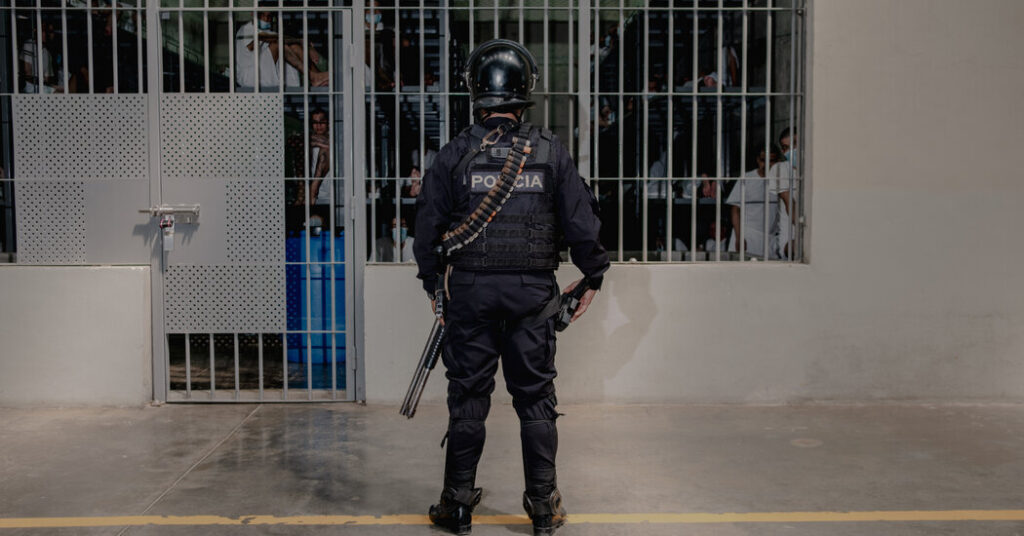
The ruling by the judge, James E. Boasberg, was the latest twist in the long-running saga of the Venezuelan men who were expelled from the country on March 15 under a proclamation by President Trump invoking the expansive powers of an 18th-century law known as the Alien Enemies Act. Mr. Trump used the act to summarily deport the men, accused of belonging to the Venezuelan street gang Tren de Aragua, to a notorious prison in El Salvador where many later claimed they had been tortured.
In the past nine months, the case of the Venezuelans has passed through every layer of the federal courts, including the Supreme Court, on a variety of issues — among them, whether the Trump administration should be held in contempt for having violated Judge Boasberg’s initial order stopping the deportation flights from going to El Salvador.
The most important aspect of the judge’s ruling on Monday was to present the administration with a choice about what to do with the men who were returned to Venezuela this summer under a prisoner swap in exchange for 10 Americans and U.S. permanent residents. By Jan. 5, Judge Boasberg ruled, Trump officials would have to decide whether they wanted to “facilitate” the return of the men to the United States or permit them to use the federal courts to challenge their original removals.
If those challenges are made, they would not ultimately rest on arguments that Mr. Trump had improperly invoked the Alien Enemies Act to begin with — a question that is currently being heard by a different court in Texas. Rather, the challenges would be based on the narrower issue of whether the men were members of Tren de Aragua at all and should have fallen under the purview of the president’s proclamation.
“Even if the A.E.A. was properly invoked as a general matter, it is beyond cavil that designated ‘alien enemies’ under that act must be afforded some process to contest their designation,” Judge Boasberg wrote. “Here, plaintiffs received none. They were not told of their designation or informed that they could challenge it before being loaded onto planes and shipped out of the United States.”
The American Civil Liberties Union, which has been representing the Venezuelan men, hailed Judge Boasberg’s ruling as a victory for its clients.
“This an important ruling not just for these men who were tortured but for the rule of law,” said Lee Gelernt, the lead lawyer in the case for the A.C.L.U. “The court made clear that the Trump administration cannot so easily escape judicial scrutiny of its policies, which has been its goal all along.”
The story of the Venezuelan men returned to the news this weekend — albeit for a different reason. “60 Minutes” had been planning to air a segment on their plight, but the episode was pulled at the last minute after Bari Weiss, the new editor in chief of CBS News, requested numerous changes.
Alan Feuer covers extremism and political violence for The Times, focusing on the criminal cases involving the Jan. 6 attack on the Capitol and against former President Donald J. Trump.
The post Judge Orders Administration to Share Plans for Deportees to El Salvador Prison appeared first on New York Times.