A sliver of “good” news came out of the Gaza Strip at the end of the past week. There are no longer any areas of the devastated Palestinian territory experiencing conditions of famine, according to the global authority on hunger. That follows a surge of humanitarian and commercial food deliveries after Israel and militant group Hamas reached a ceasefire in October. But the report from the panel of international experts known as the Integrated Food Security Phase Classification (IPC) still warned that three-quarters of Gaza’s population, or 1.6 million people, are experiencing acute food insecurity and malnutrition.
Israeli officials have disputed the IPC’s earlier findings of famine, insisting that the body was using inaccurate data; the country’s foreign ministry on Friday said, “even the IPC had to admit that there is no famine in Gaza.”
For months before the ceasefire, Israel severely restricted any aid into the territory, often arguing that this assistance was being siphoned off by bad actors. But “the United Nations and U.S. government, including in an internal review, have said there was no evidence of widespread theft or diversion of aid by Hamas,” my colleague Gerry Shih noted.
Even after the first phase of the ceasefire came into place, international organizations have warned that not enough food and other vital supplies were entering Gaza. An Associated Press analysis this month concludedthat deliveries were falling far short of the terms Israel had agreed to in the ceasefire brokered by the Trump administration. The IPC estimates that, over the next year, more than 100,000 children in Gaza will face “acute malnutrition and require treatment,” as well as some 37,000 pregnant women.
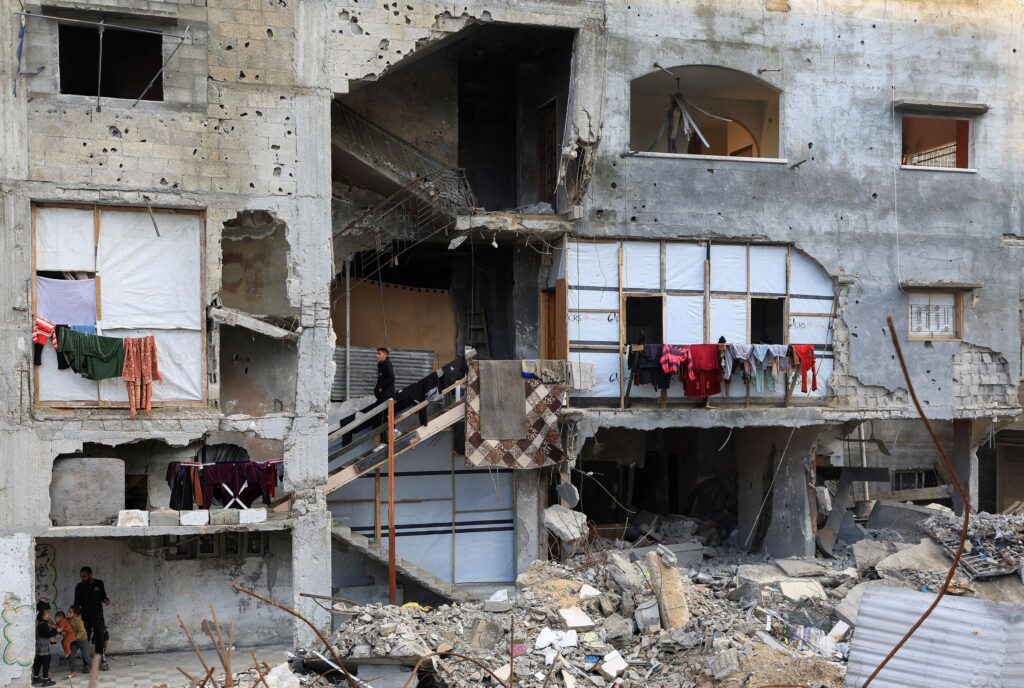
The impact of this shortfall extends well beyond risks of hunger. The onset of winter and a major coastal storm led to the deaths of more than a dozen Palestinians living in squalid tent camps and amid the rubble of half-destroyed buildings. Heavy rainfall and strong winds earlier this month led to widespread flooding in some encampments and the collapse of some damaged structures where Palestinian residents of Gaza had tried to find shelter.
At least two babies have died due to hypothermia, with plastic tarpaulins proving little defense in the cold and warm blankets — subject, at times, to Israeli restrictions — in short supply. “We are warning that this tragedy will happen again unless there is a permanent solution for babies, and specifically premature babies, because they are more vulnerable to the dropping temperatures,” Ahmed al-Farra, the director of pediatrics at Nasser Hospital, where a 29-day-old infant was brought Wednesday and could not be saved, told the Associated Press. “They live in worn-out tents that are exposed to winds and cold weather and lack all means to stay warm in these tents.”
The grim conditions exacerbate an already bleak status quo. Much of Gaza’s civilian infrastructure has been destroyed, including many medical facilities. Those that remain in operation are struggling to care for the population. “Of the 18 partially functioning hospitals and clinics, 16 cannot dispose of infectious waste properly, 15 do not have dependable electricity, 13 lack decent toilets and sinks and 11 lack reliable clean water. In Gaza just 74 intensive-care beds remain,” noted the Economist.
Rights groups blame Israel for not doing more to help. “The deadly storms in recent days have inflicted further misery on an already traumatized population and compounded the suffering of Palestinians still reeling from two years of relentless bombardment and forced displacement,” Erika Guevara Rosas of Amnesty International said in a statement. “The knowledge that the extent of this disaster could have been prevented had Israeli authorities allowed the entry of shelter and other materials essential for repairing life-sustaining infrastructure is deeply distressing.”
Israeli authorities have squeezed Gaza further by setting up what’s known as the “yellow line” within the territory. It’s asserting full control of areas east of this boundary, where reports indicate a number local armed factions hold sway with the acquiescence or support of Israel. On the west side of the line, in areas where Israel technically withdrew forces after the ceasefire, the majority of Gaza’s population is subsisting in squalid, makeshift settlements.
Israel continues to hit positions in places where it claims Hamas fighters are still in operation. Gaza’s health ministry, which doesn’t distinguish between civilians and combatants, reports that at least 395 Palestinians have been killed by Israeli attacks since the ceasefire technically came into place.
U.S., Israeli and other regional officials are wrangling over the next phase of the ceasefire, which involves the more-complex implementation of President Donald Trump’s 20-point plan. The White House wanted to see it coming into fruition before Christmas, but much remains uncertain over critical aspects of the process, including the nature of the international force that would police Gaza as foreign governments and private entities engage in the territory’s reconstruction.
White House officials tout visions of high-speed rail, luxury beach properties and glittering skyscrapers emerging from Gaza’s ruin. But for the time being, the territory’s 2 million residents are still stalked by deprivation and violence. Israel Prime Minister Benjamin Netanyahu, meanwhile, presides over a right-wing government that’s conducting frequent strikes on Lebanon and accelerating the stealth annexation of areas of the West Bank. At a meeting before the end of the year, Netanyahu is also expected to press Trump about a potential new campaign against Iran.
“We have seen this movie before,” Manal Radwan, a top Saudi diplomat, said at a conference in Qatar this month, warning about Gaza slipping into geopolitical limbo. “There is a war in Gaza, then there is an engagement by the international community, then there is a search for humanitarian assistance, and then political fatigue, and then we forget about it — only to see another more violent cycle of violence erupt.”
Sign up to receive WorldView, a free, thrice-weekly email newsletter from the international desk of The Washington Post.
The post In Gaza, another winter of despair appeared first on Washington Post.