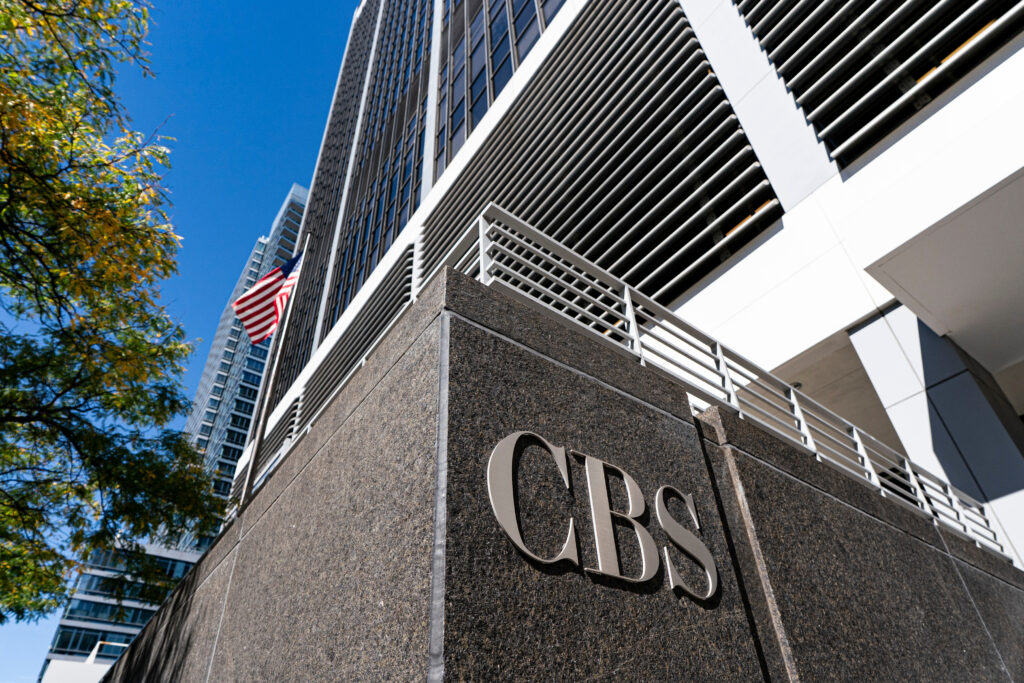
The executive producer of “60 Minutes” responded to criticism after CBS News abruptly pulled a highly promoted segment on the Trump administration’s deportations, telling colleagues in a private meeting Monday that she stood by the investigation but could not allay the concerns of the network’s editor in chief, Bari Weiss.
“In the end, our editor in chief had a different vision for how the piece should be, and it came late in the process, and we were not in a position to address the notes,” said EP Tanya Simon, according to a partial transcript of the meeting obtained by The Washington Post. “We pushed back, we defended our story, but she wanted changes, and I ultimately had to comply.”
The segment was set to cover the Trump administration’s deportations of Venezuelan migrants to El Salvador’s CECOT prison and had been heavily promoted before its scheduled Sunday airdate. Employees say it was pulled Saturday night after Weiss asked for additional reporting, including an on-camera interview with a member of the Trump administration, according to a person familiar with the matter, speaking on the condition of anonymity to avoid retribution, and documents obtained by The Post. By Sunday, promotional materials for the segment including a trailer had been eliminated from the “60 Minutes” website.
The story had been cleared by the network’s usual process and was previously vetted by standards, legal and senior editors — including Weiss, according to Simon’s remarks.
The last-minute change has fueled internal tension at “60 Minutes” and CBS News, with some staffers arguing that the decision hamstrings the network’s reporters and others demanding a meeting with Weiss. The segment’s correspondent, Sharyn Alfonsi, called the decision “political” in an internal email to producers.
“If the administration’s refusal to participate becomes a valid reason to spike a story, we have effectively handed them a ‘kill switch’ for any reporting they find inconvenient,” she wrote.
Weiss explained her thinking in a Monday morning editorial meeting, telling staff she “held that story because it wasn’t ready,” according to a person who attended the meeting and spoke on the condition of anonymity to share nonpublic comments.
She continued: “And this is ‘60 Minutes.’ We need to be able to make every effort to get the principals on the record and on camera. To me, our viewers come first, not a listing schedule or anything else, and that is my North Star, and I hope it’s the North Star of every person in this newsroom.”
“The 60 Minutes report on ‘Inside CECOT’ will air in a future broadcast,” a CBS News spokeswoman said in a statement. “We determined it needed additional reporting.” Alfonsi did not respond to a request for comment.
Weiss was named CBS’s top editor this fall after David Ellison’s newly formed Paramount Skydance bought the Free Press, the opinion website she founded, for $150 million. While the two properties are still technically separate, Weiss runs both. Her early days at the network have been marked by rapid changes, including restructuring and layoffs. Weiss launched a town hall series including an interview with Erika Kirk, the widow of conservative activist Charlie Kirk.
Earlier in December, CBS promoted Tony Dokoupil, who has co-anchored “CBS Mornings” since 2019, to anchor “CBS Evening News,” one of the most prominent jobs in television journalism.
Ellison is the son of Oracle co-founder Larry Ellison, one of the world’s richest people and a Trump political ally.
Simon told her staff that she has enjoyed a “good working relationship” with Weiss since she started as the network’s top editor earlier this year. “I am not here to, you know, ascribe motive and place blame. I just wanted to tell you all the sequence of events and reiterate how grateful I am to everyone, and I stand by our story.”
The original preview said that Alfonsi spoke with released prisoners, who describe “brutal and torturous conditions” inside the prison.
Hundreds of Venezuelans who have been deported to El Salvador under President Donald Trump’s immigration crackdown have endured systematic torture and abuse — including sexual assault — during their detention, according to a November report by Human Rights Watch. The report said conditions at CECOT breached the United Nations’ minimal rules for the treatment of prisoners.
“We’re incredibly proud of you, Sharyn, and everybody else on this story,” Scott Pelley, the veteran “60 Minutes” correspondent, said during the meeting. “You are doing exactly what you’re supposed to do — what this broadcast is about. And I think you’re going to find all of us standing and cheering around you.”
Democratic critics of Weiss were swift to condemn what they characterized as censoring a story to appease the Trump administration.
“What is happening to CBS is a terrible embarrassment and if executives think they can build shareholder value by avoiding journalism that might offend the Mad King they are about to learn a tough lesson,” Sen. Brian Schatz (D-Hawaii) wrote on X. “This is still America and we don’t enjoy bullshit like this.”
The segment’s production team had sent questions and requested comment from the White House, the State Department and the Department of Homeland Security for the story, according to the email. But the administration declined to grant the journalists an interview. Alfonsi wrote that she learned Saturday that Weiss killed the story, which she says was screened five times.
“Government silence is a statement, not a VETO,” Alfonsi wrote. “Their refusal to be interviewed is a tactical maneuver designed to kill the story.”
In the email, Alfonsi said the sources in the segment “risked their lives to speak with us.” She added: “We have a moral and professional obligation to the sources who entrusted us with their stories.”
“If the standard for airing a story becomes ‘the government must agree to be interviewed,’ then the government effectively gains control over the 60 Minutes broadcast. We go from an investigative powerhouse to a stenographer for the state,” Alfonsi wrote.
Sen. Edward J. Markey (D-Massachusetts) said in a social media post that it’s a “sad day for 60 Minutes and journalism,” and said that the Trump administration’s involvement in approving Skydance’s $8 billion deal to buy Paramount led to this. Skydance agreed to concessions to get the deal approved by the Republican-controlled Federal Communications Commission, chaired by Brendan Carr.
The company promised a review of CBS content, appointed an ombudsman with Republican Party ties to interrogate claims of bias and said it would refrain from diversity initiatives. Carr had previously threatened to block any mergers for companies engaged in diversity, equity and inclusion (DEI) practices.
“This is what government censorship looks like,” Markey wrote. “Trump approved the Paramount-Skydance merger. A few months later, CBS’s new editor in chief kills a deeply reported story critical of Trump.”
The post ‘I ultimately had to comply’: ‘60 Minutes’ EP faces fallout after Bari Weiss shelves story appeared first on Washington Post.