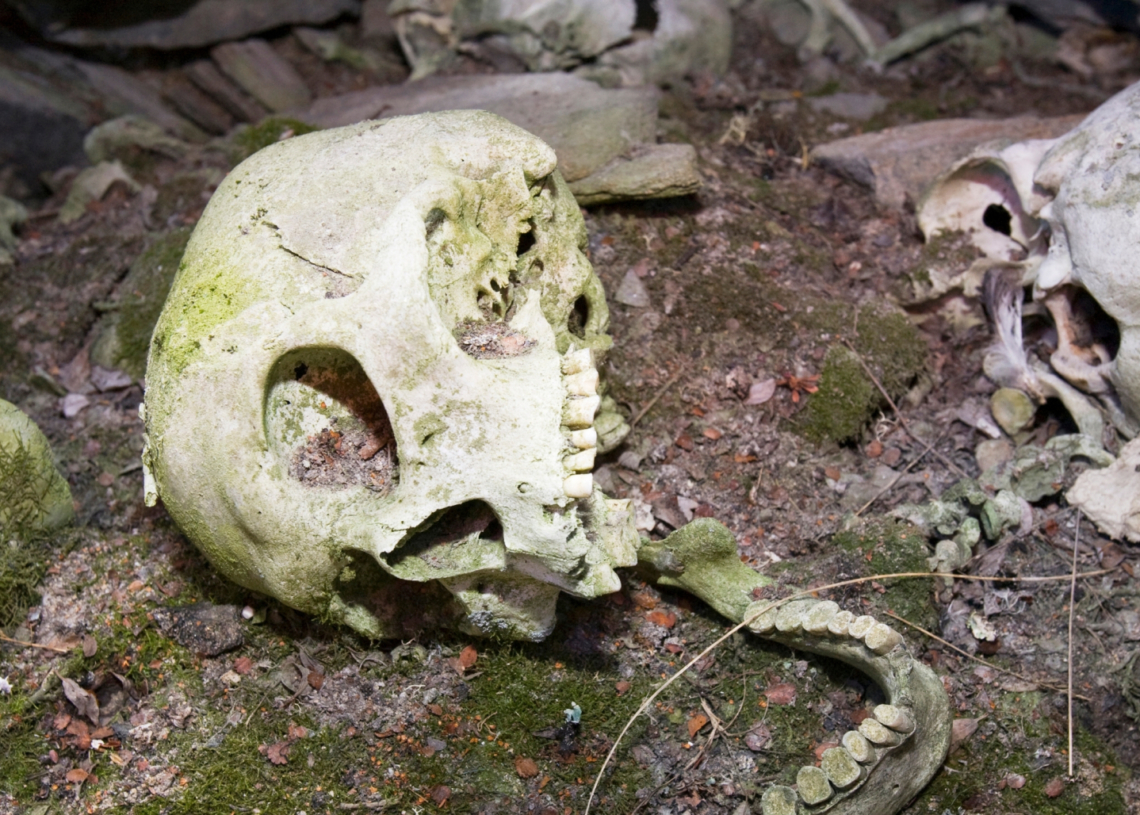
Archaeologists working at a Bronze Age burial site in southern Italy thought they would find the typical evidence of ancestral ties, such as parents buried close to their children and family connections identified through remains. They did not anticipate uncovering genetic proof of what is now considered the oldest confirmed instance of a father and daughter having an incestuous relationship.
The discovery comes from Grotta della Monaca, a cave in Calabria that served as a burial site roughly 3,700 years ago. Researchers analyzed DNA from 23 individuals buried there between 1380 B.C. and 1780 B.C., hoping to learn more about the makeup of a small mountain community. Instead, they uncovered what the study calls “extreme parental consanguinity,” centered on the remains of a teenage boy.
The findings were published in Communications Biology.
Oldest Known Evidence of Father-Daughter Incest Found in 3,700-Year-Old Remains
At first glance, the genetics looked familiar. Some of the buried individuals were clearly related, including a mother and daughter placed near each other, a common practice across cultures. But one pairing stood apart. Their DNA told an uncomfortable story. The adult man and the boy shared an extreme amount of identical genetic material, something scientists only see when reproduction happens inside a nuclear family.
According to the researchers, the boy had “the highest sum of long ROH segments ever reported in ancient genomic datasets to date.” Further analysis confirmed what the team described as “indisputable evidence” that the child was born from a first-degree incestuous union between a father and his own daughter. The girl’s remains were not found in the cave.
Archaeologists have seen incest in ancient remains before, though it typically stops at siblings. Neanderthals did it. So did elites who treated bloodlines as assets. Parent-child pairings are far less common and biologically dicey. In this case, the team searched the boy’s DNA for serious genetic conditions and didn’t find any.
Why this happened remains an open question. The community buried at Grotta della Monaca doesn’t appear isolated, nor does it show signs of a rigid hierarchy where incest might preserve power. “This exceptional case may indicate culturally specific behaviours in this small community,” said study co-author Alissa Mittnik of the Max Planck Institute, “but its significance ultimately remains uncertain.”
The genetic evidence is clear, though the circumstances around it definitely are not. A parent and child had a son, and that son lived long enough to be buried among his community. The reasons behind it remain unknown. Archaeology doesn’t always offer a full explanation. Sometimes it only confirms that something deeply unsettling happened.
The post 3,700-Year-Old Bones Reveal the Oldest Known Case of Father-Daughter Incest appeared first on VICE.