The U.S. Coast Guard on Saturday intercepted an oil tanker linked to Venezuela that is now fleeing in the Caribbean Sea, according to three U.S. officials who spoke on the condition of anonymity to discuss a sensitive operation, days after President Trump said he would crack down on sanctioned vessels involved in the country’s oil trade.
The tanker, called the Bella 1, was en route to pick up oil in Venezuela and was not carrying cargo, according to one of the officials and ship tracking data. The tanker has been under U.S. sanctions since last year for transporting Iranian oil, which federal authorities say is sold to finance terrorism.
When U.S. forces approached the Bella 1 late on Saturday, it was not flying a valid national flag, the officials said, making it a stateless vessel liable to be boarded at sea under international law.
American authorities had obtained a seizure warrant from a federal magistrate judge, which would allow them to take possession of the ship, two of the officials said. The warrant had been sought because of the Bella 1’s previous involvement in the Iranian oil trade, not because of its links to Venezuela.
But the ship did not submit to being boarded and continued sailing, one of the officials said. A second official referred to the situation as “an active pursuit.” The Coast Guard had successfully boarded another tanker earlier on Saturday, and the United States had taken possession of a third tanker on Dec. 10 that is now sailing to Texas.
The U.S. actions represented a significant escalation of Mr. Trump’s pressure campaign against President Nicolás Maduro of Venezuela. They come as Mr. Maduro has ordered Venezuelan Navy vessels to accompany some oil tankers leaving his country — raising the possibility of an armed confrontation at sea. The Bella 1 had not yet reached Venezuelan waters and did not have such an escort, according to one of the officials and ship tracking data.
Mr. Trump has accused Mr. Maduro of flooding the United States with fentanyl and of stealing oil from American companies, without providing evidence. Venezuela’s economy depends on exporting oil, and the seizures are an attempt to squeeze this vital trade.
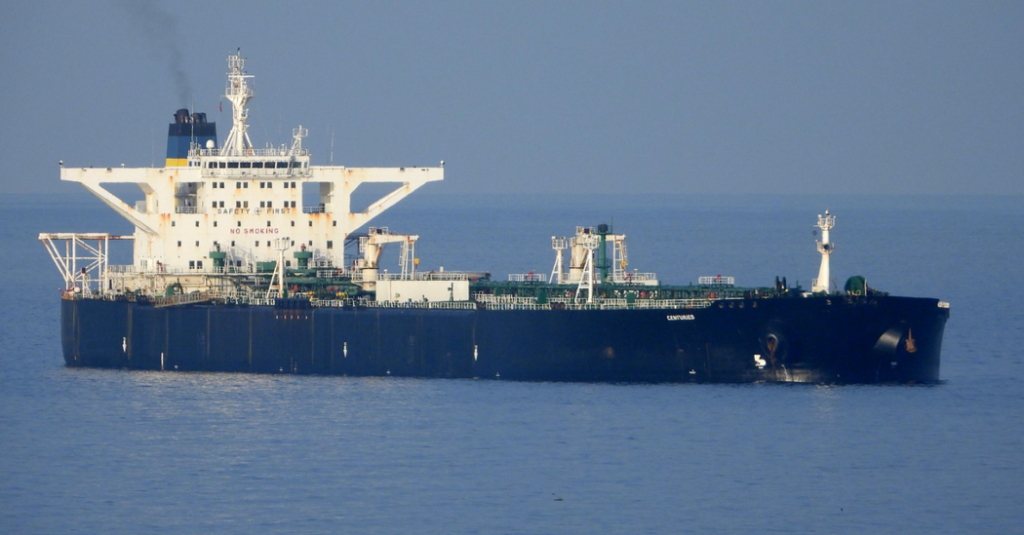
Earlier on Saturday morning, the Coast Guard had stopped and boarded a second vessel, the Centuries, which had recently picked up oil in Venezuela and was headed east. Two people inside Venezuela’s oil industry said the cargo belonged to an oil trader based in China.
Unlike in the Bella 1 case, U.S. forces did not have a warrant to seize the Centuries. It was unclear how long the United States intended to detain the vessel, which was flying under a Panamanian flag. A U.S. official said the Coast Guard was trying to determine whether the ship’s Panama registration was valid.
Mr. Trump signaled on Tuesday that more seizures were coming, announcing a “complete blockade” on oil tankers that were traveling to and from Venezuela and were under U.S. sanctions. But the Centuries does not appear on a public list of entities under U.S. sanctions maintained by the Treasury Department.
The events have added to the uncertainty surrounding the Trump administration’s ultimate intentions. If the United States continues to allow most vessels to freely enter and leave Venezuelan ports, it is not a real blockade, which would constitute an act of war. Instead, the operation would more closely resemble a law enforcement action.
Kristi Noem, the homeland security secretary, said in a social media post on Saturday afternoon that the Coast Guard had “apprehended” a tanker that had been docked in Venezuela, seemingly referring to the Centuries.
“The United States will continue to pursue the illicit movement of sanctioned oil that is used to fund narco terrorism in the region,” she wrote. “We will find you, and we will stop you.”
Ms. Noem also posted a video that appeared to show U.S. forces rappelling from a helicopter onto the ship’s deck.
The White House declined to comment on the boarding of the Centuries and did not immediately respond to questions about the interception of the Bella 1.
In response to the boarding of the Centuries, the Venezuelan government said the country “denounces and categorically rejects the theft and hijacking of another private vessel transporting Venezuelan oil, as well as the forced disappearance of its crew.”
The ships being targeted are part of a ghost fleet of tankers that move oil from Iran, Venezuela and Russia in violation of sanctions imposed by the United States and other countries. Shipping and energy experts estimate that these ghost tankers make up as much as 20 percent of the global tanker fleet.
The ships often disguise where they are traveling and file false paperwork.
On its previous voyage, the Bella 1 faked its location signal, a method known as spoofing, which can be done by broadcasting falsified data through location transponders, according to a New York Times analysis of satellite imagery and ship tracking data. The Bella 1 picked up oil from Kharg Island, Iran’s main oil export terminal, in August, the analysis shows. The tanker then transferred its cargo to another tanker off the coast of Oman before making its way to the Caribbean, where it was intercepted.
The Bella 1 was last scheduled to load Venezuelan crude in November, when it received a contract for one million barrels, according to internal data from the country’s state oil company. The oil was bought by a company connected to Ramón Carretero, a Panamanian businessman placed under U.S. sanctions this month for his financial dealings with the Maduro family, the data shows.
Trump administration officials have said the boarding operations are part of an effort to weaken the finances of Mr. Maduro’s government. Much of Venezuela’s oil goes to China, some through a complicated resale network with Cuba. But some is specially licensed to come to the United States.
The United States has long opposed Mr. Maduro; Democratic and Republican administrations have labeled him a dictator and accused him of corruption and human rights abuses.
Mr. Trump claimed in a social media post that Mr. Maduro’s government was using oil to finance “Drug Terrorism, Human Trafficking, Murder, and Kidnapping.” But he has not publicly offered proof.
The United States has been building up a heavy military presence in the Caribbean for months. Since September, American forces have killed at least 104 people in attacks against boats that the administration has claimed were smuggling drugs. But the cocaine that transits through Venezuela is generally bound for Europe, and many legal experts say the boat strikes are illegal.
The Venezuelan government has said that the United States intends to seize its oil reserves, which are among the largest in the world. Mr. Trump and his top advisers have publicly expressed interest in controlling that supply.
On Dec. 10, the conflict between the two nations ratcheted up when armed U.S. agents boarded and seized a tanker called the Skipper that was carrying Venezuelan oil. The ship was flying a false flag and was under U.S. sanctions for previously carrying Iranian crude. Like with the Bella 1, American authorities had obtained a seizure warrant for the vessel based on its connections to Iran. The Skipper’s crew sailed it to the port of Galveston, Texas, under Coast Guard supervision.
But the United States has not yet moved to seize the oil on board the Skipper, one U.S. official said. Doing so would require a separate legal process, and prosecutors would most likely need to offer proof of Mr. Trump’s claim that Venezuelan oil was being used to support terrorism.
After the Skipper episode, Mr. Maduro ordered his navy to escort oil tankers leaving Venezuelan ports.
Satellite imagery reviewed by The New York Times showed the Centuries heading east on Thursday, flanked by three vessels that might have belonged to the Venezuelan Navy. The flotilla appeared to escort the supertanker, as well as two other merchant vessels, to the limit of Venezuela’s exclusive economic zone. But those ships did not seem to have been present during the boarding on Saturday.
The Centuries was carrying between 1.8 million and two million barrels of Venezuelan oil, and it has also engaged in spoofing. But it has no known connections to Iran, and its last six voyages involved transporting Venezuelan crude and fuel oil to Asia.
American authorities have identified other tankers moving Venezuelan oil that also have ties to Iran and that they may try to seize, according to people with knowledge of the discussions. The threat of more seizures could deter tankers from traveling to Venezuela. Some ships that appeared to have been heading there have recently turned around, according to TankerTrackers.com, which monitors global shipping.
Reporting was contributed by Edward Wong and John Ismay from Washington; Zolan Kanno-Youngs from West Palm Beach, Fla.; and Simon Romero from Bogotá, Colombia.
Nicholas Nehamas is a Washington correspondent for The Times, focusing on the Trump administration and its efforts to transform the federal government.
The post U.S. Coast Guard Is Pursuing an Oil Tanker Linked to Venezuela appeared first on New York Times.