New York environmental officials on Monday will unveil the most expensive watershed protection land purchase in the city’s history to add to the protective buffer around its famously unfiltered drinking water.
The nearly 50-acre parcel, bought for $12.5 million earlier this month, is in Westchester County, about 15 miles north of the Bronx. Over the last quarter-century, officials have spent $636 million to take control of over 125,000 acres in hopes of avoiding the construction of a filtration plant, which would cost billions.
These kinds of land investments keep the property around the city’s 19 reservoirs, in mostly rural counties north of New York City, from being developed. The extra acreage performs as a natural sieve for the water.
The new acquisition signals a shift by the city agency making these purchases, the Department of Environmental Protection. It plans to refocus its land investments away from the rural Catskills region — a mountainous area west of the Hudson River where six reservoirs provide 90 percent of the city’s drinking water — to a more suburban zone east of the river, officials said. There, one reservoir stores all of the Catskills water before it reaches the city.
“This is a truly historic investment to protect the high quality of the pristine unfiltered water that New York City is famous for,” said Rohit Aggarwala, the commissioner of the Department of Environmental Protection.
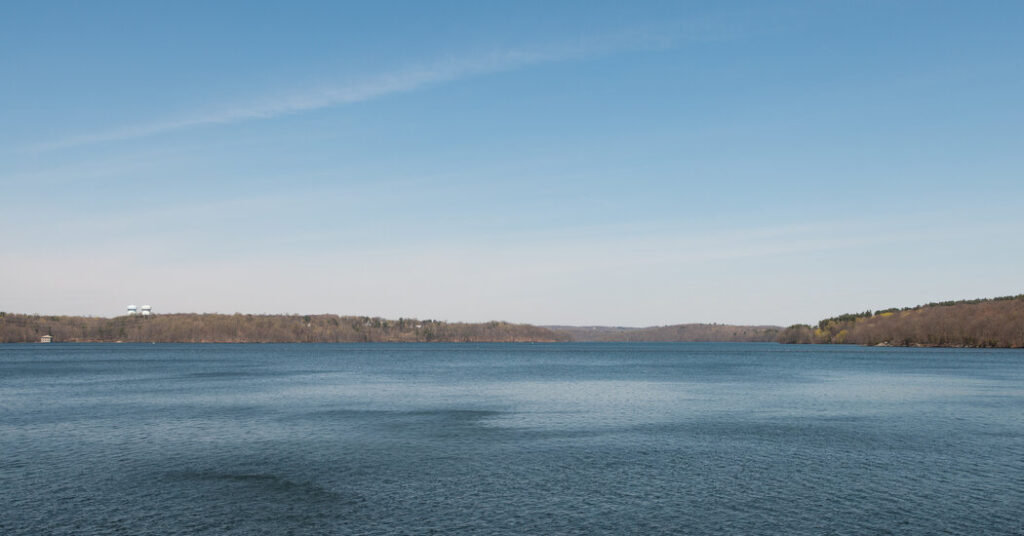
The land, in the town of Mount Pleasant, is an undeveloped hillside that empties out into the Kensico Reservoir, an artificial lake that holds about a month’s worth of Catskills water.
Mr. Aggarwala said the natural filtering qualities of this parcel will help clean local surface water before it trickles into the reservoir. The biggest source of contaminants, even in a more heavily developed area like Westchester, is waste from wildlife, primarily deer, he said.
Storm water from extreme rain is flushing more contaminants into all of the city’s reservoirs, Mr. Aggarwala said. They can, for the most part, be taken offline temporarily and the shortfall made up by another reservoir, he explained. But climate change has made these pollutants more of a risk for Kensico because it is unique: It is the sole holding area for all of the Catskills drinking water before it is treated, he said.
“It is the pinch point in the reservoir system,” he said. “And that means if something goes wrong in Kensico, we have relatively few tools to react.”
The city already owns the shoreline of Kensico and several nearby parcels, and is actively looking for other land purchases in the area, Mr. Aggarwala said.
The federal government strengthened drinking water regulations in the 1980s, requiring either a filtration system or a comprehensive watershed protection program, including land purchases, to be put in place, said Eric A. Goldstein, a senior attorney and New York City environment director at the Natural Resources Defense Council. New York chose the latter.
The practice has kept the water supply safe, while some rural counties have benefited from the property taxes. But some town leaders felt hemmed in by their lack of development options, and gradually put pressure on the city to curb the purchases.
In 2020, a study commissioned by the city concluded that most of the land needed to protect the Catskills water had been bought and that future investments should focus on “smaller, higher-priority parcels.”
New York homeowners and renters pay for all water treatment and protection efforts through their utility bills. Watershed protection is a much more affordable strategy for the city than filtration. Every 10 years, the city receives a waiver from the state’s Department of Health that allows it to circumvent the need for a filtration system, which could cost as much as $25 billion to construct, according to some estimates.
The next waiver is up for renewal at the end of 2027. New York is one of a handful of major American cities, including San Francisco and Boston, still able to bypass the filtration requirement. Until recently, Portland, Ore., was part of this group. But in 2017, it lost its waiver after microorganisms that cause intestinal problems were found in its water. The city is now building a filtration system that will cost over $2 billion.
Another watershed to the north of the Kensico reservoir, also in the suburbs, provides a backup supply for the city, but requires a filtration plant, which was built in 2015. Last year, officials increased the mix of filtered and unfiltered water from this supply with the Catskills water, potentially compromising its taste, when they started crucial repairs to a major aqueduct. But the $2 billion project was delayed because of a drought and contractual issues.
Buying and preserving land is the gold standard for protecting water, according to environmental groups. Filtration plants are energy-intensive and would need to run around the clock, potentially emitting greenhouse gases and requiring hundreds of millions in operating costs alone, Mr. Goldstein explained.
“This is an example of smart governmental decision-making that takes the long view,” Mr. Goldstein said of watershed protection. “It’s like installing protective glass over the Mona Lisa.”
Hilary Howard is a Times reporter covering how the New York City region is adapting to climate change and other environmental challenges.
The post How New York Keeps Its Unfiltered Water Safe: Spending Millions on Land appeared first on New York Times.