The Trump administration escalated pressure on the Smithsonian this week, threatening to withhold federal funds if it does not submit extensive documentation for a sweeping content review. President Donald Trump earlier this year set out to purge what he called “improper ideology” from the nation’s most prestigious museum system, efforts that are expected to intensify as his administration tries to shape the country’s 250th anniversary celebrations next year.
In a staff email obtained by The Washington Post, sent Friday evening after the funding threat, Smithsonian Secretary Lonnie G. Bunch III said the Smithsonian had sent information to the White House in September and intended to submit more that day. He asserted that “all content, programming, and curatorial decisions are made by the Smithsonian.”
The previous day, Domestic Policy Council director Vince Haley and White House budget director Russell Vought wrote to Bunch that the Smithsonian’s initial submissions “fell far short of what was requested.” Among the solicited documents are current exhibition descriptions, comprehensive America 250 programming files, draft plans for upcoming shows and internal guidelines used in exhibition development. The White House gave the Smithsonian until Jan. 13 to meet the request.
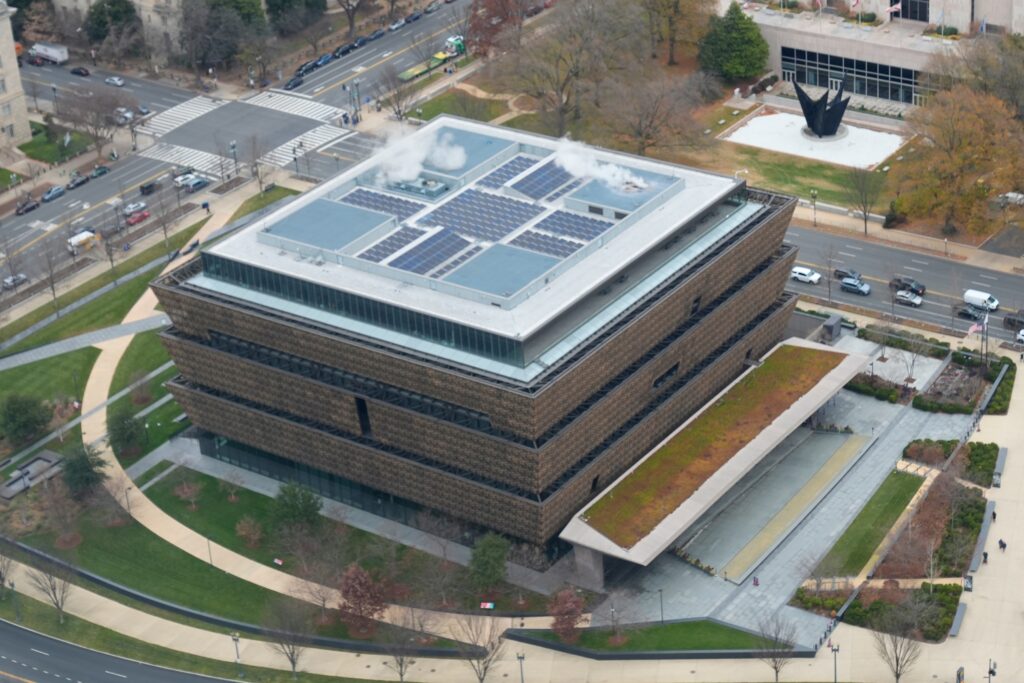
“Funds apportioned for the Smithsonian Institution are only available for use in a manner consistent with Executive Order 14253 ‘Restoring Truth and Sanity to American History,’ and the fulfillment of the requests set forth in our Aug. 12, 2025 letter,” Haley and Vought wrote. The letter specifically referenced the Museum of American History, the Museum of Natural History, the Air and Space Museum, the Museum of African American History and Culture, the Museum of the American Indian, the Smithsonian American Art Museum, the Museum of African Art and the National Portrait Gallery.
It was not immediately clear how much money the White House might try to withhold, from which parts of the Smithsonian or on what authority. The institution is about 62 percent federally funded by a combination of congressional appropriation, federal grants and contracts.
An earlier letter, in August, called for an aggressive review of eight museums to ensure they align with the president’s directive to “celebrate American exceptionalism” and asked the Smithsonian to submit all requested materials within 75 days and “begin implementing content corrections” within 120.
Amid scrutiny from Trump, the institution had already planned its own content review, with the Smithsonian’s Board of Regents instructing Bunch in June “to ensure unbiased content” across the institution and report back on “any needed personnel changes.”
The Smithsonian declined to comment on the latest development. In Friday’s email, Bunch told staff that the institution had provided the White House with information in September about their public exhibitions and displays, policies and procedures, and had planned to send more documents related to their mission, organization, and public exhibitions and displays.
But, Bunch added, “some aspects of the White House request are not readily available and will require a significant amount of time, labor, and coordination from various departments across the Smithsonian” and as they collect documents, they would “continue to evaluate the scope of our response.”
He stressed that the Smithsonian is “committed to transparency” and has for nearly 180 years “served our country as an independent and nonpartisan institution.”
In September, Bunch wrote in a letter to staff that the institution had assembled a small, internal team to advise on what it can provide to the White House and said it was undergoing “our own review of content to ensure our programming is factual and nonpartisan.”
The heightened demands arrive at the end of a tumultuous year for the Smithsonian — the self-described “world’s largest museum, education, and research complex” — which normally operates independently. Historians have broadly criticized Trump for attempting to sanitize the country’s past by demanding that cultural institutions espouse “American exceptionalism” and focus less on slavery, among other historical sins.
In June, the director of the Smithsonian’s National Portrait Gallery, Kim Sajet, resigned after Trump attempted to fire her, and months later, artist Amy Sherald pulled her solo show from the same museum, after a disagreement with the institution over how a portrait of a transgender woman as the Statue of Liberty would be displayed.
The Trump administration amplified its rhetoric over the summer, with the president posting on social media that the nation’s museums are “essentially, the last remaining segment of ‘WOKE’” and that the Smithsonian is too focused on “how bad Slavery was.” The White House later released a list of exhibits and materials at the Smithsonian of which it disapproves, specifically targeting worksand content mentioning race, slavery, transgender identity and immigration.
A unique public-private partnership that is a “trust instrumentality” created by Congress, the Smithsonian puts its public funds toward conserving national collections, basic research, public education, and administrative and support services to maintain large museum and research complexes. Its private funds are used to endow positions, build new facilities and open new exhibitions, among other uses, according to the Smithsonian website.
“We wish to be assured that none of the leadership of the Smithsonian museums is confused about the fact that the United States has been among the greatest forces for good in the history of the world” leading up to the nation’s 250th anniversary, Haley and Vought wrote in Thursday’s letter. “The American people will have no patience” for any museum that is “uncomfortable conveying a positive view of American history.”
The Organization of American Historians wrote in an August statement that Trump’s content review “will undoubtedly be in service of authoritarian control over the national narrative, collective memory, and national collections.”
James Millward, a history professor at Georgetown who studies Chinese history and is one of the founders and leaders of Citizen Historians for the Smithsonian — a volunteer effort to document everything on display at the institution — said that he suspects the request for digital files means “they’re looking for trigger words.” The Post reported in February that National Science Foundation staff members were combing through research projects looking for words such as “diversity” and “gender.”
“We’ve seen, of course, this across websites, across agencies, across the United States, and they want to apply that kind of sledgehammer, chauvinistic, brute force, and frankly, bigoted approach to the Smithsonian as well,” Millward told The Post.
The rhetoric from the Trump administration on how to discuss the past is “very similar to Chinese Communist Party propaganda,” he said. “Only positive stories, only positive energy, no negative energy allowed when you’re talking about history.”
The post White House threatens Smithsonian funds in sweeping content review appeared first on Washington Post.