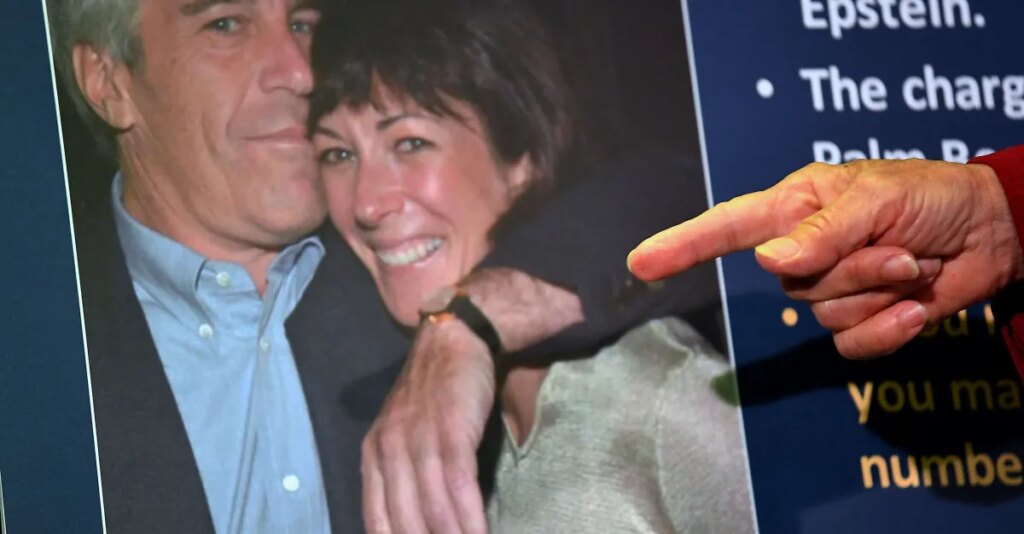
The Trump Administration was legally required to release all documents related to federal investigations of Jeffrey Epstein by Friday, with only limited grounds for withholding documents and full explanations required for any redactions.
They did not do this. Or anything close to it.
The Justice Department released several thousand documents Friday, but top officials acknowledged that they had hundreds of thousands more that weren’t releasing yet, purportedly because they weren’t reviewed or ready. Most of the documents they did release were photos – either photos the FBI took of Epstein’s properties, or photos Epstein himself possessed. Of the investigative documents released, many were entirely redacted, covered in black boxes.
Some of the leading Republicans who’d pushed the administration for disclosure expressed disappointment in their compliance, with Rep. Thomas Massie (R-KY) saying the release “grossly fails to comply with both the spirit and the letter of the law.”
Unsurprisingly, these limited releases do nothing to clear up the swirling questions people had about the Epstein scandal.
And while some of those swirling questions amount to conspiracy theories that will never be definitively cleared up by any document release – there is one big question that could be answered to some extent by documents in the government’s possession.
Namely: did investigators believe there were other men involved in Epstein’s sex crimes, and if so, why didn’t they charge any of them?
The Justice Department has documents that would answer this question
Officials at the Justice Department have been very clear that they believe Epstein sexually abused at least hundreds of women or underage girls in the 1990s and 2000s.
But officials have been much less clear on a related question: whether Epstein trafficked certain of these women or girls to any of his prominent and influential friends.
Certain Epstein accusers – most notably, the late Virginia Roberts Giuffre – claimed that this is indeed what happened to them. Giuffre said publicly that Epstein groomed her to have sex with him and his influential friends in exchange for money, which she did for a few years. And Giuffre specifically named some of the men who she said participated, including the UK’s now-former Prince Andrew.
The FBI has been aware of Giuffre’s allegations since 2011. One of the documentsin the new release describes some of officials’ conversations with Giuffre that year, in which she “indicated Epstein had instructed her to have sex with numerous associates in both the United States and overseas.”
It is primarily Giuffre’s claims that convinced many people that Epstein was not only abusing victims himself – that he was also providing young women and underage girls to other men.
Yet no other men were ever charged with Epstein-related crimes. And the big question is: why not?
There are many possible explanations, ranging from the prosaic (evidentiary problems, statutes of limitation) to the nefarious (cover-up) to somewhere in between (questions about witness credibility). But surely, at some point, someone involved in the investigation wrote something down about this, assessing whether Giuffre’s claims appeared credible, whether other women made similar claims, and whether such claims merited further investigation — or not.
More broadly, investigators had to at some point grapple with whether they themselves thought the evidence suggested Epstein was supplying girls or young women to his friends.
Typically, such internal assessments would never see the light of day if they didn’t result in charges. But they should be somewhere in the Justice Department’s Epstein files. So will we ever see them – or not?
The post The Epstein files release did nothing to clear up the scandal’s biggest question appeared first on Vox.