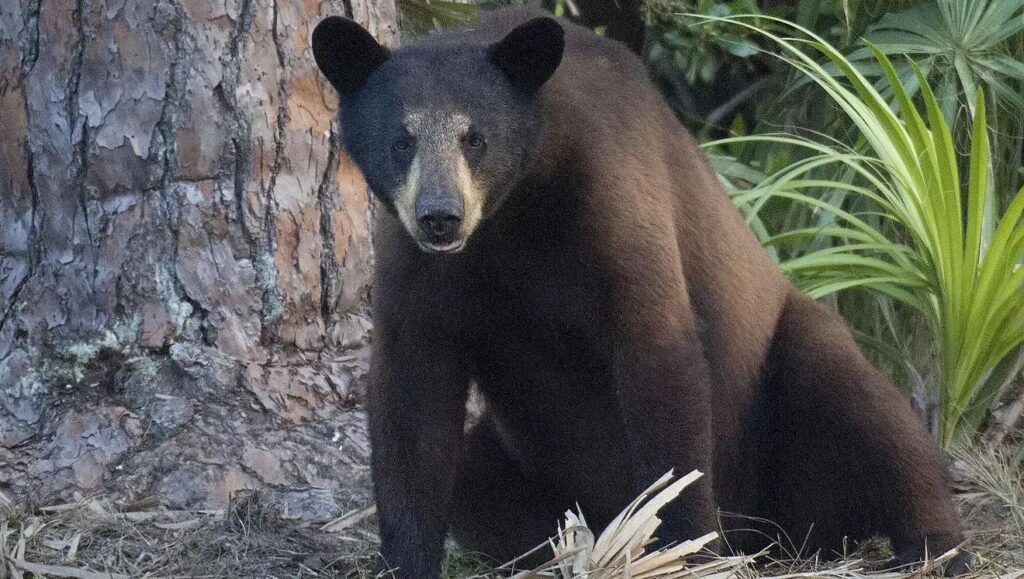
Ten years ago, a Florida bear hunt shocked the public when photos spread online of bloody carcasses of mother bears loaded in pick-up trucks and splayed out on concrete slabs at hunter check-in stations.
The hunt, the first in 20 years, was halted in less than 48 hours after an estimated 304 bears were killed the first weekend. The quota that year was 320.
Hunters said the quick success rate was proof of a “robust” bear population. Wildlife defenders called the state-sanctioned hunt “a slaughter” and succeeded in discouraging officials from authorizing another one, until this year.
The first regulated Florida black bear hunt in a decade has been underway since Dec. 6. But unlike the 2015 version, it’s almost invisible to anyone but hunters. They report their kills over the phone, instead of taking slain bears to check-in stations open to public view.
The state won’t release information — including the number of bears killed, their ages and sex — until after the hunt ends Dec. 28. Most of the hunting is expected to take place on private land.
Hunters are supposed to set up an appointment to meet up with a Florida Fish and Wildlife Commission employee before they do anything with the bears they take, such as using the meat or hide.
“The FWC is requiring hunters to contact the FWC to coordinate staff access to the bears they harvest, which is more efficient and accomplishes the same objectives of having fixed and manned check station,” agency communications director Shannon Knowles said in an email response.
The hunt is the latest chapter in the ongoing conflict between two groups that support wildlife conservation in Florida, but from opposite directions.
“A conservationist is an environmentalist with a gun,” said Travis Thompson, executive director at the All Florida conservation organization.
The secrecy around the data has fueled suspicions and fears from activists who fought unsuccessfully in court and at public meetings to stop the 2025 hunt.
“A lot of the hunting is on these private properties where we don’t know what’s going on, and law enforcement can’t see what’s going on,” said Katrina Shadix, founder of Bear Warriors United, which unsuccessfully filed suit to stop the hunt. “And now they’re refusing to release bear kill numbers. We didn’t think the state could do this any worse than they did in 2015, but they have managed to outdo themselves.”
Hunters say the state already knows the largest number of bears that will be killed: 172.
“They’ve issued only the number of permits that they want taken. So there’s no scenario wherein you go over the number of permits,” said Thompson, a hunter who lobbied for the bear hunt.
The total number of bears killed also could end up being less than the state limit: advocates say at least 45 people who are opposed to the hunt won permits in the state lottery but won’t use them.
Most states, including California and New York, allow bear hunting. Some states have rules similar to Florida’s,including ones that allow allow hunters to self-report their harvests.
Florida wildlife officials fielded 5,689 calls about bears last year, most of them from people reporting sightings rather than a conflict. The first fatal attack in state history happened in May, when a bear killed an 89-year-old man and his dog in rural Southwest Florida. Nearly 300 bears are killed every year by vehicle strikes on state roadways.
Hundreds of hunters showed up at a public meeting in August when the Florida Fish and Wildlife Commission gave final approval to the bear hunt.
They cited studies from state wildlife biologists, contending that the current bear population is healthy and growing and can be managed by a regulated hunt, possibly every year. The state has about 4,000 bears, up from a low of 500 when they were put on the state threatened species list in 1974. Hunters called bears a game species, asserting that their population can support a hunt.
But opponents of the hunt said the studies the game commission used to approve it are old, some dating back to the 1990s. The agency said new statewide bear studies won’t be ready until 2028.
The most recent study of a ‘bear zone’ in the Osceola National Forest in northeast Florida showed a 66% decline in the bear population there since 2014. The game commission reduced the number of bear hunt permits by 15 soon after the study was made public in September.
“If we have a declining population, any harvest of that population is not sustainable and not in line with the Fish and Wildlife Commission’s stated objectives for this hunt,”said Darcy Doran-Myers, a wildlife biologist who was the assistant black bear research coordinator for the agency for four years, until 2022.
Doran-Myers testified on behalf of Bear Warriors United’s efforts to stop the hunt with a lawsuit.
“I’m disappointed in how my former colleagues at the agency are handling it,” she said. “But one thing to keep in mind here is that the biologists have very little say on what happens.
Shadix’s group offered a bounty to hunters who won permits and intended to kill a bear. She said Bear Warriors United gave $2,000 each to more than a dozen hunters who agreed to give up their plastic bear tags, which come with the hunt permits and must be attached to a bear carcass when a kill is reported.
She said she drove around the state during the first week of the hunt with her German shepherd, Gunner, and met with the hunters inside post offices and police stations to pay them when they destroyed the non-transferable tags. Shadix said she didn’t want to run afoul of state regulations by taking possession of them herself.
“I watched them cut it up and put it in the wall slot at the post office or hand it to the postmaster to make sure,” she said. “And then there’s no way they can use that tag. That means one more bear that won’t be hunted.”
She said a donor who insisted on remaining anonymous gave her group more than $40,000. She and her attorney crafted a letter and emailed it to the 172 people on the list of permit holders, which she obtained through a public records request.
She received 37 responses, and checked their names and addresses against the list provided by the state. About a dozen hunters were given the $2,000 bounty, she said.
“One guy said he was going to buy Christmas presents for his family,” Shadix said. “Another one said he was going use the $2,000 to buy a new transmission for his fiance’s car because it broke down and she’d been Ubering to work.”
Thompson didn’t apply for one of the permits, but he said the state is conducting this hunt correctly. Florida’s rules are similar to those in Georgia.
“It’s being led by science,” he said. “It doesn’t mean that next year we’re going to harvest 172 bears. If we have different data that says we should harvest 144, that’ll be the number. If there’s data that says we should harvest 219, that’ll be the number. The science is never settled. So we go along, getting new data and adapting.”
North Florida hunter Ryan Kelley is still looking for a bear to harvest. In an email he sent via the hunting group Safari Club International , Kelley said among the hunters he’s seen, “everyone who has a tag is excited about the opportunity to get it filled ahead of the end of the season.
“We have all seen how bear populations in our state have gotten completely out of hand, so letting us hunters play a role in managing that problem through a tightly controlled hunt that will also help to improve public safety, all while getting to go afield and support conservation, is really exciting,” Kelley wrote.
The post Controversial Florida bear hunt is taking place mostly out of sight appeared first on Washington Post.