Dmytro Kuleba was Ukraine’s foreign minister from 2020 to 2024.
The recent summitry between Ukraine, the United States and Europe, kicked off by President Donald Trump’s initial peace proposal, produced something rare in this war: a negotiating track that looks serious enough to matter. After months of motion without traction, the conversation is no longer about abstract frameworks. It is about concrete trade-offs.
Clarity is finally emerging, but it’s not yet time to be euphoric. Though news coverage indicates that only questions of territory remain unresolved, Ukraine’s red lines cannot be found on maps. Bitter recent history has taught that what matters is not where the ceasefire lines are drawn, but what happens afterward.
It has been reported that the United States is prepared to offer Ukraine legally binding security guarantees. If so, President Volodymyr Zelensky has scored a significant victory. This is something Kyiv has sought since 1991 when it gained independence from Moscow, and something its Western partners have consistently refused to provide. Ukraine long ago lost faith in the various political security assurances it has been offered, most of which the West has not honored. Now, it seems, Kyiv may finally have a chance to see whether legally binding guarantees will be upheld any more reliably.
Zelensky appears to have shifted, too. He is signaling readiness to contemplate painful compromises that, earlier in the full-scale invasion, would have been politically and strategically unthinkable — including proposals that touch the most sensitive of all issues: territory.
There is a temptation in every ceasefire negotiation to treat geography as the main variable. Diplomats sweat over where the front line freezes, which towns change hands and which lands are labeled “temporarily occupied.” Yet the central question in these talks is not simply whether Ukraine might give up a portion of Donbas, the ravaged region on the nation’s eastern border with Russia, under a negotiated formula. It is what comes next. What prevents Russia from turning a “ceasefire” into a means of finishing the job?
This is not merely a theoretical question. Ukraine learned some hard lessons in 2015 that have left it understandably cautious.
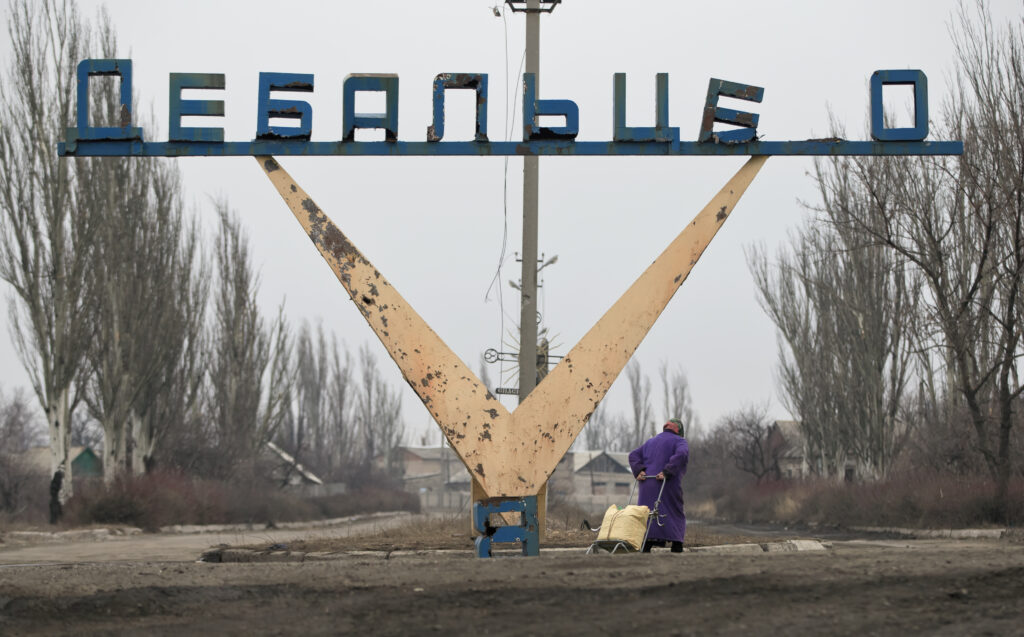
That year, the second Minsk agreement was signed to stop the war in eastern Ukraine. The ceasefire was set to begin on Feb. 15. As the diplomatic ink dried, officials spoke hopefully of de-escalation. But on the ground, the fighting did not stop. Russian forces and their proxies continued their assault on Debaltseve, a key rail and road junction. Only after the city fell and Ukrainian troops were forced to withdraw on Feb. 18 did the ceasefire truly take hold. In practice, the ceasefire served as diplomatic cover for Russia to seize what it wanted before the line froze.
Worse, despite the fact that Russian forces continued to violate the ceasefire, Germany and France insisted on talking about compliance. Rather than declaring the effort dead, they leaned hard on Ukraine, which was largely reacting to Russia’s provocations, to keep up its side of the deal. This was not due to naiveté. It was due to the gravitational pull of process when enforcement is weak. The side that violates the terms creates new facts on the ground; the side that complies is pressed to keep complying — to “save the deal” and to avoid being blamed for collapse.
Ukraine rightly fears a repeat of this dynamic. If Ukrainian forces withdraw from certain areas, what physically prevents Russia from moving into the newly vacated territory under whatever pretense they come up with? Even if the United States and Europe threaten consequences for such breaches, everyone understands the grim asymmetry: Sanctions can be reimposed, weapons deliveries can be accelerated, diplomatic isolation can deepen, and statements of condemnation can be issued. But no Western army is going to storm a town in eastern Ukraine to evict Russian troops after the fact.
A durable ceasefire now hangs on two questions.
First, will Russia accept an agreement in which many of its demands are satisfied only nominally — on paper, partially or conditionally? It might, if cornered. President Vladimir Putin’s speech on Wednesday suggests his full goals remain unchanged. But Moscow has long treated incremental concessions at negotiations as partial wins to pocket. A ceasefire that reduces Russia’s immediate costs while preserving the option to escalate later is not a concession for Putin; it is his strategy.
Second, how will compliance be enforced in a way that actively blocks opportunistic advances rather than merely punishes them after the fact? If the answer is only “we will respond,” then Ukraine is being asked to trade territory for promises — and to trust that Russia will not test those promises. Ukraine has no trust left to give.
This is precisely what worries Zelensky and holds him back — and why his caution is not stubbornness but responsibility. A ceasefire that simply shifts the battlefield into a slower, dirtier gear — with ongoing Russian provocations, creeping annexation, acts of sabotage and attempts at political destabilization — is not a meaningful ceasefire at all.
Zelensky’s stance also reflects a stable Ukrainian consensus. Ukrainians are exhausted, but resilient and not indifferent to how negotiations end up. They know the recent history better than anyone. A majority is likely to reject a plan that requires withdrawals without credible guarantees. No president can make such concessions without his people’s full backing.
What we are witnessing is indeed the first serious attempt since the full-scale invasion to reach a ceasefire. A ceasefire, of course, is not the end of the war. This war ends only when Putin accepts that Ukraine is lost to Russia — that its future is independent, sovereign and European. Until then, any pause is just that: a pause.
That said, we should stay optimistic while avoiding last-mile euphoria. In negotiations like these, you can traverse nearly the entire distance and still be forced to stop at the final step. Because it’s at the final step that risk concentrates and illusions collapse.
The post Why Zelensky is right to distrust a quick ceasefire appeared first on Washington Post.