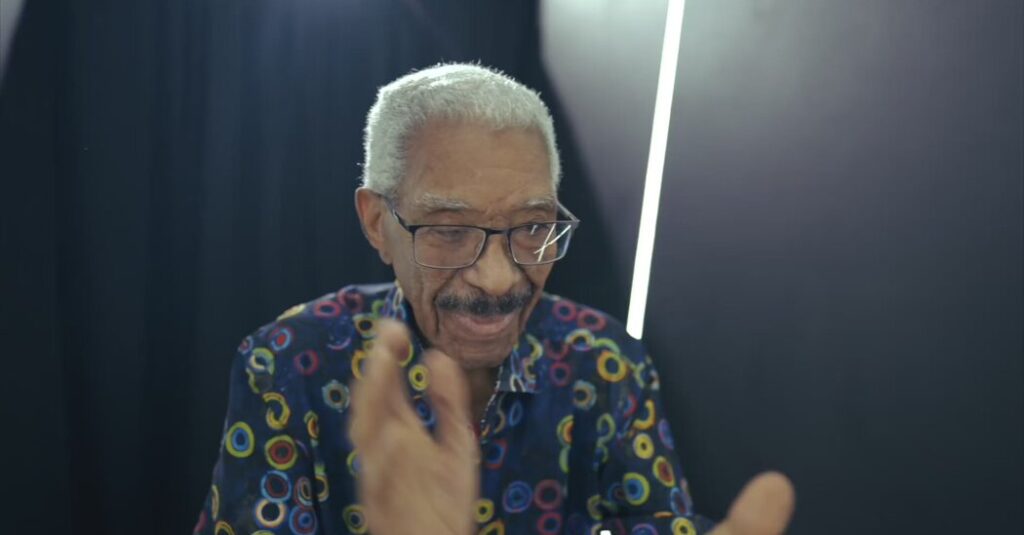
Rafael Ithier, a bandleader who brought the rhythms of his native Puerto Rico to a world audience with the long-running salsa orchestra El Gran Combo de Puerto Rico, giving inspiration to younger artists from the island like Bad Bunny, died on Dec. 6 in Bayamón, P.R. He was 99.
Víctor Rivera, a lawyer for his family, confirmed his death to the San Juan radio station WKAQ.
El Gran Combo formed in 1962, roughly the same time as the Beach Boys and the Rolling Stones, and showed similar staying power, motoring on for the past six decades. Through it all, though the band has had an ever-evolving lineup, Mr. Ithier remained its anchor, serving as pianist, composer, producer and musical director.
Following his death, he was celebrated not only as a titan of Puerto Rican music but also as a cultural ambassador.
“Puerto Rico has lost a giant, a man whose life was dedicated to elevating our identity through the art and rhythm that distinguishes us to the world,” Mayor Marlese Sifre of Ponce, on Puerto Rico’s south coast, said in a statement.
Upon hearing the news at a recent concert in Costa Rica, Bad Bunny, now a global star rapper and singer, became visibly emotional as his band launched into “Nuevayol” (a common Puerto Rican term for New York), the opening track of his critically acclaimed album “Debí Tirar Más Fotos” (“I Should Have Taken More Photos”), released earlier this year. The song prominently samples El Gran Combo’s 1975 hit “Un Verano en Nueva York” (“A Summer in New York”).
“El Gran Combo is not just an orchestra, it’s part of the soul and culture of the people,” Bad Bunny, whose real name is Benito Antonio Martínez Ocasio, wrote in a rare social media message. “El Gran Combo is Puerto Rico.”
El Gran Combo has released more than 40 albums over the years, with abundant commercial success. According to Billboard, the band holds multiple records on the Top Tropical Albums chart, including most entries for a group (22); most Top 10s for a group (19); and most No. 1 spots for a group (10).
The band has been nominated for six Latin Grammy Awards, winning two for best salsa album: “40 Aniversario En Vivo” (“40th Anniversary Live,” released in 2002) and “Arroz Con Habichuela” (“Rice With Beans,” released in 2006). Along the way, the group has crowded dance floors with a long string of hits, including “Ámame” (“Love Me”), “Me Liberé” (“I Freed Myself”); “Brujería” (“Witchcraft”), “La Fiesta de Pilito” and “El Menú.”
El Gran Combo, which has typically had about 13 members, became known as “la Universidad de la Salsa” for graduating generations of salsa notables, including the singers Andy Montañez, Pellín Rodríguez and Charlie Aponte.
Despite Mr. Ithier’s outsize presence in the world of Latin music, he avoided the usual star trappings. Along with packing stadiums, he booked the group in clubs and hotels and for concerts on town plazas.
“This is music for the masses,” he said in a 2002 interview with The New York Times. “We’re not trying to complicate anybody’s mind. That simplicity speaks to people.”
Rafael Ithier Natal was born on Aug. 29, 1926, in Puerta de Tierra, a neighborhood of San Juan. His father, Nicolás Ithier, died when Rafael was 8, leaving his mother, Mérida Natal, to support the family on a seamstress’s wages.
Rafael picked up the guitar at 10 and earned money by playing at a corner store for tips, according to the National Foundation for Popular Culture, a Puerto Rican nonprofit organization.
Facing lean times for the family, he left school at 14 to find work. A year later, he joined a group called Conjunto Hawaiano, where he became proficient on the Cuban tres, a small, guitar-like instrument, and the double bass. He eventually made piano his primary instrument.
The U.S. Army drafted him in 1952. After his discharge two years later, he moved to New York City, where he started a combo called the Borinqueneers Mambo Kings. He later returned to Puerto Rico to join the band headed by the celebrated musician and bandleader Rafael Cortijo.
That combo disbanded in 1962 after the group’s lead vocalist, Ismael Rivera, was charged with drug possession and did jail time. Mr. Ithier considered abandoning music for a more stable career in banking or law, but he was lured back to join a backing band for an album by the Dominican singer Joséito Mateo, known as the King of Merengue.
Later, Mr. Ithier and several other of the Mateo group’s musicians split off to form El Gran Combo, which went on to make regular television appearances in Puerto Rico, tour the world and perform at marquee venues like Yankee Stadium and Madison Square Garden.
The pianist Willie Sotelo, who joined in 2006, eventually took over as El Gran Combo’s pianist and musical director on tours, but Mr. Ithier continued as the conductor at live shows.
Information on his survivors was not immediately available.
Over the years, El Gran Combo’s stature grew to the point that “some of its songs have been in Spanish-speaking consciousness for so long that they’re bigger than the band,” Ben Ratliff of The Times wrote in reviewing a concert at Radio City Music Hall in 2013.
While the group explored various musical avenues, including tangos, boleros, Cuban timba and boogaloo, Mr. Ithier stayed true to its roots, all while striving to maintain its distinctive local flavor.
“All the musicians are Puerto Rican,” Mr. Ithier once said. “We don’t want to have anybody from America, or Cuba, or wherever. Not because we are discriminating against them — they are very good musicians — but we want to keep it pure. To keep it Puerto Rican all the way.”
Alex Williams is a Times reporter on the Obituaries desk.
The post Rafael Ithier, Ambassador of Puerto Rican Music, Dies at 99 appeared first on New York Times.