Tom Wolfe was a fast talker. Eudora Welty had a musical Southern drawl. Kurt Vonnegut’s jokes got belly laughs.
Each of these authors once spoke to audiences at the 92nd Street Y Unterberg Poetry Center in New York City, which has hosted some of the most celebrated writers of the past several generations, from Isaac Asimov to Anaïs Nin and Kazuo Ishiguro to Margaret Atwood. Now, the Poetry Center has digitized audio recordings of its literary events stretching back to 1949 — hundreds of which have never been released before — in a collection that offers a glimpse into history and a taste of what the writers themselves were like in public.
In 1965, for example, the year before he became consultant in poetry to the Library of Congress, James Dickey complained that his 14-year-old son had acquired a taste for rock ’n’ roll and a transistor radio. The sound of electric guitars had taken over his house. He was joined onstage that night by the poet Theodore Weiss, but it could have been Truman Capote, Joseph Heller or Adrienne Rich, who also visited the Poetry Center over the years.
“Historically, it’s been the premier place to read your work in public in the United States,” said Billy Collins, a former U.S. poet laureate, who has read at the Poetry Center many times. “Maybe short of the White House or Carnegie Hall — but most poets don’t get to Carnegie Hall no matter how hard they practice.”
You can listen to some clips from the archive below.
1963
James Baldwin gets a spark of inspiration.
Baldwin was a gifted public speaker, compelling and quick on his feet. The eldest son of a preacher, Baldwin turned his own oratorical skills to advocacy and debate after a short stint at the pulpit as a teenager. Here, he talks about the mysteries of the writing process.
2005
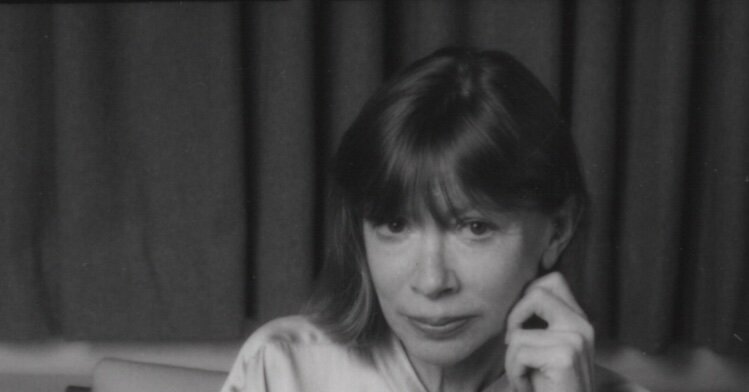
Joan Didion’s life changes in an ordinary instant.
In this recording, Didion reads from her book “The Year of Magical Thinking,” which recounts her daughter’s grave illness and the sudden death of her husband, John Gregory Dunne. Didion and Dunne had been married for 40 years when, after visiting their daughter at the hospital, Dunne collapsed at the dinner table from a heart attack. He was pronounced dead a few hours later. The book offers a portrait of both loss and the long marriage that preceded it.
2001
Mary Oliver says you do not have to be good.
The prolific and prizewinning poet reads “Wild Geese,” one of her most celebrated poems. Oliver, who died in 2019, read at the Poetry Center three times during her life. On each of those visits, she made sure to include this fan favorite.
1983
Kurt Vonnegut recites a rather different poem.
Vonnegut was best known for his novels, including “Slaughterhouse-Five” and “Cat’s Cradle,” but because he was at the Poetry Center, he thought he should read some poems. How he met the moment was quintessential Vonnegut: genial and cheeky in equal measure.
1970
Tom Wolfe wears green tweed to blend in.
Wolfe, an author and journalist, was known both for novels including “The Bonfire of the Vanities” and for the role he played in helping to create “New Journalism,” which employed novelistic techniques in nonfiction. Wolfe was also an exceptionally snappy dresser, and he was often photographed wearing a bespoke three-piece white suit — although he chose a different outfit for the reporting trip he recounts here.
1949
E.E. Cummings makes dying seem like a miracle.
The earliest recording in the collection is of the American poet E.E. Cummings, who read at the Poetry Center in 1949. Cummings was born in 1894 and died in 1962, so even readers who love his distinctive style — with its unusual, almost sculptural line breaks and formatting — may not be familiar with his stately reading voice.
1999
Arthur Miller molds a play from catastrophe.
This selection is pulled from a Q. and A. with the playwright behind such classics of American theater as “The Crucible” and “Death of a Salesman.” A member of the audience asked about Miller’s play “The American Clock,” which is set during the Great Depression and was first staged in 1980: was Miller, the audience member asked, expecting another economic calamity when he wrote it?
“dying is fine,” from “The Complete Poems: 1904-1962,” by E.E. Cummings. Copyright © 1949, 1977, 1991 by the Trustees for the E.E. Cummings Trust. Copyright © 1979 by George James Firmage. Used with permission of Liveright Publishing Corporation, a division of W.W. Norton & Company. All rights reserved.
“Wild Geese,” from “Dream Works: Poems,” by Mary Oliver. Copyright © 1986 by NW Orchard LLC. Copyright © 1986-2017 by Mary Oliver, with permission of Bill Reichblum. Reprinted by permission of Penguin Books, an imprint of Penguin Random House, and the Charlotte Sheedy Literary Agency. All rights reserved.
Elizabeth A. Harris covers books and the publishing industry, reporting on industry news and examining the broader cultural impact of books. She is also an author.
The post Joan Didion and Kurt Vonnegut Had Something to Say. We Have It on Tape. appeared first on New York Times.