American science is wobbling right now.
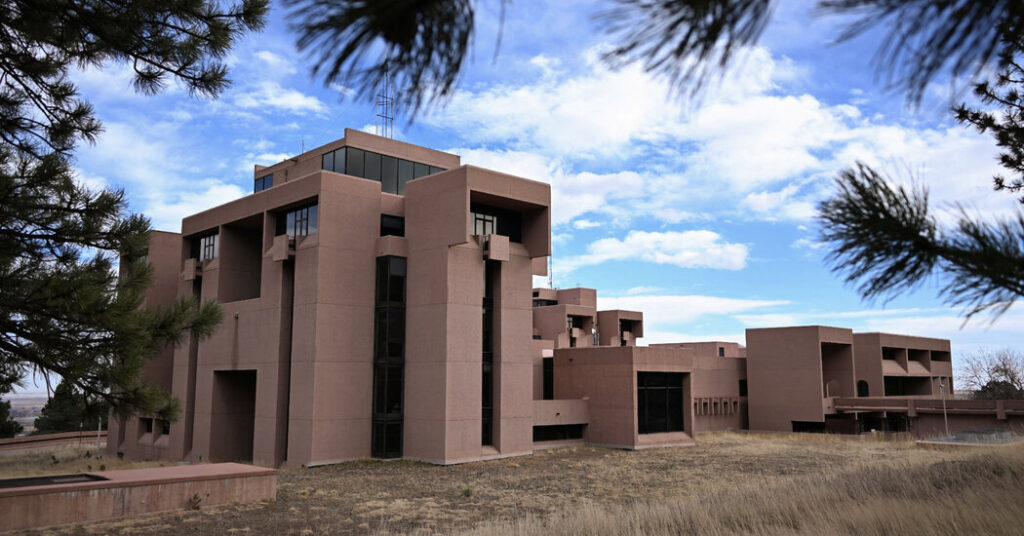
After cuts to federal funding and the firing or early retirement of thousands of government scientists this year, another blow to scientific research landed this week. The Trump administration on Tuesday night announced a plan to dismantle the National Center for Atmospheric Research in Boulder, Colo., one of the world’s premier climate and weather science institutions.
News of the planned closure rippled through the annual gathering of the American Geophysical Union, an organization of Earth and space scientists, being held this week in New Orleans.
“You could feel the energy in the room, and it was very sad,” said Mohammed Shehzaib Ali, a graduate student at North Carolina State University who uses NCAR’s supercomputer to run programs to understand how weather patterns affect air pollution from wildfires. “Atmospheric science is built on collaboration, and NCAR is the pathway through which we collaborate,” Mr. Shehzaib Ali said.
The center’s 830 employees conduct research on weather, climate and energy systems, and operate supercomputers that are used by thousands of scientists across the globe. In his announcement, Russell Vought, the director of the Office of Management and Budget, called NCAR “one of the largest sources of climate alarmism in the country.”
Antonio Busalacchi Jr., president of the University Corporation for Atmospheric Research, which manages NCAR, told reporters on Thursday that the center’s research had led to technological advances in aviation, hurricane prediction and space weather. It has also collaborated with the insurance industry to better predict risk from extreme weather.
“We are talking about a significant impact on the scientific enterprise in this country,” Dr. Busalacchi said. Closing the center would be “setting back science in this country by decades.”
Scientists at the meeting, which ends Friday, discussed research as varied as using artificial intelligence to monitor melting glaciers, detecting movement along earthquake faults and planning future science missions to Mars. At a town hall during the conference on Thursday, researchers shared how the center in Boulder was instrumental to their work. The NCAR announcement was the latest cut to science from the Trump administration.
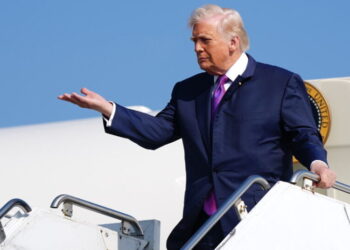
President Trump routinely mocks climate change as a hoax, and his administration has labeled virtually all efforts to study climate change, reduce the level of dangerous greenhouse gases in the atmosphere or protect communities from the impacts of global warming as “alarmism.”
Brandon Jones, the president of the American Geophysical Union, said the Trump administration had removed data from federal websites, frozen or canceled grants for climate research and weakened regulations designed to protect public health and the environment.
“What we’ve experienced this past year is not an abstract policy disagreement,” Dr. Jones said. “It’s a fundamental disruption of the systems that allow science in this country to function.”
Trump Administration: Live Updates
Updated
- U.S. attacks another boat believed to be trafficking drugs, killing 5.
- The Justice Department will not meet the Friday deadline to release all its Epstein files.
- Trump signs a law repealing tough sanctions on Syria.
This year’s event was smaller than in previous years. Conference attendance was down by one third to 20,000 from 30,000 last year.
Federal science agencies and universities sent fewer recruiters for both jobs and academic positions. Those who did attend said they were struggling to keep their research projects running and money flowing to support graduate students who represented the future of American science.
“We’ve tried to use as much money as we can before it got taken away,” said Robert Pockalny, associate dean for academic affairs at the University of Rhode Island Graduate School of Oceanography. The school has admitted 22 graduate students each of the past three years. That number dropped to 10 students this year, mostly because of uncertainty about federal funding for ocean science.
“What we tell our students is, the writing was on the wall about these jobs, but the skills you’re learning are transferable,” Dr. Pockalny said. Even if they are no longer studying the ocean, he said, the things that they are learning “can be applied to business, industry, banking and all sorts of data analysis.”
To maintain federal grants, some universities are switching from researching how to slow climate change to studying how to limit its effects.
Republicans and Democrats alike are concerned about preparing for disasters, said John Sabo, director of the ByWater Institute at Tulane University in New Orleans. “There’s an increasing appetite for adaptation as opposed to mitigation,” he said.
But for midcareer researchers, technicians and scientists working in the middle of ambitious projects, switching gears isn’t an option.
In 2009, the National Science Foundation allocated $386 million to build the Ocean Observatories Initiative, strings of stationary buoys and moored instruments in four locations around the United States.
The observatories measure the ocean’s vital signs for changes that may signify a long-term shift in the ocean circulation that could affect the climate, or short-term marine heat waves that may disrupt commercial fisheries. One observatory off the coast of Oregon monitors an underwater volcano that is overdue for an eruption.
The observatories were completed in 2016, but the Trump administration has slashed the $40 million each year needed to keep the 900 scientific instruments running, according to James Edson, a leader of the project and a senior scientist at the Woods Hole Oceanographic Institution.
“Things are starting to break,” Dr. Edson said about some of the devices.
To save money, scientists have reduced the sampling rate on some of the underwater instruments, and believe they can continue operating for the next 12 months, Dr. Edson said.
Still, Dr. Edson and others said it was discouraging to spend years building an expensive scientific array, deploying it in a remote, dangerous location thousands of feet below the ocean’s surface and then shutting it down.
Researchers said the budget cuts, layoffs and this week’s announcement to break up NCAR were weakening American science. They said they were adapting to the new reality and hoping they could hang on.
“Always in the past, there’s been this drive to make our science as relevant as possible and to answer the big questions posed by global climate changes and changes in fisheries,” said Brendan Carter, a research oceanographer at the University of Washington. “Now the focus is very much on how can we save what we built.”
The post A Somber Mood at Science Meeting as Trump Budget Cuts Continue appeared first on New York Times.