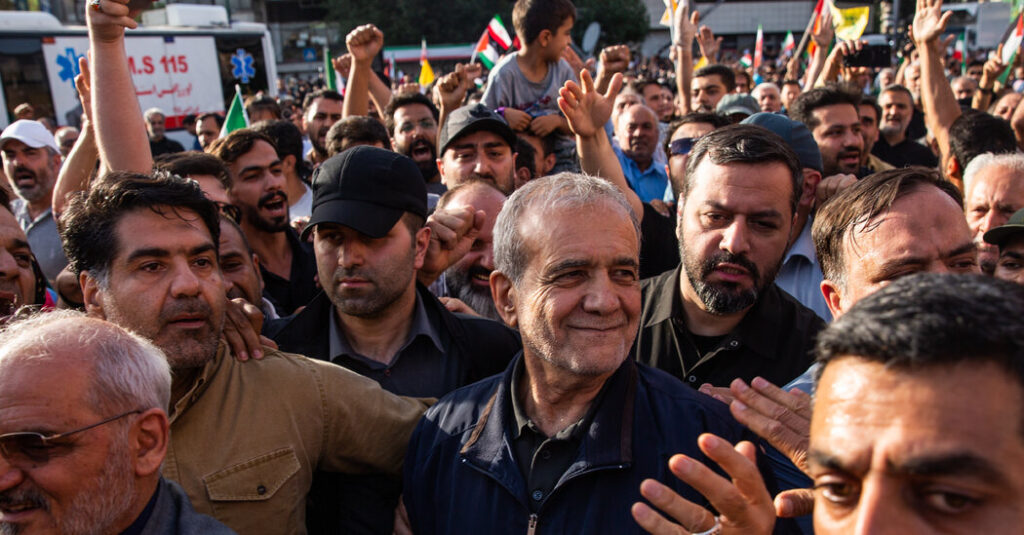
President Masoud Pezeshkian of Iran’s first year in office has been described as an annus horribilis. There were the assassinations of allies and top commanders, the airstrikes by Israel and the United States, and the destruction of nuclear facilities, not to mention the foundering economy that worsens by the day and the rolling energy and water shortages.
But if Iranians thought to look to the president for solutions, he would be the first to say don’t bother.
In a series of remarkably candid public speeches recently, Mr. Pezeshkian has said that Iran is facing insurmountable problems and that he is out of ideas to fix them.
“If someone can do something, by all means go for it,” Mr. Pezeshkian told university students and academics in early December. “I can’t do anything; don’t curse me.”
In meetings with officials, he has acknowledged the government is “stuck, really badly stuck.” He has added, “From the first day we came, catastrophes are raining down, and it hasn’t stopped.”
He has gone as far as to say that Iran’s problems are self-made — a result of corruption, factional infighting and decades of government spending practices that he described as “what crazy people do” — and not the fault of the United States or Israel.
“The problem is us,” he has said in several meetings, including the one with students.
This month, Mr. Pezeshkian told provincial governors and local officials to imagine the central government “did not exist” and “solve your problems yourselves.”
“Why should I solve them?” he said. “You shouldn’t think that the president can make miracles happen.”
Videos of the speeches have gone viral online and in Iranian news media. “Pezeshkian is not ruling the government; he has pressed autopilot and let go,” Ali Zia, a prominent television personality and anchor, said on Tuesday in a video posted on social media. “This is how the public feels.”
Some of Mr. Pezeshkian’s allies and rivals alike have privately expressed disdain for the his running commentary, saying it makes the government look weak and incompetent at a pivotal time for the country, according to two Iranian officials who work in his government and two members of the rival conservative faction. All four insisted on not being named because they were discussing sensitive issues.
In Iran’s political structure, the president can influence foreign and domestic policies somewhat, but the supreme leader, Ayatollah Ali Khamenei, 86, has the final say in all major state matters. Former presidents seldom admitted to being hampered by the system.
Not Mr. Pezeshkian. He appears to have no qualms about saying out loud that he is subservient to Mr. Khamenei on contentious foreign policy issues such as resolving the nuclear standoff with the United States. He has also said publicly that he hasn’t been allowed to lift restrictions on popular social media applications such as Instagram, which Iranians now can get access to through virtual private networks, as he promised to do.
Mohamad Ali Abtahi, a former vice president and reformist politician, applauded Mr. Pezeshkian for not sugarcoating reality. “The notion of speaking honestly with the public is a new phenomena,” Mr. Abtahi said in a telephone interview. “It is not simple-minded. There is a policy behind it. He doesn’t want to hide the truth and raise expectations and then not be able to deliver.”
Conservatives, however, have demanded Mr. Pezeshkian step down. “Why did you become president?” asked Kamran Ghazanfari, a hard-line conservative member of Parliament, in a television talk show last month. “You are supposed to solve the problems in society, not go around saying, ‘We don’t have this; we don’t have that.’”
A heart surgeon and former lawmaker and health minister, Mr. Pezeshkian, 71, assumed the presidency in September 2024, after the death of President Ibrahim Raisi in a helicopter crash.
Trouble began almost immediately. On the day of Mr. Pezeshkian’s inauguration, Israel assassinated the political leader of Hamas, Ismail Haniyeh, who had traveled to Tehran to attend the event.
In June, Israel attacked Iran and the two countries fought an intense 12-day war that culminated with the United States bombing and severely damaging Iran’s nuclear facilities. Mr. Pezeshkian himself narrowly avoided being killed when Israel bombed a secret national security meeting he was leading in a bunker underground.
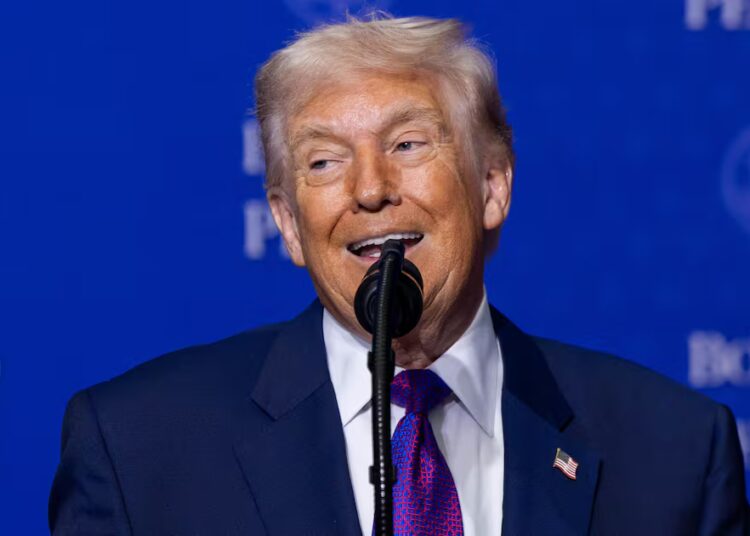
And for years, U.S. sanctions imposed in 2018 on Iran by President Trump targeting its oil revenues and banking systems have depleted the economy. Currently the prospects for the kind of deal with Washington that would grant Iran desperately needed sanctions relief in exchange for restrictions on its nuclear program appear grim, while the threat of more conflict with Israel looms large.
“Iran is paralyzed right now, paralyzed domestically and paralyzed in their standoff with the U.S.,” said Sanam Vakil, the Middle East and North Africa director for Chatham House, an international affairs policy institute based in London. “The fact that Pezeshkian is outwardly manifesting his frustration is really interesting,” she added. “He is trying to take some agency, in this indirect way, calling out the handcuffs and limitations that he is under.”
“But is this going to resolve the problem?” Ms. Vakil continued. “I don’t think so.”
Iranians are watching their currency, the rial, plummet daily against the dollar. On Wednesday, one U.S. dollar was worth 1.3 million rial on the open market, more than double the rate when Mr. Pezeshkian took office.
Prices, including for basic food items and construction materials, have also spiked as markets have adjusted. The price of dairy products, for example, recently tripled, a spokesman told state news media in November. Inflation hovers around 60 percent, according to economists and local news media.
“The situation is disastrous,” said Soheil, a 38-year-old engineer in the central city of Isfahan, insisting, like some other Iranians in this article, that his last name not be used because of fears of retribution. “If it weren’t for the banking card system and electronic transfers, we’d be lugging around sacks of cash just to buy our daily necessities.”
A report released last week by Iran’s Ministry of Social Affairs said that food insecurity in Iran had been worsening since 2020 as inflation has spiked, noting that an Iranian adult was now 400 calories short of the minimum recommended 2,200 per day.
Mahsheed, a 70-year-old retired teacher in Tehran, said inflation had forced her to sell gold and tap into savings to stay afloat. “Buying chicken and beef is now only for very special occasions, and soon we won’t be able to afford eggs, either,” she said by phone.
Acute energy and water crises have added to the problems, forcing periodic power and water cuts to residential, commercial and industrial districts.
Amir Hossein Khaleghi, an economist in Isfahan, said in a phone interview that no short-term or readily accessible solutions would resolve the multiple, overlapping crises Iran was facing. “We’re unable to address major economic challenges because what we need is a profoundly serious strategy,” he said. “Without a major shift in our foreign policy arena, we won’t achieve any breakthroughs on domestic fronts.”
Azar Mansouri, the head of Iran’s reformist political faction, which endorsed Mr. Pezeshkian as its candidate in the election, warned him in a social media post on Sunday that inflation was at breaking point: “People are angry, governing like this is not tenable.”
For now, Mr. Khamenei has thrown his support behind the president, who has three years left in his term. He praised Mr. Pezeshkian as “honorable” and “hard-working” in a speech last month that analysts say was meant to bolster the president and signal to his critics that calls to remove him would be destabilizing.
Mr. Pezeshkian, despite his own projections of doom and gloom, has said he would “stand until the end.”
Farnaz Fassihi is the United Nations bureau chief for The Times, leading coverage of the organization. She also covers Iran and has written about conflict in the Middle East for 15 years.
The post Who Can Solve Iran’s Many Problems? Not I, Says the President. appeared first on New York Times.