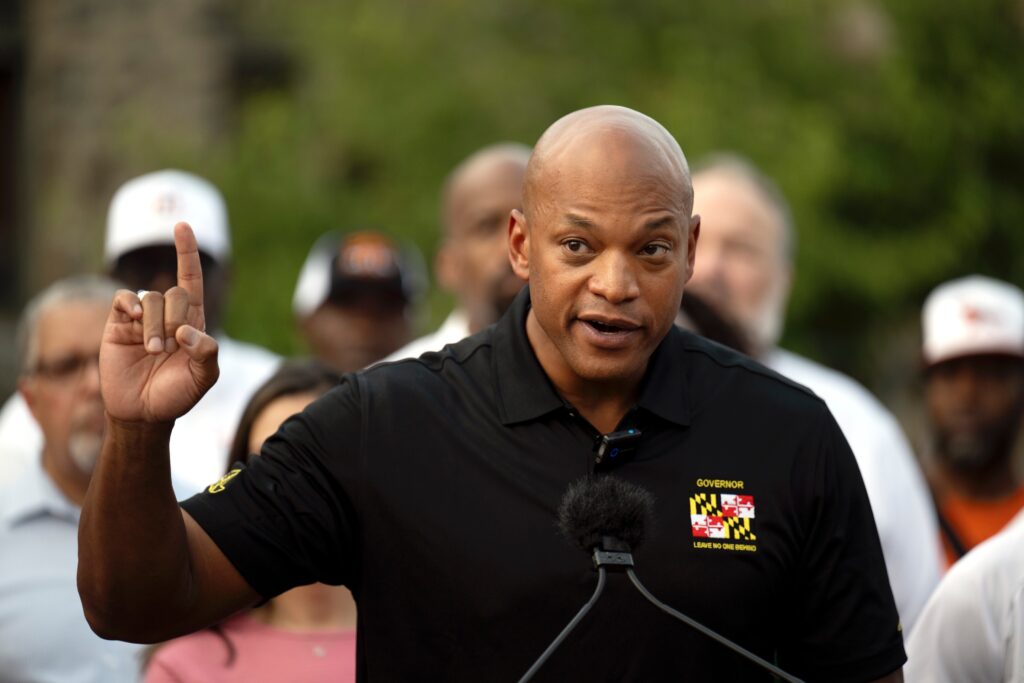
Maryland Governor Wes Moore (D) vetoed legislation this spring that would establish a commission to study how the state could provide reparations to descendants of enslaved people. On Tuesday, the Democratic supermajorities in the state legislature overrode his veto, meaning that unseemly and illogical arguments about reparations will once again be litigated in public.
Moore was correct in his veto letter: It’s important to be honest about the “full history of African Americans,” including slavery and the horrific discrimination they experienced after emancipation. Nobody can accuse Maryland’s first Black governor of being insensitive to that. The legislature issued a formal apology for the state’s role in slavery in 2007.
Maryland has a large Black population, and its political system reflects that. In addition to Moore, the state’s attorney general and treasurer, one U.S. senator, two U.S. representatives, three supreme court justices and over 60 state legislators are Black.
Charles County and Prince George’s County are the two highest-income majority-Black counties in the United States. That’s not to say that all of Maryland’s Black residents are doing well, but the issues of poverty in parts of Baltimore, for example, are clearly more complicated than skin color.
Maryland has plenty of White residents who aren’t doing great, as any state does. Should taxpayers in Allegany County (86 percent White, $57,393 median household income) really be on the hook for sending reparations to residents of Prince George’s County (60 percent Black, $100,708 median household income)? Lots of redistribution along those lines could take place with state-funded reparations.
Many of Maryland’s White residents are descended from poor Italian or Irish immigrants who were hardly powerful when they arrived in the country. Many White families arrived decades after the Civil War was over. In most cases, it’s simply too complicated to ascertain whose ancestors wronged whom more than 150 years ago to be deserving of reparations today. Explicitly race-based reparations would also run into legal issues, as such discrimination is likely prohibited by civil rights laws.
These difficulties haven’t stopped other jurisdictions from batting around the idea. Massachusetts is also considering a reparations bill, and San Francisco lawmakers have voted to create a reparations program. They will all run into similar problems, which is why no jurisdiction anywhere in the country has ever successfully instituted reparations for African Americans, despite numerous attempts.
Maryland will realize the same thing in due course, which is why legislators should have heeded Moore’s message. If overcoming racial discrimination was simply a matter of transferring money, it would be a whole lot easier to do.
The post Wes Moore is right about reparations appeared first on Washington Post.