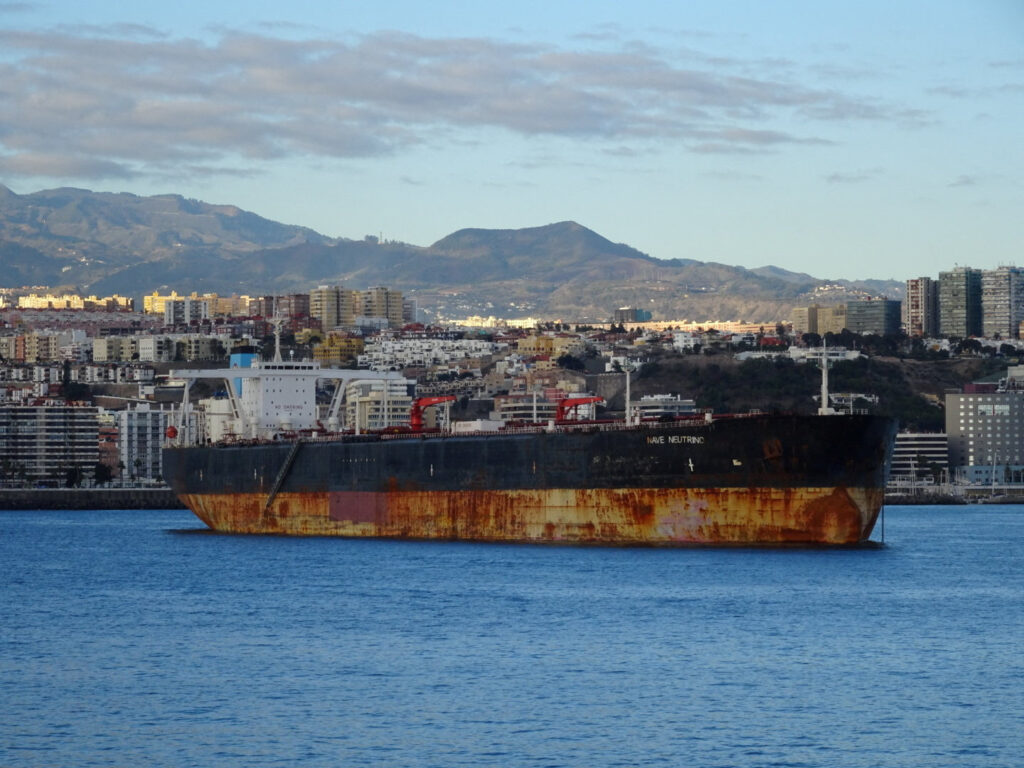
As President Donald Trump ramps up pressure on Venezuelan President Nicolás Maduro, the United States is targeting oil tankers operating under U.S. sanctions and bound for or departing Venezuela, with the announcement of a “total and complete blockade” of such vessels.
The move follows the seizure of a Venezuelan oil tanker last week — steps expected to grind Venezuelan oil exports to a near halt.
Complete blockades are illegal under international law. However, as described by Trump, the “blockade” on Venezuela applies to only vessels under sanctions, meaning it is not a complete blockade.
While Venezuela has been subject to punishing U.S. sanctions since Trump’s first term, Maduro has managed to continue to sell oil, maintaining a critical economic lifeline. Often using vessels under sanctions, Maduro has sold oil to countries such as China that don’t mind running afoul of U.S. financial institutions. And in other cases, Maduro has used what are known as shadow fleet vessels — also often sanctioned — to move Venezuelan oil onto global markets by obscuring its origin.
Here is what we know about the vessels and the blockade’s impact so far.
The vessels
More than 30 tankers in the Caribbean designated by the Treasury Department as sanctioned could be affected immediately by the blockade, according to analysis from the independent ship tracking site TankerTrackers.com and global intelligence company Kpler. Of those, at least 12, including the Skipper, which U.S. forces seized last week, are carrying Venezuelan oil, according to Kpler.
“In light of President Trump’s recent announcement, these tankers may be exposed to heightened scrutiny and potential enforcement actions by U.S. authorities,” said Dimitris Ampatzidis, senior risk and compliance analyst at Kpler.
The measure announced by Trump applies to tankers sanctioned for their links to Venezuela but can also include vessels that are designated for ties to other countries and entities. The tanker seized last week had links to a sanctioned Russian oil magnate and was designated for smuggling Iranian oil, according to a Treasury statement.
Some tankers under U.S. sanctions continued to operate near Venezuela.
One, the Azure Voyager, most recently arrived in Venezuela in late August, TankerTrackers.com found. The tanker loaded oil from Jose Terminal, just off the Venezuelan coast, several times, off-loading each time through ship-to-ship transfers. The tanker this week again appeared at the terminal, according to a Washington Post analysis, and was still there as of Wednesday morning, according to satellite imagery.
Like the Skipper, the Azure Voyager is both under sanction and traveling under a false flag — used to conceal the true nation of origin. Another tanker under U.S. sanction entered Venezuelan waters Tuesday, TankerTrackers.com reported, despite the ship reporting its location on the other side of the world.
The Treasury Department’s Office of Foreign Assets Control lists more than 50 vessels worldwide under its Venezuelan sanctions initiatives. The Treasury Department announced fresh sanctions last week on six shipping companies that it said had transported Venezuelan oil this year. According to the release, five of the firms are based in the British Virgin Islands or the Marshall Islands and are each the registered owner of a tanker that has loaded Venezuelan oil. The sixth is a U.K.-registered company behind a Hong Kong vessel that officials said had transported Venezuelan oil to Asia in June.
The precise locations of the vessels was not immediately clear. Marine Traffic, which provides information on the movement of ships, shows none of the six vessels under the new sanctions in Venezuelan waters when they last transmitted their locations, but the Treasury Department accused at least four of the vessels of obfuscating their locations.
Vessels under U.S. sanctions can be subject to severe restrictions, such as being banned from using certain ports, and the denial of services such as refueling and repairs. The designation also puts vessels at high risk of seizure and can threaten the assets of owners and clients.
Expected impact
The blockade is not expected to have a significant impact on the global oil market. While Venezuela is home to the world’s largest proved oil reserves, Venezuela oil accounts for only a small fraction of global oil consumption. Venezuela exports less than 1 million barrels of oil a day, half of what Iran exports.
But the Venezuelan economy is expected to feel the impact. If the Trump administration manages to effectively block all vessels under sanctions from carrying Venezuelan oil, it could have a “massive impact” on government revenue, said Francisco J. Monaldi, director of the Latin America energy program at Rice University. About 80 percent of Venezuela’s oil is sold on the black market and oil represents more than half of the country’s fiscal revenue, Monaldi said.
The Maduro government, in a statement posted on social media by Vice President Delcy Rodríguez, described Trump’s announcement as “grotesque” and “warmongering threats” and vowed to denounce a violation of international law before the United Nations.
The tankers that have continued to navigate the Caribbean as usual belong to Chevron. The U.S. energy giant has operated in Venezuela for over a century, and in July, the Trump administration reissued a license to continue operations.
Chevron spokesman Bill Turenne said in a statement Tuesday night that the U.S. energy giant’s work in Venezuela continues “without disruption and in full compliance with laws and regulations applicable to its business, as well as the sanctions frameworks provided for by the U.S. government.”
Samantha Schmidt contributed to this report.
The post Trump’s Venezuela blockade targets dozens of vessels under sanctions appeared first on Washington Post.