If Elon Musk is to be believed, there will be hundreds of thousands — if not millions — of autonomous Tesla vehicles roaming the streets of America by the end of next year.
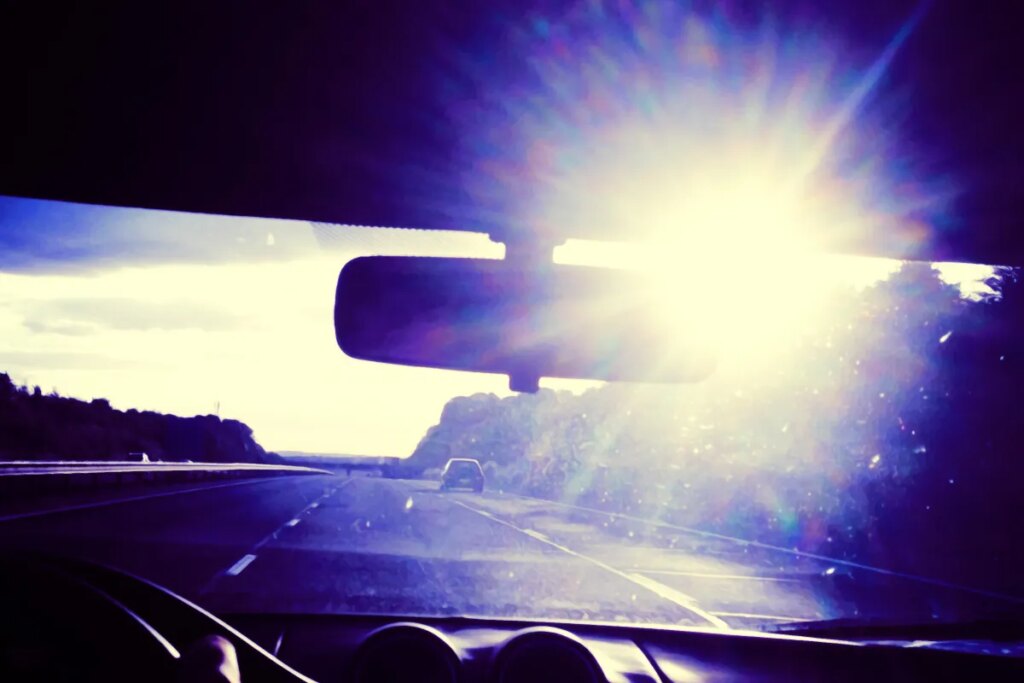
There’s a gazillion reasons to doubt whether that’ll actually happen. But in focus today is the fact that its Full Self-Driving software, which is not actually fully self-driving, can get easily stunlocked by the radiant beams of the Sun.
It’s a problem that’s been known for years, and it was recently brought back into the spotlight by Tesla investor Ross Gerber, an early backer of the automaker who has now pivoted to being one of its most outspoken bears.
On Monday, Gerber posted an image taken inside his Tesla showing it driving straight toward the Sun, with an alert on the car’s infotainment screen yelling at him to “Take Over Immediately.” The reason given: “Front camera blocked or blinded.”
“Got the new tesla FSD 14.2.1.25 and within two minutes of driving in the Sun. This,” Gerber wrote. “These cars can’t drive into Sun…”
Tesla fans, blinded by their devotion to Elon as much as the car’s camera was by sunlight, deflected by accusing Gerber of ragebaiting and mocking him for his dirty windshield.
It’s certainly not beyond the realm of possibility that Gerber is being intentionally provocative, given his prominence as a Musk critic. But he’s describing an issue that is very much real, and which has had tragic consequences.
This year, the National Highway Traffic Safety Administration launched a probe into the automaker after a Tesla running FSD mowed down and killed an elderly pedestrian on the side of the road. Footage taken by the car’s front camera clearly showed that its vision was washed out by sunlight shining directly into the lens.
The horrific accident underscores the risks of Tesla’s vision-only approach to self-driving cars. Its competitors, like the robotaxi leader Waymo, use a variety of sensory inputs to detect their surroundings, including cameras, radar, and what’s known as lidar — short for light detection and ranging, which works on the same principle as radar, but by using lasers instead of radio waves and can map out a detailed three-dimensional representation of a vehicle’s environment.
Musk, however, infamously believes lidar and radar to be a “crutch,” and ditched using them entirely years ago. He continues to insist that the systems are befuddled by rain, snow and dust due to reflection scattering, claiming that’s why Waymos are inferior to Teslas in heavy precipitation. Lidar and radar, in fact, actually “reduce safety,” according to Musk, because they can produce data that contradicts the cameras and confuse the FSD software, an argument that’s proved controversial even among his most ardent boosters.
Critics point to the moment Musk ditched lidar and radar systems as the moment that Tesla’s self-driving efforts began unraveling for good. Five years since FSD’s first beta release, it’s still committing ghastly errors like driving into the path of oncoming trains.
More on Tesla: We’re Bracing for an Accident Now That Tesla Is Taking the Safety Drivers Out of Its Robotaxis
The post Tesla Owner Says FSD Is Great Except for the Part Where It Can’t Drive in the Sun appeared first on Futurism.