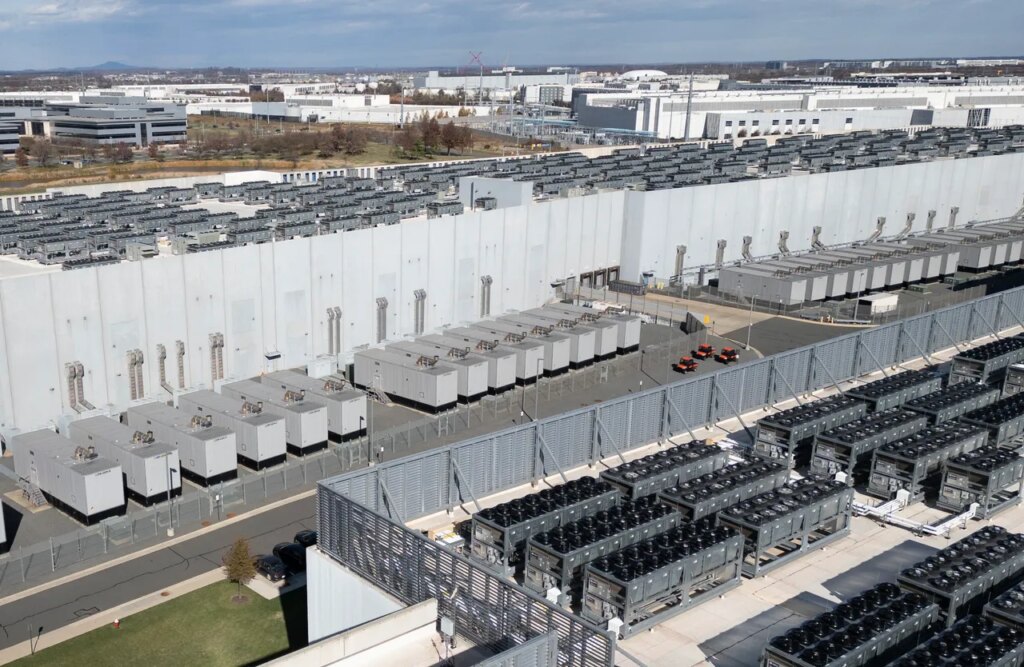
The Working Families Party said Thursday that it is putting out a specific recruitment call for people who are organizing against data centers in their communities to run for office.
The announcement comes amid a period of heightened political turmoil around data centers, as some high-profile Democrats wade into the fight. Earlier this week, three Democrats in the Senate sent letters seeking information from Big Tech companies about how data centers impact electricity bills, while senator Bernie Sanders, the independent from Vermont, became the first national politician to call for a moratorium on data center construction.
“We see our role as responding to what working families and working people are concerned about, what issues are keeping them up at night,” says Ravi Mangla, the national press secretary for the Working Families Party. “We would be ignoring the needs of our constituents if we were not responding to the issue of data centers and their impacts on communities.”
The Working Families Party was originally founded in New York in the late 1990s; it now has chapters in states across the country. While it (mostly) doesn’t seat candidates independently, the progressive third party’s endorsements and organizing power can carry real weight in the races where it chooses to get involved. It endorsed Zohran Mamdani in New York’s mayoral race this year, as well as a string of other successful candidates.
Opposition to data centers has skyrocketed in some areas of the country over the past year, as tech companies have ramped up their investment in building out hundreds of facilities across the country. Polling from the outlet Heatmap released in September shows that less than half of Americans of all political persuasions would welcome a data center being built near where they live, while a recent survey from a private industry group shows that community opposition increased in the second quarter of this year, successfully stalling or stopping billions of dollars in data center development.
In many regions of the country, affordability issues—including rising electricity bills—are becoming tangled with other concerns around data centers, like worries over the climate and water impacts, or even noise from the centers themselves. Concern over data centers played a role in a number of midterm elections, including factoring into several races in Virginia, which has the highest concentration of data centers in the country and is facing rising demands for energy from more facilities projected to come online through the end of the decade. The political ripple around data centers has lasted beyond the midterms—and stretched beyond just Virginia. In the past week, officials in Chandler, Arizona voted 7-0 to reject a proposed data center in the city, despite high-profile lobbying from former senator Kyrsten Sinema, while voters in Georgia on Tuesday elected a newcomer to the state legislature who has promised legislation to make data centers “pay their fair share.”
Mangla says the Working Families Party decided to launch the recruitment effort after seeing how the issue played out in Virginia’s elections, and after observing some of the intense local pushback around the country. “You can’t fill a community center or a town hall just organically,” he says. “There are people who are clearly stepping up in their communities, organizing their neighbors, and leading the charge to push back against these data centers.”
The group, which earlier this year put out a similar call for working class candidates to run for office, is encouraging interested people to fill out a form that will be used to identify possible local candidates, who can then be connected to resources to help them launch a bid for office. While the form is open to anyone around the country, Mangla says that the group will concentrate its efforts on certain regions—northern Virginia, the upper Midwest, and the Southwest—that, he says, overlap with support for the Working Families Party, data center development, and the local ability the group has available to vet candidates. Mangla says that they hope to expand the focus to other areas with a lot of data center organizing, like Georgia, depending on interest.
Data centers have been around for years in Virginia. But this election “was the first time that [data centers have] really been talked about on the electoral trail,” says Lee Francis, the chief program and communications officer at the League of Conservation Voters’s Virginia chapter. Much of the PAC’s work in the 2025 midterms focused on data centers, including running an ad attacking the Republican incumbent in Virginia’s 30th district on his track record of welcoming data centers to the area. (That district—which includes some of Loudoun County, one of the world’s densest data center regions, and which went to Trump in 2024—flipped this year.)
“There’s more public awareness and more public outrage on data centers than there ever has been,” says Francis. “More people are looking at their electric bill and trying to figure out why their rates keep going up. People are connecting the dots because of greater public awareness, because of more organized opposition to data centers.”
Nationally, the politics around data centers are in flux, as tech companies pour more money into building data centers to fuel the AI race—and as more opposition pops up in areas where they’re being built. Some high-profile Democrats have shown support for the buildout in their states. In June, Pennsylvania governor Josh Shapiro welcomed a $20 billion announcement from Amazon in projects in the state, including two data centers, while California governor Gavin Newsom vetoed legislation in October that would introduce new water use reporting requirements for data centers. (He did sign a bill that tasks the state’s Public Utilities Commission with investigating whether or not increased electric demand from data centers could shift onto ratepayers.)
But on Tuesday, Democratic senators Elizabeth Warren, Chris Van Hollen, and Richard Blumenthal sent letters to major data center developers and Big Tech companies, including Google, Microsoft, Amazon, and Meta. The letters seek information from the companies “in light of alarming reports that tech companies are passing on the costs of building and operating their data centers to ordinary Americans as A.I. data centers’ energy usage has caused residential electricity bills to skyrocket in nearby communities.”
The same day, Sanders released a video calling for a moratorium on data center construction. A moratorium, Sanders said, “will give democracy a chance to catch up, and ensure that the benefits of technology work for all of us, not just the 1 percent.” On Wednesday, Sanders’s team released a separate video that highlighted the climate and water impacts of data centers.
“The idea of Amazon as just a huge billion dollar company in the sky is no longer true,” says Mangla. “We’re seeing their data centers invading and taking over our own communities. I think more than ever the presence of Big Tech is not just something that is limited to Silicon Valley …we’re seeing it in all parts of our lives, and the negative impacts that are coming from a tech industry that doesn’t want to be regulated.”
The issue may become troublesome for some national Republicans, as the Trump administration puts its full weight of support behind the AI industry and data center development. (Recently, Trump issued an executive order threatening to punish states seeking to regulate AI.) Opposition to data centers has flared in red districts, and some MAGA politicians—including senator Josh Hawley and representatives Marjorie Taylor Greene and Thomas Massie—have criticized the national buildout for months. Earlier this month, Florida governor Ron deSantis called for limits on data centers in Florida as part of a bill that could regulate AI in the state.
“A lot of the opposition to these projects is led locally in rural areas,” says Francis. “There aren’t folks showing up in Birkenstocks at these public hearings. They’re local folks who have to live next to them. That’s been a lot of the opposition. It’s not necessarily a super climate activist type of thing.”
While the Working Families Party overwhelmingly aligns with Democratic candidates, the group says it has supported Republican candidates in the past. The recruitment call, Mangla stresses, is open to candidates of all political persuasions organizing against data centers.
The post Opposed to Data Centers? The Working Families Party Wants You to Run for Office appeared first on Wired.


