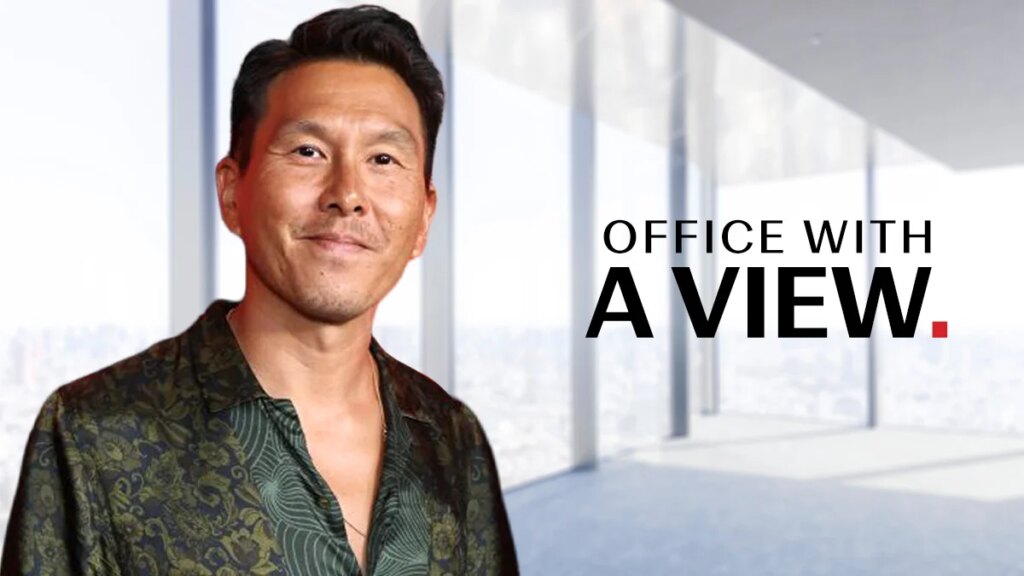
People dream of moving to Hawaii and embracing the island life. Ken Kao, who runs Waypoint Entertainment, made it a reality.
The veteran film producer moved to Hawaii during the pandemic and for the past five years has been running a Los Angeles-based team remotely while producing films with the likes of Martin Scorsese, Terrence Malick, and Yorgos Lanthimos.
His company just expanded its partnership with Neon in a multi-picture slate deal that includes award contenders like “Sentimental Value” and “No Other Choice.” The deal came after collaborating on films like Tilman Singer’s “Cuckoo” and Osgood Perkins’ “Longlegs,” which became a surprise box office hit and grossed $127.9 million at the box office.
Kao started as an entertainment lawyer before switching to producing in his early 30s. He co-founded Waypoint in 2010 and has since produced a dozen features, including “The Favourite,” which won Olivia Colman an Oscar in 2018. He is also the co-founder of Parallel, which partners with talent to launch wellness-focused media projects
But his path from renting Scorsese and Malick films at Kansas video stores as a teenager to producing Oscar-nominated movies wasn’t typical. Now he’s trying to fix what he sees as broken economics in independent film.
You’re based in Honolulu while running a company that works globally. How does working from Hawaii shape your perspective on the business?
I started in LA like most people in this industry. I was repped by WME, and they helped launch my film career. You have to build relationships when you’re starting out. COVID gave me the chance to move here, and I never looked back. That was almost five years ago.
I have a team of five at Waypoint, all in California. We connect every day by phone or video. They handle the day-to-day. I get distance from the craziness of Hollywood, which lets me see the board better. How movies actually get made, who’s doing what? They’re in the war. I can see the strategy.
You transitioned from being a lawyer to producing Oscar-nominated films. What’s the one lesson from your legal career that still serves you in navigating Hollywood?
Resilience. We’ve been talking about some development projects recently, and they all feel like relationships. I can’t say they’re like giving birth because I’m not a woman and have no idea what that feels like. But they feel like relationships. You meet someone. You date them. You move in together for a year or two. Everyone’s different. You learn something new every time.
Law is rigorous. It requires give and take. I call it negotiation, but it’s really the back and forth of deal making. That’s how I approached law practice, and film is the same. It’s relational. You have to be resilient because there are always challenges. New challenges on every film.
Waypoint just expanded its partnership with Neon on a major slate, including films from Park Chan-wook and Boots Riley. How has your approach to deal-making evolved since founding the company in 2010?
In 2010, we were production finance heavy. Over the first five years, that was the focus. In 2015, I shifted to long development. That coincided with relationships I’d made on films. I was Ryan Gosling’s producing partner for six or seven years, and we got invested in long development.
Around that time, WME helped me create a foreign sales company. It’s now part of WME after they acquired it. My education really grew. I started understanding all elements of producing.
Now we’re trying to bring that together. We’re not only producing in the traditional form of long development and acquiring IP, we’re also financing development and production. And with our Neon partnership, we’re acquiring films and helping release them. Waypoint isn’t a studio. We don’t distribute films. But with Neon, we’re acquiring films and assisting in releasing them.
Waypoint is unique because it’s represented across the spectrum.
You also launched Creature Features as Waypoint’s horror label, with “Longlegs” becoming a box office hit. What made you see an opportunity in genre filmmaking right now?
I’m not going to pretend I identified some new angle. Genre has a built-in audience. Horror, thriller, action. People love going to see these films.
What we’re doing that’s unique is finding films with a subversive angle to genre films. Very targeted audiences. We partnered with Neon, and they have a brand of genre. Our other partners make it a party of three. We’re trying to find a new angle into genre in terms of filmmaking.
“Longlegs” appealed to me because of Osgood Perkins’ pedigree and his rising star as a genre director. And Nicolas Cage doing something he’d never done before. Neon took an avant-garde approach to promoting and releasing that film. It all came together.
That’s what we’re trying to do on each of these. Not cookie-cutter genre releases. We’re treating each one individually. We’re not making many of them. Each one has to check specific boxes before we decide on a movie and release it. That’s what’s going to be unique about our style of genre.
We’ve got another film coming called “Hokum” with Adam Scott, releasing in 2026.
Between Waypoint Entertainment and co-founding Parallel, you’re building companies at the intersection of film, wellness and investing. What’s the common thread in how you evaluate projects across these different worlds?
Point of view. On the film side, if you look at the films Waypoint’s been involved in, we’ve always tried to find filmmakers with a real point of view. People who have something to say.
It’s hard to get a movie to be successful. You never know. A lot of things have to happen. But we work with filmmakers who have a bold approach or are trying to say something. Waypoint has always championed that.
On the Parallel side, even though it’s a different business, we align with that type of person. We’re looking for authenticity in what they believe and a strong point of view on what they’re trying to deliver and how they want to say it.
You work with auteurs like Scorsese, Malick and Yorgos Lanthimos. What’s your daily routine like when you’re deep in production versus development mode?
In development, I can sit here in Hawaii. These things can take years. Some movies come together quickly. Some take five or ten years. I acquired a development project in 2012. Almost 14 years ago. About six years ago, we had it cast and were going for financing. The actor fell out. It fell apart. Now I’m trying to recast it.
Development is not for the faint of heart. It takes resilience and perseverance. It’s hot and cold all the time. There may be no action for months, then suddenly it gets energy. That’s development from a producer standpoint.
For some directors, it’s different. They’re saying this is the next movie I want to make. They’re doing rewrites. That’s their focus. As a producer and slate partner, I can navigate different projects at different times from remote locations.
When we get into production, we’re on the ground. That’s very focused for me. When we have a movie that’s financed, most of the time I’m on set.
Independent film financing has gotten tough post-pandemic and after the double strikes. What’s your advice to producers trying to get auteur-driven projects made in this climate?
If you can figure that out, let me know. It is tough out there right now. Really tough in the independent space. The marketplace is not super bullish on auteur filmmakers right now.
Look at release cycles. Movies made by auteurs aren’t really performing at the box office.
You mentioned two names. I’ve worked with both Yorgos and Joachim Trier, who made “Sentimental Value.” Yorgos made this tiny movie, “Dogtooth,” with such a strong point of view that he built a brand audience around himself. He started casting the world’s best actors. Every time Yorgos has a movie now, it’s an event. People want to see his brand of filmmaking. He’s in that special class of auteur filmmakers.
“Sentimental Value” represents another form of auteur filmmaking that’s easier to get made from a studio perspective. It’s a contained budget. It doesn’t cost a lot of money. Studios don’t have to take a lot of risk. Neon acquired that film as a finished film for domestic release. It wasn’t even a studio film.
That’s the challenge we’re facing in independent film now. We don’t have the financial resources to make films the way we used to. We have to find a way through independent financing or international sales guarantees to get movies made. Then hope somebody likes them and wants to buy them. All the while, it’s getting more expensive to make movies everywhere.
Studios are increasingly focused on making big IP things. Larger movies.
There was talk recently about October being a horrible month for auteur filmmakers. A lot of flops. For the untrained eye, people would say these movies cost this much and made only this much. That was a bomb. From that metric, it’s not false.
But I see a deeper issue. The cost of making movies is being driven up. Why are they so expensive? Should a studio be making a $50 or $60 million biopic about an MMA fighter with an auteur filmmaker? Why is it $50 million? Because that movie is expensive to make in the United States. And probably because the star wanted a lot of money.
Should that movie be made for half that? Then it could have had a chance to be successful. This isn’t the only movie like this. I believe there could be a solution.
That’s what we’re trying to do at Neon. Make talent feel invested in our projects. Instead of fighting for as much money upfront, which inflates the budget, we want to make talent partners so we can keep costs down and create greater upside.
Our industry has operated like this for a long time. There’s a statement now that you should get what you can upfront because you’re never going to see real upside on the success of a film. We have a systemic issue. We’re making films unsustainably. When they don’t work, everybody wonders why.
There’s a deeper issue than they’re just not good.
The post Ken Kao on Running Production Company Waypoint From Hawaii and Why Auteur Films Need New Economics appeared first on TheWrap.