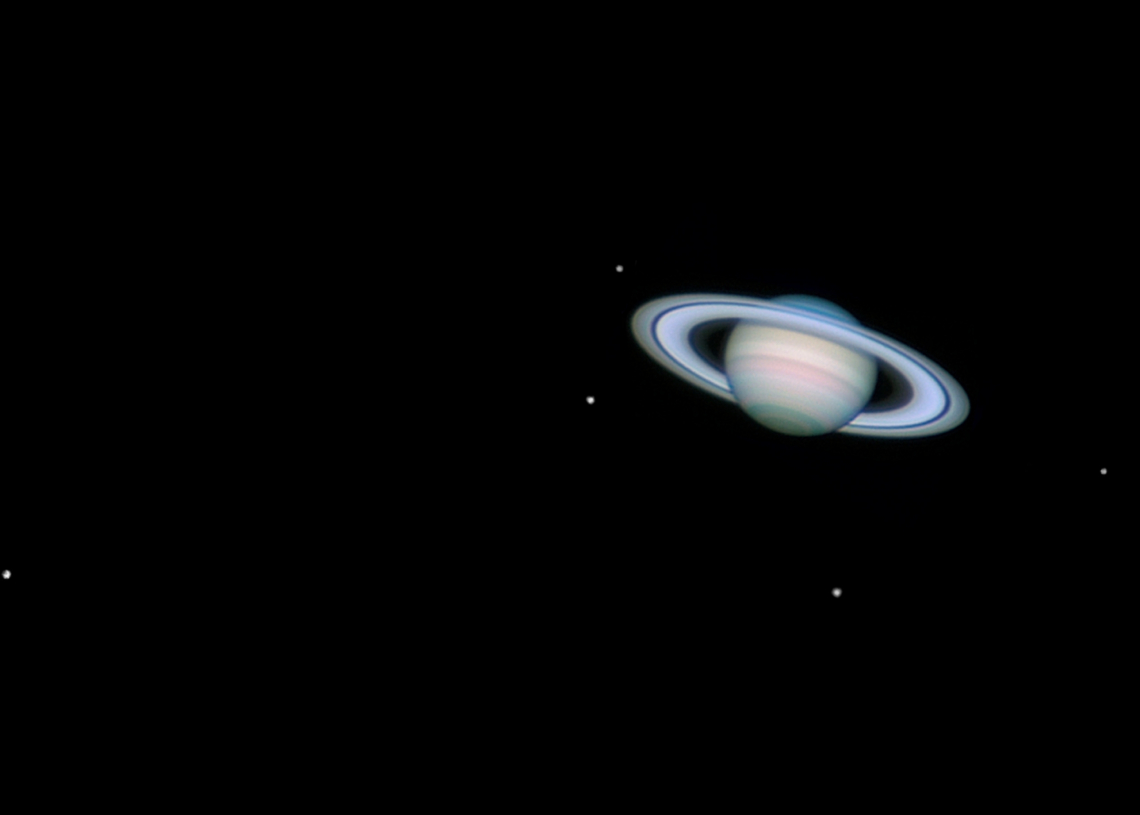
Titan doesn’t look friendly. Saturn’s largest moon sits under a thick orange haze, locked in temperatures that would literally snap steel, with methane rain falling onto vast hydrocarbon seas. Still, scientists keep circling back to it, mainly because Titan keeps offering signs that something interesting may be happening beneath the surface.
A new study published December 17 in Nature suggests Titan’s interior may be packed with slushy tunnels and pockets of meltwater rather than a massive underground ocean. That structure could still support life, just not in the way researchers once expected.
The work revisits data from NASA’s Cassini mission, which spent years observing Saturn and its moons. Cassini detected small changes in Titan’s shape as it orbited the planet. Earlier models argued that kind of flexing required a deep, liquid ocean under the ice. The new analysis points elsewhere. Titan’s shape responds slowly to Saturn’s gravitational pull, a delay that suggests internal resistance rather than freely moving water.
“Instead of an open ocean as we have here on Earth, we’re probably looking at something more like Arctic sea ice or aquifers,” said study co-author Baptiste Journaux, an assistant professor at the University of Washington, in a statement. That distinction affects how heat, nutrients, and energy move through the moon.
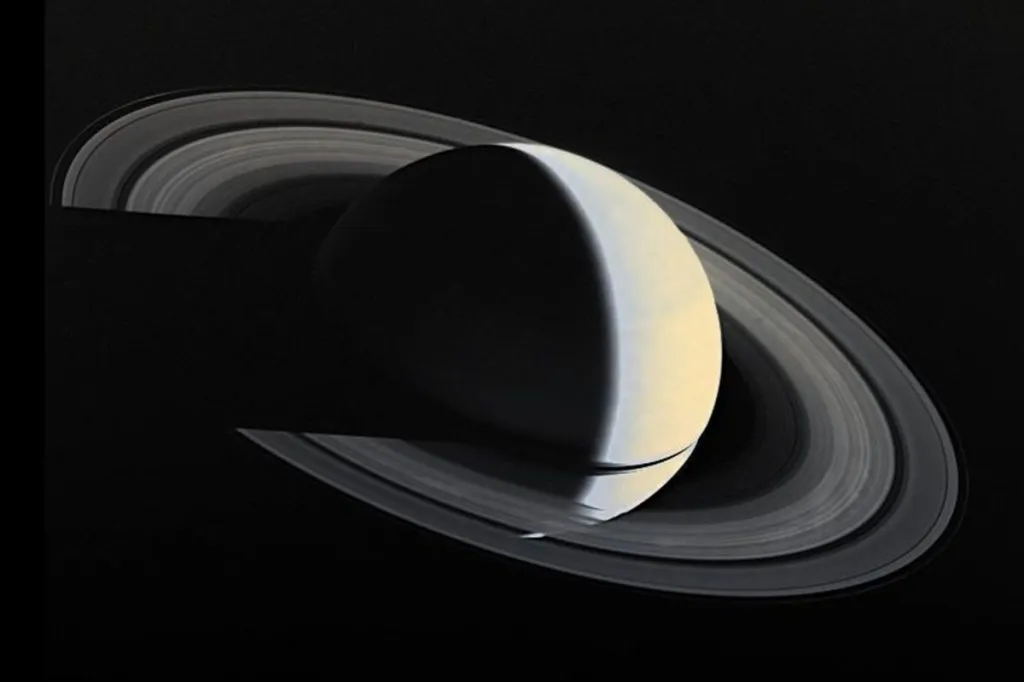
Is Saturn’s Moon Titan Hiding Alien Life in the Tunnels Under Its Surface?
Lead author Flavio Petricca, a postdoctoral researcher at NASA’s Jet Propulsion Laboratory, said the internal behavior caught the team off guard. “Nobody was expecting very strong energy dissipation inside Titan,” he said. “That was the smoking gun indicating that Titan’s interior is different from what was inferred from previous analyses.”
Using updated thermodynamic models, the researchers simulated how water and ice behave under Titan’s intense pressure. The results point to a thick, slush-like layer where ice and liquid coexist in a dense mix, creating isolated pockets rather than a single circulating ocean.
Those pockets could still be biologically interesting. The study suggests some meltwater could reach temperatures around 68 degrees Fahrenheit. Smaller volumes of water can concentrate nutrients and chemical energy, which could make them more favorable for simple life than a diluted global ocean.
Titan already stands out for other reasons. Its surface hosts lakes of liquid methane, complex organic chemistry, and weather systems that mirror Earth’s in unfamiliar ways. Adding subsurface water to that combo keeps it high on the list of places scientists want to explore.
NASA’s Dragonfly mission, scheduled to launch as early as 2028 and arrive in 2034, will explore Titan’s surface using a rotorcraft. For researchers, Titan now represents an uncomfortable possibility rather than a curiosity.
The post Is Saturn’s Moon Titan Hiding Alien Life? appeared first on VICE.