The British economy ended the year with a moment of respite.
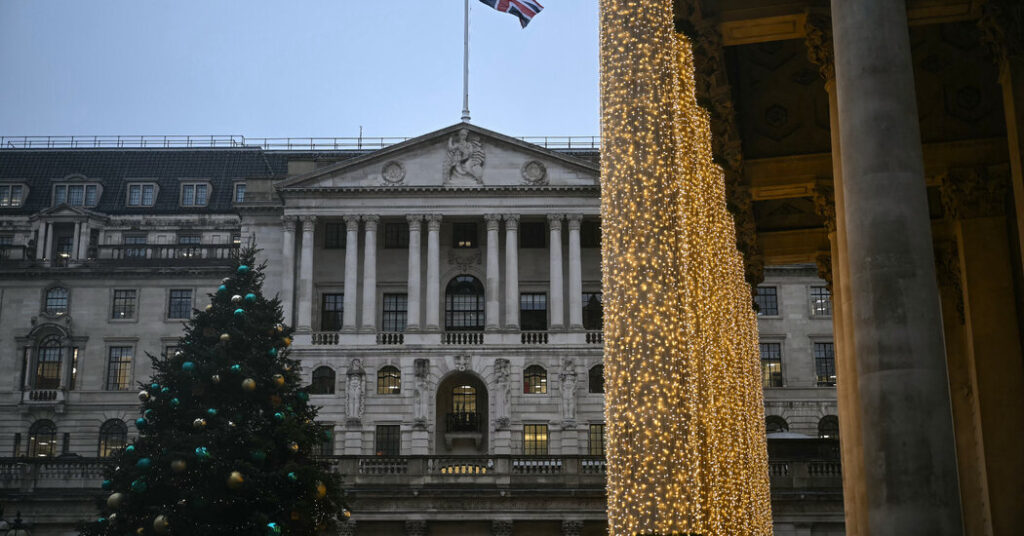
Policymakers at the Bank of England cut interest rates on Thursday a quarter-point, to 3.75 percent, after inflation slowed more than economists expected.
The central bank had held rates steady at its two previous meetings because of concerns about stubbornly high inflation. Data published on Wednesday eased those fears, in particular for Andrew Bailey, the governor of the bank. Consumer prices rose 3.2 percent in November, versus the same time last year, down from 3.6 percent the previous month.
“We’ve passed the recent peak in inflation and it has continued to fall, so we have cut interest rates for the sixth time” in the past year and a half, Mr. Bailey said in a statement.
For months, the nine-person rate-setting committee at the Bank of England has been almost equally divided into two camps. One group has been concerned about weakening demand in the economy and troubled by signals of low confidence, such as households’ high savings rates. The other group has been worried that the recent bout of high inflation has changed the way households and businesses think about prices, potentially embedding higher inflationary expectations in their behavior.
Mr. Bailey has served as the swing vote recently. This week, he broke the deadlock again cast one of the five votes in favor of cutting rates, versus four for leaving them unchanged.
“We still think rates are on a gradual path downward,” Mr. Bailey said. “But with every cut we make, how much further we go becomes a closer call.”
Policymakers said inflation would fall faster than expected in the short term because relatively high interest rates have been restricting the economy, growth has been “subdued” and the labor market was loosening. The unemployment rate recently climbed to 5.1 percent, the highest level in five years.
The rate cut was welcomed by the government, which has said it wanted to help reduce inflation and is aware that households are struggling because of the high cost of living. In her annual budget last month, Rachel Reeves, the chancellor of the Exchequer, said she would cut household energy bills and freeze rail fares.
On Thursday, Ms. Reeves called the rate cut “good news” for mortgage holders and businesses with loans. “But I know there’s more to do to help families with the cost of living,” she added in a statement.
Many economists see the British economy’s outlook as middling.
Inflation is not expected to return to the bank’s 2 percent target until 2027. This year, economic growth has been heavily supported by public spending but private investment and consumer spending have been lackluster. If that dynamic continues next year, the British economy may muddle through but remain vulnerable to shocks.
The Organization for Economic Cooperation and Development recently forecast Britain’s economy to grow 1.2 percent next year, down from 1.4 percent this year. Last year, the government raised taxes, particularly on businesses, and this year said it would take steps to raise more money from income taxes. Increased government spending is also set to moderate.
The government, led by the Labour Party, has struggled to cement a positive narrative about the economy. This week it announced that a workers’ rights bill would soon become law and that the country had reached a trade deal with South Korea. But economists are watching for other policies targeting areas such as faster home building and development of infrastructure projects.
Eshe Nelson is a Times reporter based in London, covering economics and business news.
The post Interest Rate Cut and Slower Inflation Offer Britons a Reprieve appeared first on New York Times.