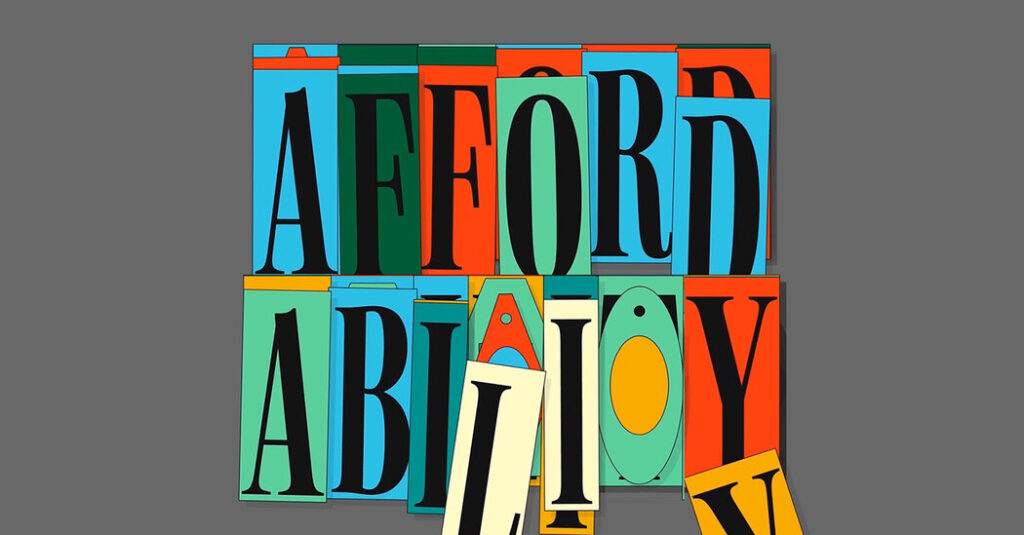
You know exactly how Democrats feel about “affordability” right now, because they will not stop telling you. It’s “the story of this moment” (per Raphael Warnock) and “definitively the decisive issue” (Hakeem Jeffries) and “the central reason to be a Democrat” (Elizabeth Warren). A database tracking newsletters from members of congress shows the party’s use of the word approaching talismanic levels of repetition, nearly tripling in the months leading up to a very successful Election Day.
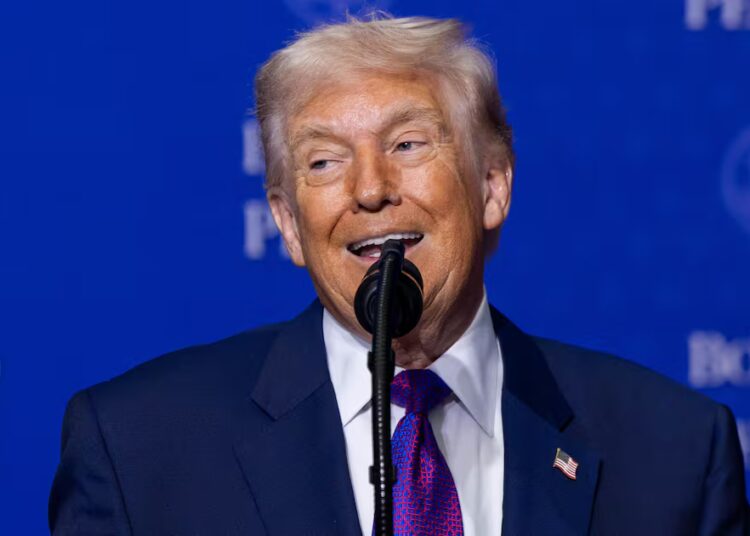
You can also tell how Donald Trump feels about this. He won the presidency with promises to lower prices and “make America affordable again,” and greeted Election Day by posting that “if affordability is you issue, VOTE REPUBLICAN!” After the races were called, though, he started talking about the concept as if halfway through a tumultuous breakup. Sometimes he tried to win it back, calling himself “the affordability president” and Republicans “the Party of Affordability.” Sometimes he contemplated his rivals: “You know, they have this new word called ‘affordability,’ and we don’t talk about it enough.” But mostly he’s been irritated — snapping that “I don’t want to hear about the affordability,” posting that the issue was “DEAD! STOP LYING!!!,” calling it “a con job created by the Democrats.” “They just say the word,” he complained. “It doesn’t mean anything to anybody.”
Can you be against affordability? As with “crime,” it’s tough to stake out a contrary position; the word’s too modest and common-sensical, redolent of an era when political ads depicted median suburbanites at kitchen tables frowning over checkbooks. Trump is right to call it new, though. A phrase like “affordable housing” would not have made those suburbanites think hopefully about their own mortgages; it would have made them picture low-income units denting their property values. “Affordability” was about somebody else’s problems.
With housing, “affordable” started off as a pleasant substitute for “low rent” or “public,” but it still pointed squarely at somebody else’s struggles.
Advertising recognized this. For decades, it deployed “affordable” with care: Like “value” or “budget,” the word could easily suggest that a product was bare-bones or second-rate, better suited to somebody poorer than you. It wasn’t until the 1990s that marketers found a way to invert that dollar-store aura with concepts like “affordable luxury” — “high end” brands selling a few mid-price items, letting consumers feel like they’re accessing goods of somebody richer.
Policymaking has its own way of reframing things. With housing, “affordable” started off as a pleasant substitute for “low rent” or “public,” but it still pointed squarely at somebody else’s struggles. That changed as public housing policy shifted its focus toward private markets, as with the National Affordable Housing Act and, later, George W. Bush’s “ownership society” push to increase home buying, with its frequent talk of single-family home affordability. The research that informed the Affordable Care Act pointed down a related path: Language about “universal” coverage, it found, made people picture government bureaucracy and expensive handouts to the undeserving. “Guaranteed affordable choice” suggested coverage being purchased, now at a reasonable price.
With housing and health care, of course, costs had risen enough to trouble even the middle class. In every other realm, Americans did not much talk about affordability; we talked about “the economy,” a vast network of phenomena we assumed would, if dutifully appeased and ministered to, provide us with jobs and homes and good deals on groceries. Today’s voters, by contrast, seem hyperaware that “the economy” can thrive even as their own lives worsen — a gap that “affordability” easily steps into. G. Elliott Morris, a data journalist who does polling research, told me that he sees fewer and fewer Americans echoing concerns about broad economic issues like “growth” and “jobs”; they talk about their specific experiences of “affordability,” “prices” and the “cost of living.”
A politician can promise, as Trump does, that prices will fall. But overall prices do not really do that, outside of a painful deflationary episode. The fix for inflation, generally, is that wages rise and we adjust to new baseline costs. The inflationary spike of 2022 had ended by 2024, with wages rising to compensate for it — but as Joe Biden saw then, and Trump is seeing now, it is extremely hard to convince Americans that their horror over the nominal price of milk is some kind of misapprehension. (Even if you are right, it is the kind of being right that makes people want to hit you.) If voters’ understanding of the “affordability crisis” is, as the writer Matthew Yglesias put it, “basically just anger at inflation,” then winning elections over it is something of a curse: So long as prices still feel abnormal, you will just be punished next.
And yet the current appeal of “affordability” seems to stretch well beyond that. Zohran Mamdani’s affordability-obsessed campaign, for instance, was generally not about everyday prices; it was about the overarching class composition of New York City and the feasibility of living here in the first place. For many, the word seems to capture this kind of broad, long-simmering frustration about the basic possibilities of life — not just the inflated cost of groceries, or even housing or health care, but also education, child care, energy and two dozen other things that once felt like staples of a modestly nice American existence and now vex even those with decent incomes. “Affordable,” for the moment, has ceased to point toward somebody else’s problems. It clearly sounds, to a lot of voters, as though it’s pointing at their own.
The post How ‘Affordability’ Became a New Magic Word for Politicians appeared first on New York Times.