Warner Bros. Discovery’s scathing rejectionof Paramount’s bid for the studio and all its assets on Wednesday laid out a brutal path for the Ellisons’ persistent pursuit of the legendary Hollywood studio.
The response, which called the $108 billion bid “illusory” and took the Ellisons to task in painful detail for failing to meet criteria around financing and transparency, sets Hollywood up for months of uncertainty, tense relations and awkward alliances.
On the Paramount side, the leadership team is dug in and waiting, perhaps with more hope than evidence, that Warner shareholders are prepared to tender their shares to the Ellisons outright and defy the board’s recommendation.
Those same individuals believe that the Netflix deal has no chance of passing regulatory scrutiny. The combination of Netflix with Warner’s streaming assets led by HBO would give it massive market share that is likely to face significant challenges from the Federal Trade Commission, and has been flagged by members of Congress on both sides of the aisle.
“There is not a conceivable world in which Netflix closes this deal,” said an individual close to Paramount’s dealmaking team.
But analysts and observers who spoke to TheWrap emphasized that even if true, that doesn’t give Paramount the edge. In the short term, a key element will be if shareholders believe that a higher bid is coming. If they don’t believe that, they said, it is less likely they’ll tender their shares.
This means that the only real path forward for Paramount is to sweeten its bid, fulfilling the wishes of investors who are still holding out hope for a reignited bidding war with Netflix. Either way, the odds are mounting against a Paramount victory.
“We doubt Paramount is ready to abandon its WBD bid,” said Rich Greenfield, an analyst at Lightshed partners. “However, with Netflix still having plenty of dry powder and a clear determination to close the transaction, it appears hard to comprehend how Paramount can win and why this is the best use of management’s time and energy.”
In his response, Paramount CEO David Ellison reiterated the argument that his offer includes more cash and that he was “highly confident” its deal would pass regulatory muster despite Trump distancing himself and Kushner dropping out of the bid. Notably, he stuck to the $30-a-share terms.
Netflix, meanwhile, responded with a reiteration of its case for acquiring Warner Bros. Discovery. “This was a competitive process that delivered the best outcome for consumers, creators, stockholders and the broader entertainment industry,” co-CEO Ted Sarandos said in a statement.
Here is a round-up of the many beats that emerged on Wednesday in this pitched battle over Warner:
- Warner Bros. Discovery board rejects Paramount’s “inadequate” and “illusory” $108.4 billion cash bid
- Paramount undeterred by Warner board rejection, forging ahead with $30-per-share offer
- Netflix touts “superior” $83 billion Warner Bros. deal to shareholders after Paramount rejection
- Choosing Netflix over Paramount was “not a hard choice,” says WBD Chairman Samuel Di Piazza Jr.
- David Zaslav calls Paramount “inappropriate” for proposing a compensation package worth “several hundred million dollars”
- Regulatory process for Netflix’s acquisition of Warner Bros. has begun, Zaslav says
- Starz places a $25 billion bid for all of WBD’s cable networks
“Not a hard choice”
It wasn’t just the breadth of the disclosure but the tone that Warner Bros. Discovery employed in its filing that signals just how far apart Paramount was from Netflix’s rival offer. The company argued that Paramount had “consistently misled” WBD shareholders about the financial backing of its offer, noting that it wasn’t fully backstopped by the Ellison family.
WBD said that using the Ellison family’s revocable trust is “no replacement for a secured commitment by a controlling stockholder” and that its assets and liabilities are “not publicly disclosed and are subject to change.”
It added that the bid relies on “the credit worthiness of a $15 billion market cap company with a credit rating at or only a notch above ‘junk’ status from the two leading rating agencies” and that its $9 billion in proposed synergies are “both ambitious from an operational perspective and would make Hollywood weaker, not stronger.”
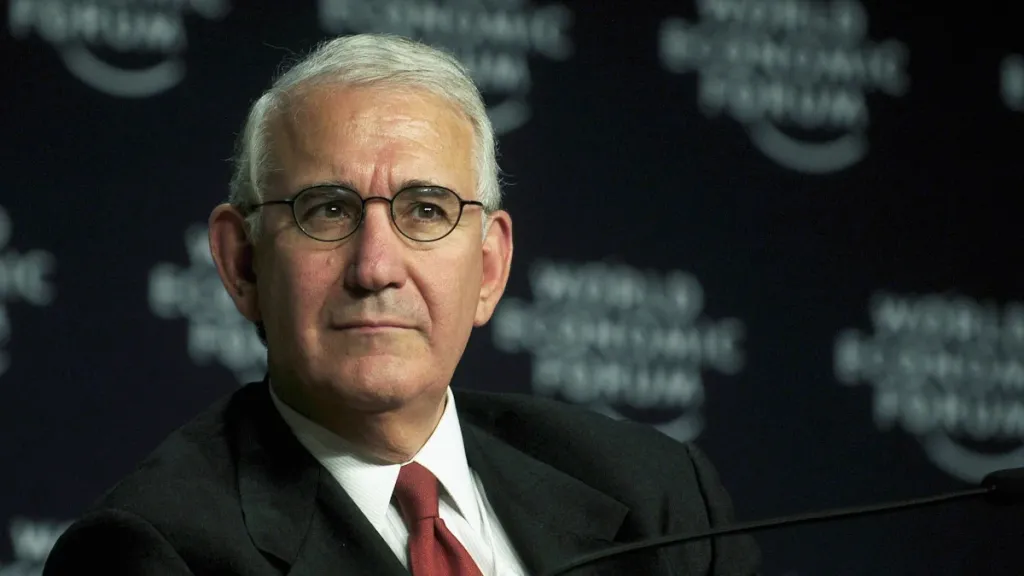
“It was not a hard choice,” said Warner Bros. Discovery Chairman Samuel Di Piazza Jr. in an interview with CNBC.
Ellison, in turn, said it was WBD who wasn’t being truthful to its investors about the strength of Paramount’s offer.
“WBD seeks to mislead its shareholders into believing this is a complicated question about legal documents,” the company said. “In reality, it is all quite simple: $30 in cash fully backstopped by a well-capitalized trust (in existence for approximately 40 years) of one of the most well-known founders and entrepreneurs in the world, Larry Ellison.”
Still, it’s clear why WBD preferred the cleaner Netflix bid, Paul Nary, an M&A and strategy professor at the Wharton School of the University of Pennsylvania, said in a post on X.
“The filing does give an impression that $PSKY was a rather aggressive suitor that engaged in some unconventional behaviors and didn’t always follow the process,” Nary said. “It certainly doesn’t make $PSKY look like an ideal counterparty.”
What’s next?
Just because the WBD board made its case doesn’t necessarily mean Paramount’s doors are completely shut.
“This isn’t the end of the saga, as shareholders do not always meekly follow Board recommendations,” said Kim Chua, a partner at OC&C Strategy Consultants.
Investors like GAMBO Investors Chairman Mario Gabelli have signaled a willingness to tender shares to Paramount, noting the strength of the $30 all-cash offer. An undercurrent to those comments is the hope that it will lead to a higher bid from either Paramount or Netflix.
In that same interview with TheWrap in which he talked about tendering shares, Gabelli acknowledged that the battle was in “early innings,” suggesting he was expecting further moves to come.
Nary said he believes Paramount will need to come in with a “cleaner $33+ bid” or Netflix will walk away with Warner Bros. He isn’t the only one expecting Paramount to take action.
“We believe the most likely scenario is that (Paramount) continues to ratchet up its bid price, supported by substantial cash backing and a clear strategic need for WBD,” said Robert Fishman, an analyst at MoffetNathanson.
If Paramount wants to bypass the WBD board and a shareholder vote, it would need to acquire 90% of the outstanding shares via a tender offer.
But it’s unclear if Paramount will pull the trigger. An insider told TheWrap this week that Paramount is holding firm with its offer. The company is soliciting tendered shares through Jan. 8, although it has the option to extend the period.
Greenfield, meanwhile, believes it is time for Paramount to throw in the towel. He suggested Paramount instead pursue a merger with NBCUniversal. Or if it’s gunshy from media deals after this experience, use the capital to ramp up spending on content.
But given how doggedly Paramount has pursued WBD, there’s no indication that it is giving up. What’s up in the air is just how aggressive Paramount and Ellison are willing to get.
The post Can a Rejected Paramount Still Win Over Warner Bros. Discovery Shareholders? | Analysis appeared first on TheWrap.