An appeals court signaled Wednesday that it may find the National Guard deployment in D.C. to be lawful, disagreeing with a lower-court judge’s opinion, and it issued an order that will allow troops to stay in the city while litigation continues.
A three-judge panel — with two Trump appointees and one Obama appointee — wrote that the Trump administration is likely to succeed in its appeal of that lower-court ruling. The panel’s unanimous order on Wednesday was not a determination of the deployment’s legality and functioned only to allow the troops to remain pending final rulings, likely to come next year. But the judges said D.C.’s lack of autonomy under the law gives the president vast authority over how the National Guard is used within city limits.
“Because the District of Columbia is a federal district created by Congress, rather than a constitutionally sovereign entity like the fifty States, the Defendants appear on this early record likely to prevail on the merits of their argument that the President possesses a unique power within the District — the seat of the federal government — to mobilize the Guard,” wrote the panel from the U.S. Court of Appeals for the District of Columbia Circuit.
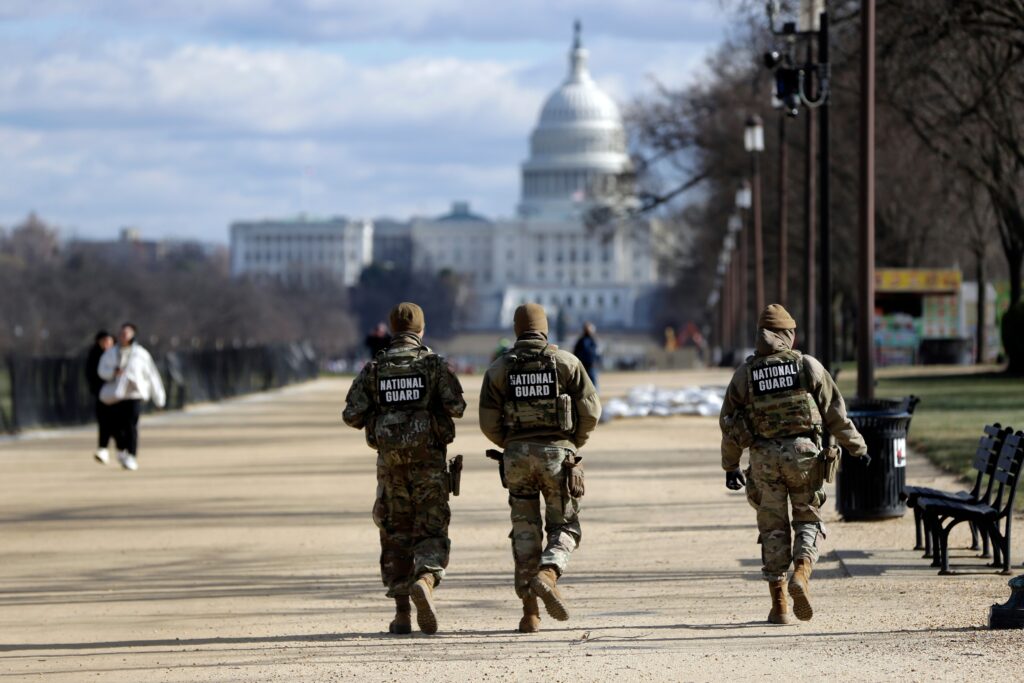
While preliminary, the appeals court ruling boosts the Trump administration in its fight to exert more control over the nation’s capital, an effort that has included the highly visible use of armed National Guard troops who patrol the city’s transit stations and pick up trash at its parks. Local officials have argued the deployment is at best unnecessary and at worst dangerous; the Trump administration has argued that the mission has been successful and the president is within his rights.
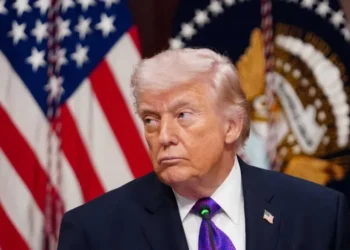
White House spokeswoman Abigail Jackson said in a statement that “today’s legal victory re-emphasizes what we have always maintained — President Trump exercised his lawful authority to deploy National Guard troops in Washington D.C. This effort has yielded tremendous results in making DC safer and more beautiful.”
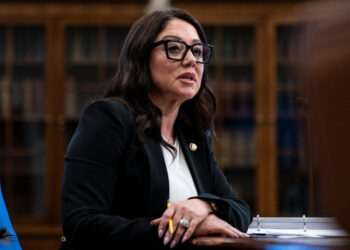
Gabe Shoglow-Rubenstein, a spokesperson for D.C. Attorney General Brian Schwalb (D), whose office sued over the deployment, said the appeals court ruling does not address D.C.’s core arguments in the case.
“This is a preliminary ruling that doesn’t resolve the merits, and we look forward to continuing our case in both the district and appellate courts,” he said.
The Guard mission began in August, when despite recent drops in homicides, carjackings and other violent crime, President Donald Trump declared a “crime emergency” in the District to temporarily seize control of the police department. He also ramped up federal law enforcement and immigration enforcement and ordered a deployment of troops that has since swelled to about 2,600 National Guard members from D.C. and 10 states with Republican governors. The Guard’s presence is currently scheduled to last through February.
“Our federal surge in DC has saved countless lives, removed hundreds of illegal guns off the streets, and led to a dramatic drop in crime in our nation’s capital city,” Attorney General Pam Bondi wrote in a social media post celebrating Wednesday’s ruling. “We will continue fighting in court to defend @POTUS’s agenda.”
Schwalb sued the Trump administration over its use of the Guard in September, arguing that it was an illegal incursion on the city’s autonomy. Schwalb also alleged that the troops were improperly engaged in law enforcement, in violation of a federal law that prohibits military troops under federal command from performing domestic policing. In addition to asking for the deployment to be stopped entirely, Schwalb asked a judge to halt the deployment as litigation continued.
A U.S. District Court judge has not issued an opinion on the underlying lawsuit but in November gave D.C. a preliminary legal win, ordering the Trump administration to halt the deployment by Dec. 11 as the court considered the broader case. In her opinion, Judge Jia M. Cobb said the Trump administration overstepped its authority by acting without a request from D.C.’s mayor and used the troops for purposes beyond what his limited powers allowed. The out-of-state troops, Cobb said, were also unauthorized.
That order set off another flurry of litigation; the Trump administration asked an appeals court to block Cobb’s order from going into effect. The administration has argued that the troops are not conducting law enforcement; they are only supporting police and deterring crime by being a visible presence, attorneys said in court. The administration’s attorneys have also argued that the District’s government has “zero sovereignty,” allowing Trump to deploy the troops without the city’s consent. Unlike in states, where governors have command, the president is the commander in chief of the D.C. National Guard.
On Dec. 4, the appeals court said the Guard could stay in the city as the judges continued to weigh the Trump administration’s requests — and on Wednesday, they granted the administration’s motion for stay pending appeal, meaning the Guard can remain in the District for now.
The appeals court judges noted that their assessment was “hurried” and that they did not address some of Schwalb’s central arguments — whether the Guard units were engaged in law enforcement in violation of federal law and whether the troops from other states were improperly under federal command.
However, the judges wrote, the stay pending appeal is an “extraordinary remedy” that required the Trump administration to show it was likely to prevail in its appeal of the lower-court ruling.
“The Defendants have demonstrated on this preliminary record that they will likely succeed in showing that the guard deployments are lawful” under federal and local law, they said.
The appeals court judges also said that halting the deployment would disrupt operations that have freed up U.S. Park Police to perform other tasks, emphasizing that there is a “strong federal interest in the protection of federal functions and property within the Nation’s Capital.”
They wrote that blocking the deployment could be unnecessarily disruptive. “The district court’s order would require them to pack up and leave the District, only to be ordered to return if this court were to find on the merits of the appeal that they were lawfully deployed,” they wrote.
Trump has also initiated, over state and local leaders’ objections, National Guard deployments in other jurisdictions, including Memphis, Los Angeles, Charlotte and the Chicago area — but has been blocked by courts in various forms. The Trump administration has asked the U.S. Supreme Court to reverse a lower-court ruling that prevented him from deploying troops in Illinois.
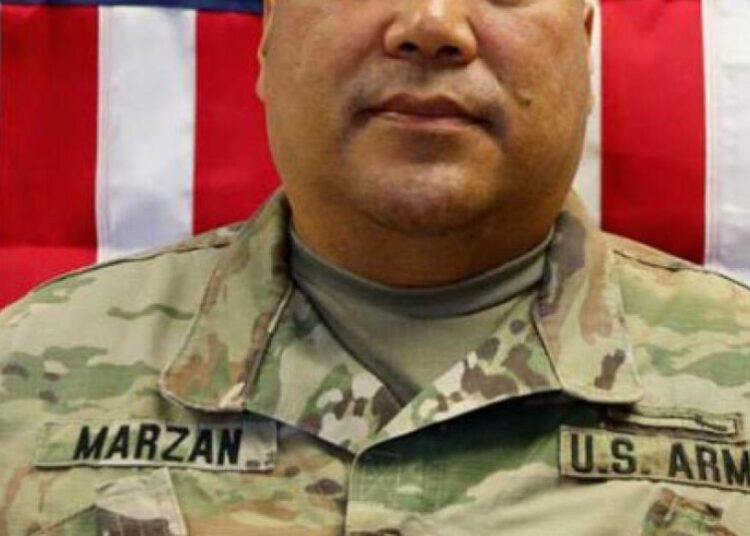
Wednesday’s ruling in D.C. comes weeks after two National Guard troops were shot — one fatally — at a busy downtown intersection about 1,500 feet from the White House. The attack, which prosecutors say was carried out by a lone gunman who had traveled from Washington state, led Trump to double down on his military efforts in the city and order the deployment of 500 additional troops. Schwalb, on the other hand, argued in a court filing that the attack “tragically underscored” the public safety risks of the deployment to both the public and Guard members themselves.
Meagan Flynn and Salvador Rizzo contributed to this report.
The post Appeals court hands Trump a win over D.C. National Guard deployment appeared first on Washington Post.