BRUSSELS — European leaders are racing to push through plans to unlock Russia’s frozen assets before Ukraine runs out of money and before the United States and Russia decide to use the funds as part of negotiations on the war.
As leaders of the European Union’s 27 nations convene here on Thursday, Kyiv’s chief backers vowed they would not leave until they agree on a way to finance Ukraine’s state and army.
E.U. officials hope to break the impasse over a plan to give Kyiv a “reparations loan” of about 210 billion euros over the next two years, underpinned by Russian assets. To do that, they need to overcome objections from Belgium, where most of the assets are held since Russia’s 2022 invasion of Ukraine.
But while they cast this as a do-or-die moment for Ukraine’s fate and Europe’s voice, the debate over money has thrown a harsh light on European divides.
The continent’s top leaders are issuing increasingly dire warnings. Ursula von der Leyen, president of the E.U. executive that drafted the plan, called this Europe’s “independence moment.” Polish Prime Minister Donald Tusk told his counterparts on Thursday they had a choice: “either money today, or blood tomorrow.”
“I’m not talking about Ukraine only. I’m talking about Europe,” he added. “This is our decision to make. And only ours.”
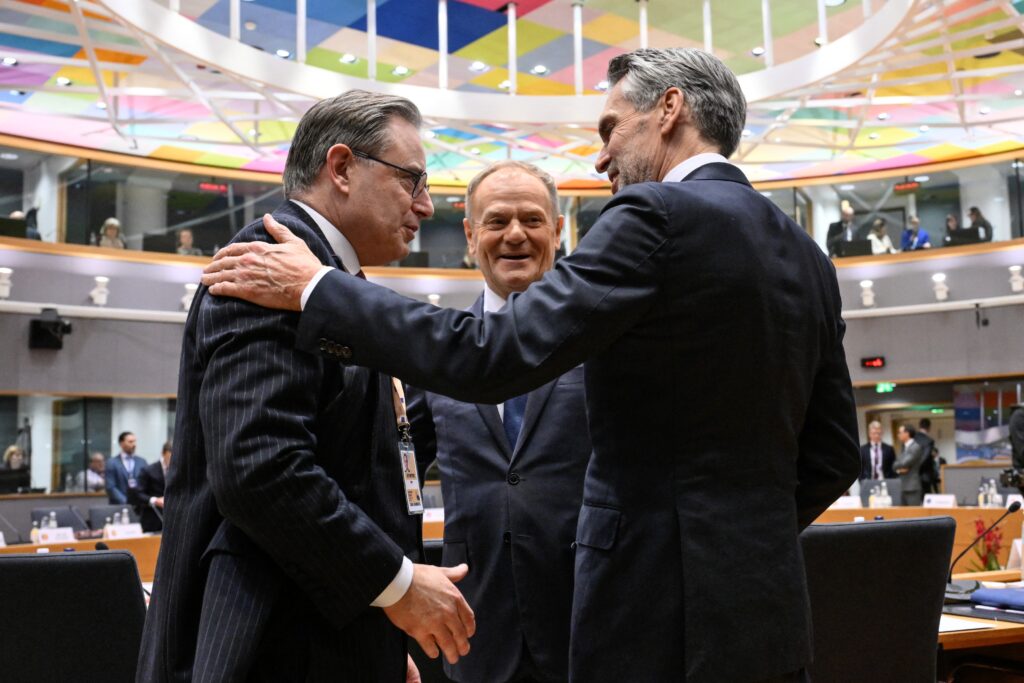
The plan faces opposition from Belgium, where the funds are held in a financial services institution called Euroclear, despite weeks of tensions and a diplomatic flurry by the E.U.’s power brokers to get Belgian buy-in. Diplomats expect heated negotiations to go down to the last minute at the gathering of leaders.
Belgium, a founding member of the E.U. and home to its headquarters, finds itself in a delicate position, facing threats from the Kremlin and calls from its E.U. neighbors to play ball — even as it says it doesn’t have enough guarantees they will share the full risk of any Russian response.
Belgian officials — worried the plan will draw retaliation against Euroclear and expose the country to huge liabilities — also want other countries holding smaller pots of Russian funds to commit to using them. And Belgian Prime Minister Bart De Wever has voiced concern that a U.S.-brokered deal on Ukraine would want to tap into the funds as well.
European officials say their decision, or lack thereof, sets the stage for how the E.U. meets this moment in the face of Russian threats, American antagonism and the expensive bill of the war now resting with them.
It would also be a blow to Ukrainian President Volodymyr Zelensky’s leverage and his European partners if Kyiv runs out of money to fight while Washington leads negotiations with Moscow over its future. European officials expect a funding crisis in Ukraine in early spring, adding to the urgency of endorsing a solution before the new year.
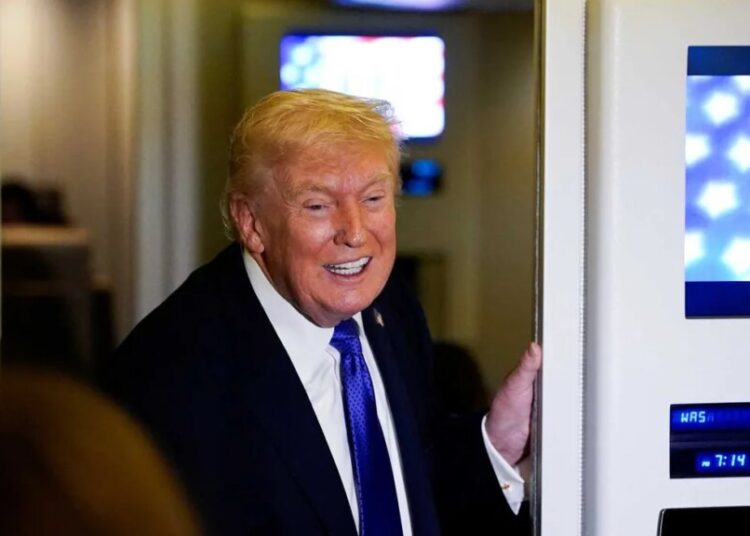
Ukrainian negotiators are en route to the United States to continue talks with President Donald Trump’s administration, Zelensky said Thursday. The Kremlin, meanwhile, is also “preparing certain contacts with our American counterparts,” spokesman Dmitry Peskov said.
As talks intensify, European officials say Moscow and Washington have both piled pressure on E.U. capitals that are squeamish about the proposal to tap into Russia’s central bank assets.
“I understand Belgium is under a lot of pressure from Russia, from European countries, but also from the United States,” E.U. foreign policy chief Kaja Kallas told reporters Thursday. As a result, she said, there should be a European agreement, so “whoever has any concerns can go to court against the European Union.” Kallas put the chances of a deal at “50/50.”
“We are 27 democracies, discussions take time,” she added. “We will stay here as long as we have to for a solution.”
The U.S. interest in the Russian assets sets up a possible collision course between the Trump administration and European leaders. Though Europe holds most of the roughly $300 billion frozen in the West, versions of the U.S. proposal for a peace deal have envisaged using some of it for U.S. reconstruction efforts in Ukraine and joint U.S.-Russian investments.
European leaders see the Russian assets as a way “to send a signal to the Americans,” after Washington released a national security strategy berating the European Union, said Agathe Demarais, a fellow at the European Council on Foreign Relations and a former French treasury adviser in Russia.
The E.U. is trying to push back and “use the assets as leverage to count in the negotiations,” she added, while “Donald Trump the businessman sees $300 billion.”
After years of warnings about the legal and financial risks of setting a precedent by seizing sovereign assets, the E.U. plan emerged out of a need. The United States has stopped paying for weapons to Kyiv, and European voters are growing more restless about public spending as big economies stagnate.
E.U. officials say a decision on the assets proposal — crafted with some financial and legal gymnastics — could be made with a weighted majority rather than unanimity, but that they would not want to move ahead without Belgium.
“There can be no flexibility on matters that threaten the financial security of Euroclear and Belgium: Let that be very clear,” De Wever told Belgian lawmakers early Thursday. “We are a reliable partner and are ready to make sacrifices but there is no free money.”
Still, some analysts expect Belgian officials to eventually sign off, and De Wever appeared to leave the door open. He said the E.U. executive branch, the Commission, was taking steps to find a solution and that it would be a “total failure” if the E.U. was unable to agree on funding Ukraine.
“I hope we can come out of the meeting, either tonight or whenever it is, and we have found a political solution to support financially a country that is losing every week thousands of compatriots in a terrible war for freedom,” De Wever said.
He made clear Belgium dislikes the assets plan, but suggested it might be possible if Europeans share the risk: “You give us a parachute, and we jump all together.”
Belgium has maintained that it prefers the other, even less popular option tabled — common borrowing against the E.U.’s budget to help Ukraine — but several other countries are against that and it would require unanimity.
Hungary’s Kremlin-friendly Prime Minister, Viktor Orban, who has often sought to block E.U. aid for Ukraine, rebuked both ideas. He said Thursday morning the assets plan was “killed, dead end.”
“The whole idea is a stupid one,” Orban told reporters. “That is marching into the war.”
Despite the standoff, most E.U. member states including Belgium agreed last week to indefinitely freeze the Russian assets, which would be key to unlocking the funds. The move, which triggered further ire from Orban, bypasses the possibility of a veto from Hungary by eliminating the need for a vote every six months.
The decision, based on emergency powers designed for natural disasters, circumvents a core E.U. tenet, unanimous consensus on foreign policy, as the commission stretches the bounds and cites the severity of the moment.
While Belgium may be the main focus, a few other countries have in recent days expressed hesitation about the assets plan too, including Italy.
On Thursday, Zelensky joined the summit to stress Ukraine’s need. He met with De Wever and said he understands the risks for Belgium.
“But we are at war and I think that we face bigger risks,” Zelensky added. “It’s important that he is transmitting signals that anyway we need to sort this issue, that Ukraine is not left without financial support.”
In Kyiv, a corruption scandal that recently engulfed Zelensky’s administration also stoked some unease about a big payout, and weakened his standing in U.S. negotiations.
The Ukrainian leader acknowledged that Kyiv would be “more confident at the negotiating table” with the Russian assets. Otherwise, “I don’t see how Ukraine can stand strong, economically strong,” Zelensky warned earlier this week before the summit. “I don’t see how we can cover such a deficit with some obscure alternatives or obscure promises.”
Kostiantyn Khudov in Kyiv and Natalia Abbakumova in Riga, Latvia, contributed to this report.
The post A divided E.U. races against time to tap Russian assets for Ukraine appeared first on Washington Post.